 Pressmediaofindia
Related Articles
21-05-2026
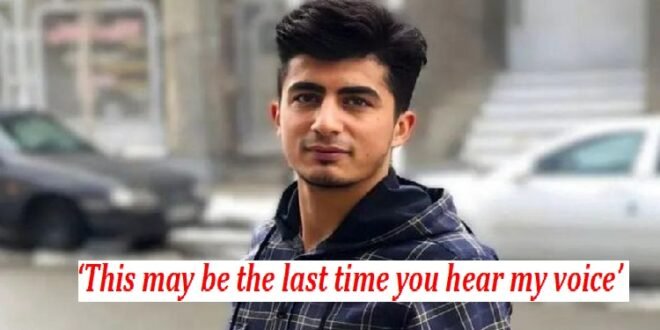
TEHRAN: The line is crackly but the voice of Mehrab Abdollahzadeh is clear and, given the circumstances, surprisingly steady.
He’s on death row in western Iran. He speaks quickly as if time is running out and his message is desperate.
 “You are hearing my voice from Oromiyeh Central Prison, and this may be the last time you hear it,” he says in a voice note obtained by the Kurdistan Human Rights Network.
“From the very first day of my arrest, they forced confessions out of me through torture and threats, confessions that were entirely false. None of the charges against me are true. They know it, and God knows it. I am innocent.”
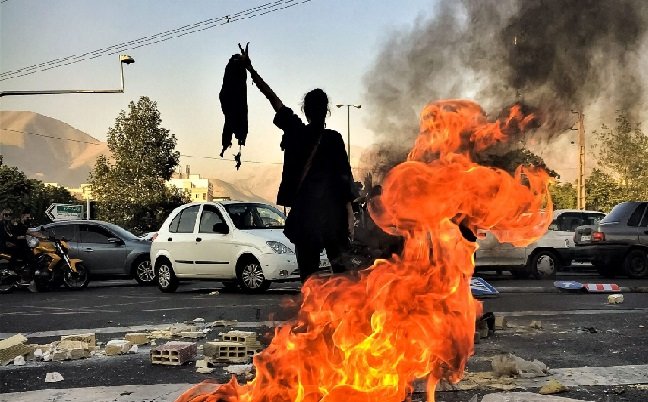
Mehrab was arrested back in 2022, during nationwide protests that followed the death in police custody of a young woman, Mahsa Amini, who had been detained for not wearing her veil properly. He was accused of involvement in the killing of a member of Iran’s Basij militia force.
After 42 months of fear and sleepless nights, he was put to death earlier this month part of a surge in executions of people on political and security charges.
Since the US and Israel attacked Iran on 28 February, the UN says it’s verified the execution of at least 32 political prisoners.
This marks a sharp year-on-year increase, with 45 executions on politically-motivated charges taking place across the whole of 2025, according to Amnesty International. The UN’s Human Rights Office has warned the death penalty is increasingly being used to silence political dissent.
Several of those killed this year were accused of spying for Israel or the CIA, while some were accused of being affiliated with an exiled opposition group. Fourteen of them were arrested in relation to the uprising in January this year, which was crushed with lethal force leading to thousands of deaths.
“In Iran, the authorities carry out executions by hanging. They carry them out at dawn,” says Nassim Papayianni of Amnesty International. “People in Iran have been waking up to near-daily announcements of executions.”
 “They weaponized the death penalty as a tool of political repression, to instil fear among the population, and essentially crush and stifle any dissent that there might be” while some executions are announced publicly, a spokesperson for the UN Human Rights Office told media it was concerned others were happening in secret.
Last year, Iran carried out 2,159 executions, according to Amnesty International, the highest number since 1989. It says that the vast majority are for drugs-related offences or murder.
The UN fears that the figure this year could be even higher.
With its increased use of the death penalty, the regime is attempting to restore authority after its image was damaged by the January uprising and the war, according to Kaveh Kermanshahi of the Kurdistan Human Rights Network.
“At a time when it is confronting multiple internal and external crises, it is attempting, through intensified repression and an increase in executions, to stage a display of power and project the message: ‘I am still here, and I still control the situation,’” he says.
Late last month, state-run television carried a report on the execution of Sasan Azadvar, a 21-year-old karate champion from the central city of Isfahan. He’d been convicted of “moharabeh” or “waging war against God,” and “effective collaboration with the enemy” for attacking police forces during January’s protests. He is seen confessing to using a stick to break the window of a police car and asking for petrol to set it on fire. (Int’l News Desk)