 Pressmediaofindia
Related Articles
The West Asia crisis has placed India-Iran relations at the intersection of energy security, maritime safety, strategic autonomy and regional diplomacy.
New Delhi, Sept 14 (PMI) India’s relations with Iran have acquired renewed strategic significance at a time when West Asia is facing one of its most serious geopolitical crises in decades, and the Strait of Hormuz has emerged as a critical pressure point for global energy security.
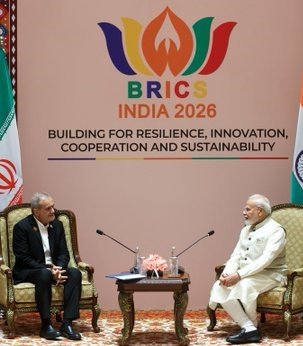
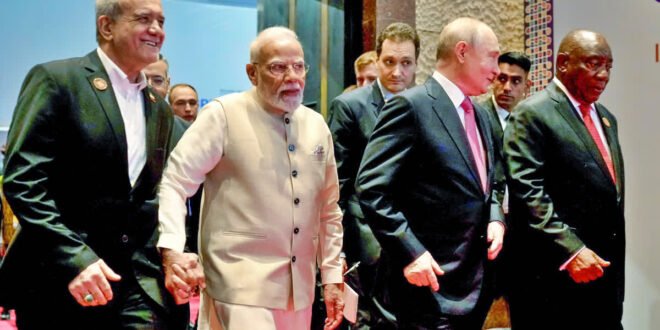
Prime Minister Narendra Modi’s meeting with Iranian President Masoud Pezeshkian was their second meeting in less than two weeks. The two leaders had earlier met on the sidelines of the Shanghai Cooperation Organisation (SCO) Summit in Kyrgyzstan earlier this month. The latest engagement reflects New Delhi’s continued commitment to maintaining high-level communication with Tehran, particularly as regional conflicts pose growing risks to maritime trade, energy supplies, shipping and the safety of seafarers.
In a statement issued by the Ministry of External Affairs following the Modi-Pezeshkian meeting held on Friday on the sidelines of the BRICS 2026 Summit, the government said that the two leaders discussed various aspects of bilateral relations. Prime Minister Modi also thanked the Iranian President for Iran’s continued participation at a high level in BRICS-related meetings despite difficult circumstances.
According to the statement, Modi underlined the potential of BRICS to promote resilience, innovation, cooperation and sustainability among countries of the Global South.
The Ministry of External Affairs said the two leaders also discussed recent developments in West Asia. Modi reiterated India’s longstanding position that all issues should be resolved through dialogue and diplomacy. He also stressed the need for sustained efforts to ensure lasting peace and stability in the region, safeguard freedom of navigation and trade, and protect the safety of seafarers.
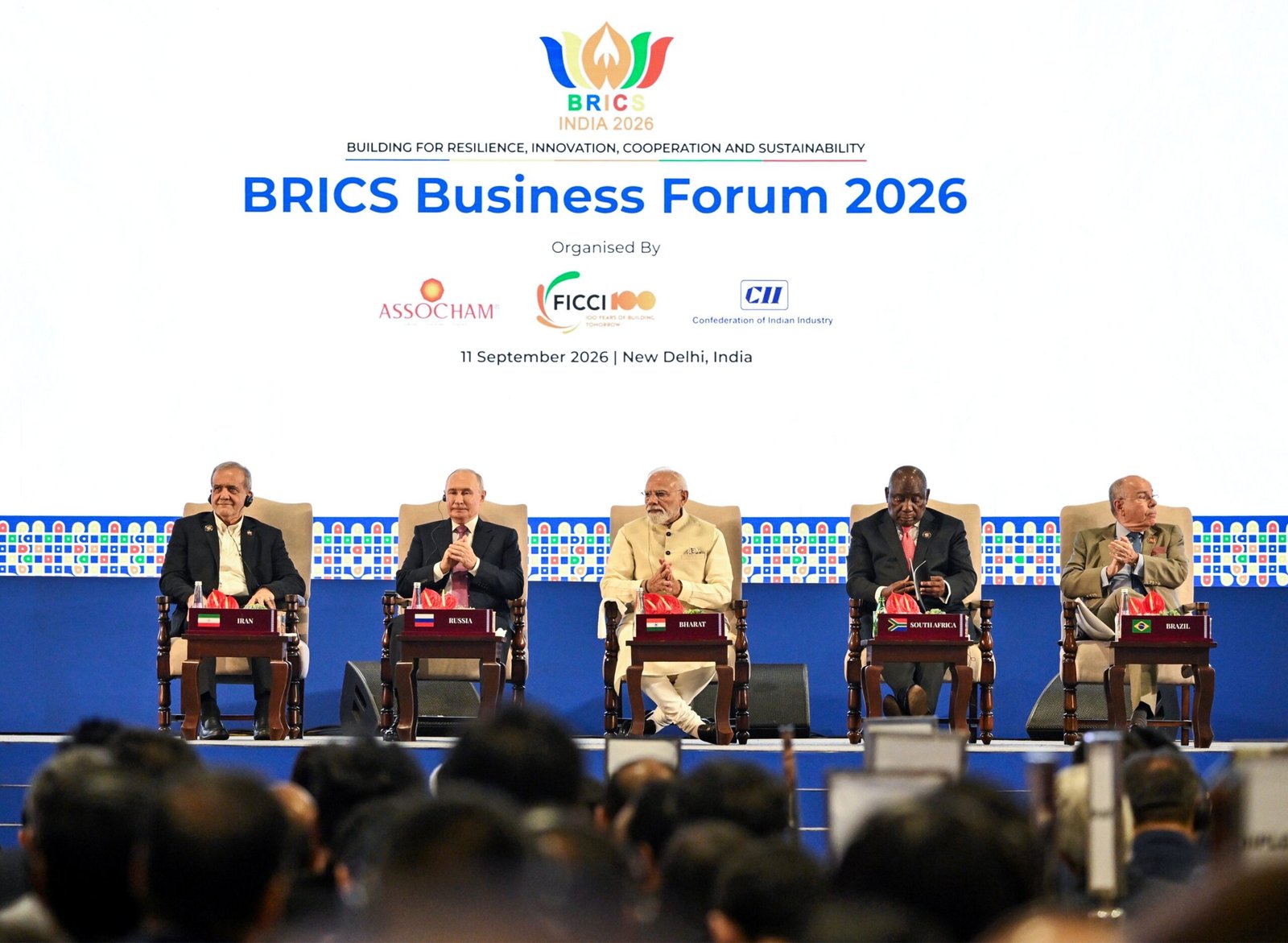
Against the backdrop of continuing conflicts in West Asia, serious disruptions in the Strait of Hormuz and uncertainty in global energy markets, the Modi-Pezeshkian meeting highlights why Iran remains strategically important for India.
For New Delhi, relations with Tehran are linked simultaneously to energy security, connectivity, regional stability, maritime security, access to Central Asia and Afghanistan, and India’s broader policy of strategic autonomy. The latest meeting also demonstrated India’s intention to keep diplomatic channels open with all major stakeholders in the West Asian crisis while advocating dialogue instead of military confrontation.
Strategic Importance of India-Iran Relations
India-Iran relations are shaped by geography, history, and strategic necessity. Iran is not simply an energy supplier or a regional partner for India. Its geographical location provides New Delhi with access to the Persian Gulf, Afghanistan and Central Asia, while India’s location and large consumer market make it an important economic and diplomatic partner for Tehran.
The strategic significance of this relationship has increased further following the escalation of the current conflict in West Asia.
The Modi-Pezeshkian meeting took place against the backdrop of severe disruptions in the Strait of Hormuz. Shipping data indicated that before the conflict, an average of around 125 vessels passed through the waterway each day, while the number had fallen to only seven on September 10.
For India, this is not merely a geopolitical development. The Strait of Hormuz is directly connected with the country’s energy security and economic stability. It is one of the world’s most important energy chokepoints, connecting the Persian Gulf with the Gulf of Oman and the Arabian Sea.
Energy Security at the Centre
The Strait is particularly important for India because the country remains heavily dependent on imports of crude oil, LPG and other petroleum products.
Before the current crisis, an estimated 55 per cent of India’s total crude oil imports passed through the Strait of Hormuz. During the initial phase of the conflict, India managed to increase the proportion of crude arriving through alternative routes outside the Strait to around 70 per cent.
This diversification has provided an important degree of protection. However, crude oil is not the only concern.
According to the Ministry of Petroleum, India imports around 60 per cent of its LPG requirements, and traditionally about 90 per cent of those LPG imports have travelled through the Strait of Hormuz.
During his meeting with Pezeshkian, Modi emphasised the importance of freedom of navigation and trade, as well as the safety and welfare of seafarers, while highlighting the need for lasting peace and stability in West Asia.
For India, these issues have major practical implications.
Indian nationals constitute one of the world’s largest maritime workforces. Any prolonged disruption of major shipping routes could directly affect their safety and employment, while also creating difficulties for India’s commercial shipping and international trade.
Chabahar and Regional Connectivity
Another major reason India cannot view Iran solely through the lens of oil is connectivity.
Through the Chabahar Port project, Iran provides India with an important strategic route towards Afghanistan and Central Asia.
India has invested significantly in Chabahar, which offers an alternative to routes constrained by Pakistan’s geography and provides access to Afghanistan and the wider Eurasian region.
The port has become particularly important as India seeks to expand its economic and strategic engagement with Central Asian countries.
Therefore, Chabahar’s importance extends well beyond commercial shipping. It represents India’s effort to develop alternative connectivity corridors at a time when geopolitical tensions could disrupt traditional trade routes.
The same principle applies to India’s broader interest in the International North-South Transport Corridor (INSTC), which aims to connect India with Iran, the Caucasus, Russia and Europe through multimodal transport routes.
BRICS as a Diplomatic Platform
The participation of the Iranian President at the BRICS Summit gives the relationship another dimension.
The Ministry of External Affairs said that Modi appreciated continued cooperation between India and Iran on issues of mutual interest through multilateral organisations, including BRICS.
For India, BRICS provides a platform through which it can maintain engagement with Iran without allowing bilateral disagreements or geopolitical rivalries to dominate the relationship.
It also enables New Delhi to promote broader Global South priorities, including economic resilience, innovation, sustainable development and alternative mechanisms of international cooperation.
Iran’s participation is significant because Tehran has increasingly sought deeper engagement with non-Western economic and diplomatic structures. At the same time, India wants BRICS to remain focused on practical cooperation and the interests of developing and emerging economies.
Why India Prefers Dialogue
Modi’s emphasis on dialogue and diplomacy is not merely a conventional diplomatic formulation. It reflects India’s practical interests.
A prolonged conflict could keep oil prices elevated, disrupt shipping, increase insurance costs, endanger Indian seafarers, affect LPG and LNG supplies, increase inflation, disrupt India’s trade, complicate the safe evacuation of Indian nationals and deepen geopolitical divisions.
India therefore has a direct interest in preventing the current crisis from developing into a prolonged regional confrontation.
At the same time, New Delhi’s approach allows it to maintain relations with Iran while continuing its strategic partnerships with the United States, Israel and the Gulf countries.
This essentially captures the core of India’s diplomacy in present-day West Asia: maintaining engagement with all sides, advocating dialogue and protecting India’s own economic and strategic interests.
For New Delhi, maintaining productive relations with Tehran does not mean choosing Iran over India’s other strategic partners.
Rather, it forms part of a broader effort to preserve strategic autonomy, protect India’s energy lifelines and maintain diplomatic influence in a region whose stability has a direct bearing on India’s economic and national security interests.
In this context, the Modi-Pezeshkian meeting sends a clear message: India wants West Asia to move away from confrontation towards dialogue, wants the Strait of Hormuz to remain open for legitimate trade, and regards stable relations with Iran as an important component of its wider regional and strategic policy.(pressmediaofindia.com)