 Pressmediaofindia
Related Articles

Special Report
“The Community Asked for Solutions, the Meeting Offered Assurances”
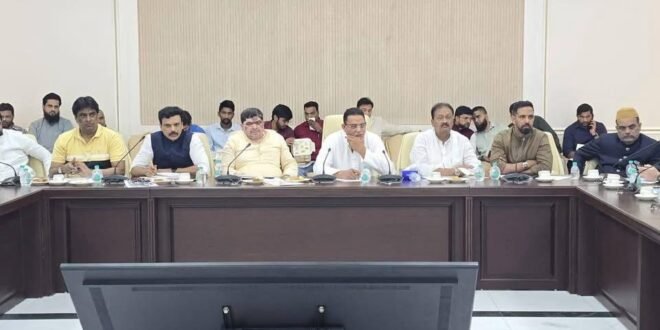
ٓHyderabad’June 9 (Ali Abbas-PMI) The Telangana government’s recent review meeting on Muharram arrangements has once again raised a fundamental question: Are the concerns of the Shia community truly among the government’s priorities, or are they merely addressed as a formality?
Minorities welfare minister Mohammed Azharuddin stated that show-cause notices would be issued to absent officials and action would be taken against them. However, past experience compels many to ask whether these announcements will lead to real accountability or remain limited to official statements.
Out of the 365 days—or 8,760 hours—in a year, barely three hours are allocated to discussing the issues, requirements, and concerns of the Shia community in connection with Muharram. Unfortunately, even these few hours often appear to be consumed by procedural formalities rather than meaningful planning and problem-solving. For years, community representatives have been demanding that the Muharram review meeting be convened at least one month in advance so that government departments can prepare adequately and address pending issues in a timely manner. Yet, as in previous years, the meeting was held only days before Muharram, creating the impression that fulfilling a routine obligation has taken precedence over effective preparation.
This year’s meeting was particularly disappointing as several key government officials failed to attend. Their absence drew strong criticism from legislators and members of the Legislative Council, who questioned the seriousness with which the administration views Muharram-related matters. Heated exchanges during the meeting further highlighted the frustration felt by community representatives. Equally concerning was the fact that Hyderabad’s in-charge minister, Ponnam Prabhakar, arrived approximately forty minutes late and left before the meeting concluded. Such actions inevitably create the perception that an occasion of immense religious and cultural significance is not receiving the attention and respect it deserves. Ideally,
The meeting should have begun with detailed reports from all concerned departments outlining the implementation status of decisions taken in previous years. Officials should have explained which commitments had been fulfilled, which remained pending, and what obstacles were preventing their completion. Unfortunately, such accountability was largely absent. The entire situation can be compared to a well-known parable: hungry children asked their mother for food, and she placed stones in a pot over a fire to give them hope that a meal was being prepared. Believing that food would soon be ready, the children eventually fell asleep, but their hunger remained. For many participants, the Muharram review meeting felt much the same—promises were offered, assurances were given, but tangible outcomes remained elusive.
Unless Muharram preparations are treated as a serious exercise in planning, consultation, and accountability rather than a routine annual formality, the same concerns will continue to resurface year after year, leaving the community with unanswered questions and unfulfilled expectations. (pressmediaofindia.com)