 Pressmediaofindia
Related Articles


14-05-2026
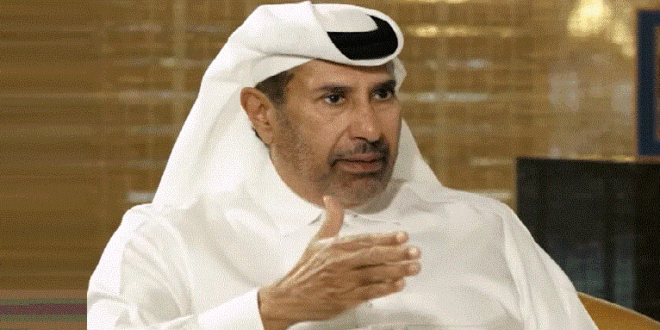
DOHA: The United States-Israel war on Iran is not the result of a sudden escalation but the culmination of a long-term Israeli agenda to violently reshape the Middle East, former Qatari Prime Minister and Foreign Minister Sheikh Hamad bin Jassim Al Thani tells media.
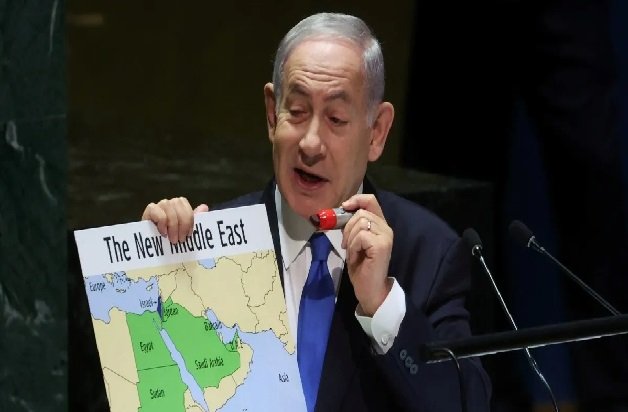 In a wide-ranging, candid interview, the veteran diplomat offered a stark assessment of the region’s rapidly shifting geopolitical landscape. He warned that the crisis in the Strait of Hormuz is the most perilous consequence of the recent war, cautioned against Israeli Prime Minister Benjamin Netanyahu’s ambitions for a “Greater Israel” and called for the urgent establishment of a unified Gulf defence pact.
“We are witnessing a major restructuring of the region,” Sheikh Hamad said, noting that the current geopolitical tremors will dictate the shape of the Middle East for decades to come. Sheikh Hamad had warned of an impending conflict last year and urged Gulf States to push for a diplomatic resolution to resolve the crisis with Iran and prevent military strikes.
He identified a push for a conflict with Iran and blamed it on a “hardline faction” within Israel led by Netanyahu, who he said had been trying to drag the US into a war over Tehran’s nuclear program since President Bill Clinton’s administration in the 1990s while previous US governments including during President Donald Trump’s first term hesitated to launch a full-scale war on Iran, Netanyahu finally succeeded by selling Washington an “illusion”, Sheikh Hamad argued. “He convinced the US administration that the war would be short and swift and that the Iranian regime would fall within weeks,” he said, drawing parallels to failed US efforts to change Venezuela’s government.
The former Qatari premier criticised Washington’s reliance on military might, saying, “America’s true power has always been in its ability to avoid using force, not in deploying it.” He noted that the current war ultimately has forced all parties back to the negotiating table, suggesting that an additional two weeks of talks in Geneva early this year, an Oman-led diplomatic push to avoid war could have averted the catastrophe altogether.
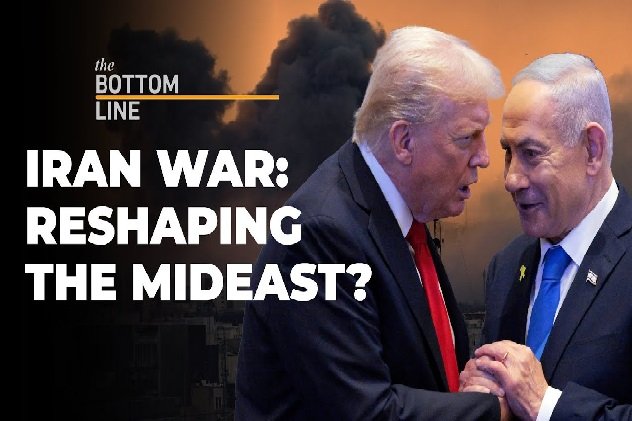 Netanyahu has emerged as the primary beneficiary of the war, Sheikh Hamad observed, saying the Israeli leader is using the chaos to market his vision of forced regional alliances and a “Greater Israel”, a plan among Israel’s right wing to expand the country’s borders deeper into neighboring Arab states.
Assessing Tehran’s strategy, Sheikh Hamad said Iran successfully absorbed the initial military strikes of the war and subsequently dragged its feet on a settlement after realizing it could leverage a new strategic advantage: the Strait of Hormuz.
Calling the weaponization of the waterway the “most dangerous outcome” of the war, he warned that Iran is now treating the vital international chokepoint as its own sovereign territory. This, he argued, poses a more immediate and severe threat to global economies than the Iranian nuclear program.
The Gulf States, rather than Washington, have borne the brunt of this crisis, Sheikh Hamad said, and the former prime minister harshly condemned Iran’s attacks on Gulf energy, industrial and civilian infrastructure under what he said was the guise of targeting US interests, noting that these Gulf nations had explicitly opposed the war.
As a result, Tehran has exhausted much of its political capital in the Gulf, generating widespread public anger over the economic and security disruptions its actions have caused. However, Sheikh Hamad stressed that geography dictates coexistence and called for a frank, collective Gulf dialogue with Tehran rather than fragmented unilateral communications to establish a realistic framework for the future. (Int’l News Desk)