 Pressmediaofindia

Related Articles



04-06-2026
MINGENEW/ SYDNEY: A mouse plague is terrorizing farmers across large swathes of Australia, with the rodents running rampant around homes and ravaging fields of grain.
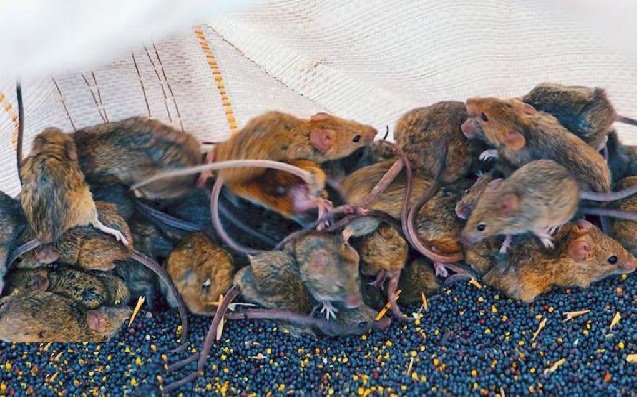 It comes as farmers are already under pressure from unpredictable fuel and fertilizer supplies due to the ongoing US-Israeli war on Iran.
This new battle has seen farmers pour hundreds of thousands of dollars into either re-planting crops that have been devoured by the mice or spending precious farming hours laying down bait sterile seeds laced with mouse poison.
“It’s a big cost and it’s not just the price of the bait,” says Geoff Cosgrove, 43, who runs a 14,000-hectare farm in Mingenew, Western Australia (WA), growing wheat, canola, lupin and barley.
“They do play with your mind running around at night, in the ceiling, the air conditioning units. You can hear them and you can smell them, it’s like a decaying body.”
Cosgrove has been farming for 25 years and in that time, he’s only ever had to bait twice. This year’s mouse plague is “way worse than the one in 2021”, he says.
That year a mouse plague swept through many parts of Australia, with large areas of New South Wales (NSW) and parts of Queensland suffering their worst plague in memory.
The situation was so dire in NSW that hundreds of prisoners were forced to relocate after mice caused extensive damage at their jail.
This time, farmers in WA first began reporting plague-like numbers of mice in March, with their neighbors in South Australia following suit shortly after.
 Bumper harvest boosts mice numbers
About two hours north of Cosgrove’s farm, agronomist and farmer Belinda Eastough, 59, recalls the mouse plague that hit WA about five years ago.
“The last time (in 2021), they were in my handbag,” she says from her 5,500-hectare farm in Nolba, 80km (50 miles) northeast of Geraldton, one of the hardest hit areas.
“They were everywhere, in the floors, the walls, in the pantry but I haven’t had them in the pantry this year.”
That’s because “they’re staying where the food is,” she says, out in the paddocks.
“Last year, we had a record-breaking harvest so that gives the mice a lot of food.”
A big harvest means large amounts of grain spilt in the paddocks during the processing of crops, leading to an easily accessible and much-loved food source for mice.
“Then we got some summer rain,” Eastough says, which spurred the growth of young green shoots.
“So instead of just steak, they got steak and salad. Basically, the mice were in absolute mouse heaven.”
Eastough, who’s been farming for almost 40 years, grows wheat, canola and lupin with the wheat either exported to South-East Asia for udon noodles or used domestically in biscuits, bread and pasta.
In her canola paddocks, she estimates there are about 8,000 to 10,000 mice per hectare about the size of a rugby field.
“Sometimes we’ve had mouse plagues, and the numbers will crash once they run out of food but this year, they haven’t. “I’m living the nightmare.”
The autumn months are some of the most crucial for grain growers as that’s when they plant their crops.
As an agronomist, Eastough advises farmers on their crops and this year, she’s urging them to bait as soon as possible after planting the seeds. (Int’l Monitoring Desk)