 Pressmediaofindia
Related Articles


03-06-2026
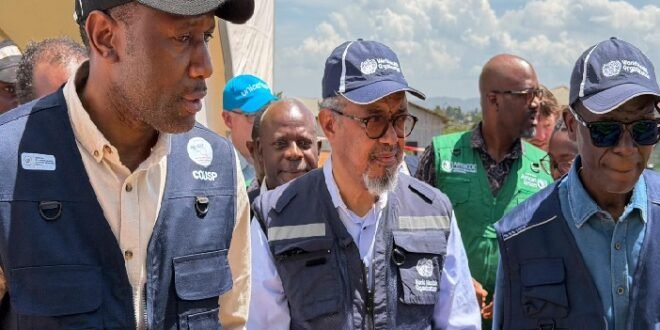
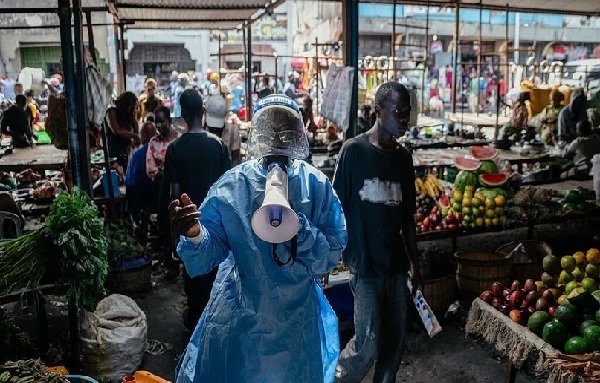
KINSHASA/ BUNIA: The head of the United Nations health agency is visiting the epicentre of a deadly Ebola outbreak in eastern Democratic Republic of the Congo (DRC), urging local communities to lead the fight against a disease whose confirmed cases have nearly doubled in two days.
 Tedros Adhanom Ghebreyesus, the World Health Organization (WHO) director-general, arrived in Bunia, the capital of Ituri province, on Saturday.
“The international community is involved under the leadership of the government of DRC, and at the same time, community ownership is important; that’s why we’re here to discuss with the community to see how the response is you know, running, and if there are challenges, to help,” Tedros told reporters.
“The communities understand the problems better, and they know the solution, as well.”
Congolese authorities say the number of confirmed cases in DRC reached 225 on Friday, nearly double the figure of 121 reported two days earlier.
The outbreak is caused by the Bundibugyo virus, a rare and severe form of Ebola for which there is no approved vaccine or treatment.
The WHO has declared the outbreak a global health emergency, its highest level of alarm, and the medical NGO Doctors Without Borders, known by its French initials MSF, calls it one of the fastest-spreading Ebola outbreaks ever recorded.
Authorities have also recorded 1,028 suspected cases and more than 220 suspected deaths in DRC, while the disease has crossed into neighboring Uganda, which has recorded nine confirmed cases and one death.
Ebola was first identified in this part of central Africa in 1976; this is the DRC’s 17th outbreak. Bundibugyo is one of three virus types behind most major epidemics; the deadliest, the Zaire Ebola virus, drove the 2014–2016 West Africa outbreak, the largest on record, with more than 28,000 cases.
 “Nobody knows the true scale and severity of this outbreak,” MSF said, warning that the response has not kept pace.
The WHO has cautioned that the death rate could reach 30 to 50 percent, the range seen in the previous two Bundibugyo outbreaks though the rate among confirmed cases so far has been lower.
As the virus spreads rapidly, the European Union has sent medical supplies to Ituri, and the United States has pledged more than $112m.
Even so, the Africa Centres for Disease Control and Prevention (Africa CDC), the African Union’s health body, says global funding for the response has more than halved, from $498m to $219m.
The outbreak recorded its first confirmed recovery this week, and WHO is working with both DRC and Uganda to assess experimental drugs and a candidate vaccine.
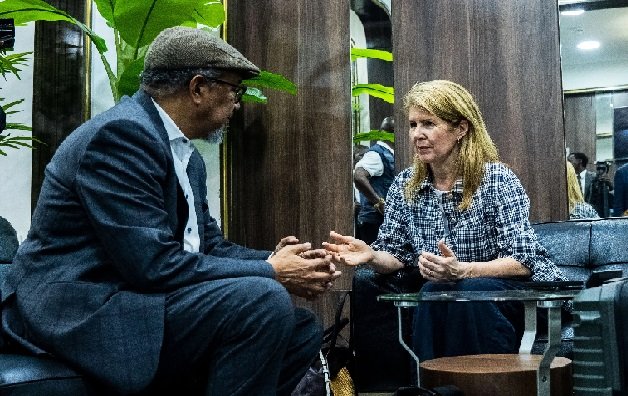
Tedros, who met DRC’s Prime Minister Judith Suminwa Tuluka in Kinshasa before flying to Bunia, said he was confident the country, which has battled Ebola repeatedly, could again bring it under control.
Still, containing the disease is made harder by years of conflict in eastern DRC. Health teams in Ituri have come under attack from the Allied Democratic Forces (ADF), an armed group linked to ISIL (ISIS), and from local ethnic militias. The virus has also reached North Kivu and South Kivu provinces, where the Rwanda-backed M23 rebel group controls major cities.
Anger over strict rules for handling victims’ bodies, which clash with local burial customs, has fueled at least three attacks on health centers.
Regional countries are meanwhile on alert. Both Uganda and Rwanda have shut their borders with DRC, while Washington has barred most travelers who have recently visited DRC, Uganda or South Sudan. (Int’l Monitoring Desk)