 Pressmediaofindia
Related Articles


22-04-2026
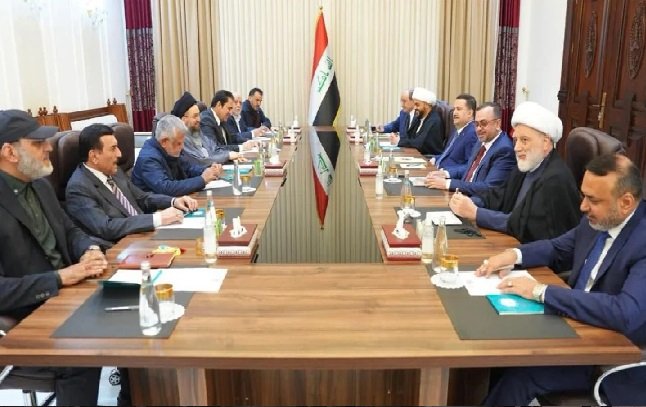
BAGHDAD: It’s been more than five months since Iraq’s parliamentary elections, but the Coordination Framework, the largest parliamentary bloc of Shia parties, has failed to choose its prime ministerial candidate amid internal power struggles.
 The incumbent Prime Minister Mohammed Shia al-Sudani, who is eyeing a second term, is facing a challenge from the bloc led by former Prime Minister Nouri al-Maliki, a pro-Iran divisive figure whose candidacy is being opposed by the United States.
The Coordination Framework which commands approximately 185 of 329 seats in parliament must nominate a prime minister by April 26, as required by the Iraqi constitution, while the country faces the delicate task of balancing its ties between the US and its influential eastern neighbor, Iran.
Baghdad is in a tight diplomatic spot as the US-Israel war on Iran has spilled into Iraq, with pro-Iranian armed groups having carried out attacks on US assets in solidarity with Tehran.
Iran, which wields considerable influence over Iraqi politics, has also been involved in the political crisis. It has cultivated Shia parties following the removal of President Saddam Hussein in the 2003 US-led military invasion.
Ismail Qaani, the head of the Quds Force, the foreign branch of the Islamic Revolutionary Guard Corps (IRGC), visited Baghdad at the weekend, aiming to break the leadership deadlock, according to sources.
His unannounced visit apparently came at the request of the caretaker Prime Minister al-Sudani to convince the Shia Coordination Framework not to nominate Bassem al-Badri, who is aligned with Maliki, as prime minister, according to a source familiar with the discussions.
Falih al-Fayadh, chairman of the Popular Mobilization Forces (PMF) and a senior figure in al-Sudani’s Reconstruction and Development Coalition, mediated the visit, the source said. The PMF, also known as al-Hashd al-Shaabi, is an umbrella organization of mostly Shia armed groups, some of whom have close ties to Iran. They are part of “the Axis of Resistance”, a network of political and armed groups allied with Iran across the Middle East.
 The US has been wary of Iran’s influence through its allied groups, such as Yemen’s Houthis and Lebanon’s Hezbollah, the most powerful members of the Network.
Qaani met with Abu Fadak al-Mohammadawi, the PMF’s chief of staff, as well as al-Maliki, al-Sudani, and several other Coordination Framework leaders. A separate source said al-Mohammadawi is leading efforts within the Framework to block al-Sudani’s bid for a second term.
“The Iranians face a bigger existential challenge, the US-Israeli war and are not interested in settling the Iraqi PM file. They want a weak prime minister through whom they can get what they want,” said Akeel Abbas, a Washington-based researcher.
Political appointments to the top democratic posts have often exposed sectarian and ethnic divisions. Under Iraq’s power-sharing system (Muhasasa), in place since the first government formation after the 2003 US-led invasion, the presidency goes to the Kurds, the speakership to Sunni Arabs and the post of prime minister to Shia Arabs.
On April 11, Nizar Amedi was appointed president after months of political haggling. Now the Coordination Framework must nominate a prime minister within 15 days from the president’s appointment.
The Framework’s general secretariat has called a meeting for Monday at the residence of Ammar al-Hakim, head of the National State Forces Alliance, a core member of the Shia bloc, with a single agenda item: selecting the prime ministerial candidate. (Int’l Monitoring Desk)