 Pressmediaofindia
Related Articles



10-05-2026
Bureau Report
NEW DELHI: India’s main opposition Congress party drew increasingly strong backing from Muslim voters while Hindus overwhelmingly voted for Prime Minister Narendra Modi’s party, results from recent elections in four states have shown.
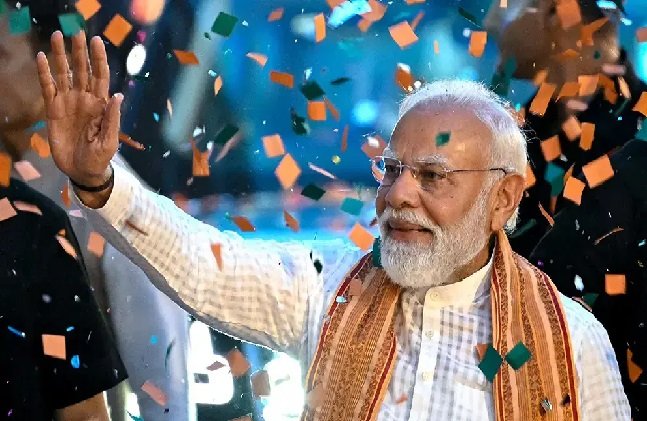 This voter trend highlights hardening religious polarization in the officially secular nation, and the deep-seated ideological division between India’s two biggest political parties, analysts and political commentators say.
Modi adopted an unabashedly pro-Hindu platform to take power in 2014, and his Bharatiya Janata Party largely follows a Hindu-first ideology called Hindutva. Such voter fragmentation helps expand its dominance across the country because Hindus are nearly 80% of India’s 1.42 billion people compared with about 14% Muslims.
“The rise of the BJP has led to a consolidation of Muslim voters behind so‑called secular parties, particularly the Congress, a form of reverse polarization is taking place,” said political analyst Rasheed Kidwai, visiting fellow with the Observer Research Foundation.
Muslim leaders and analysts say voters from that community are increasingly choosing Congress or other strong regional parties over smaller parties that focus on their interests but have struggled to be part of any governments in recent years
Congress fared poorly in the elections held last month across four states and one federal territory, with results declared this week. Its alliance secured control of only one state, while a BJP-led coalition won three and a new regional outfit took the remaining contest. The Muslim support for Congress was most evident in the BJP-ruled northeastern state of Assam, where 18 of its 19 newly elected lawmakers are from the community, up from roughly 16 in the previous assembly. The party had fielded 20 Muslim candidates and about 80 non-Muslims for the 126-member legislature, in which the BJP won 82 seats.
The Assam-based All India United Democratic Front (AIUDF), which mainly draws Muslim support, saw its tally collapse to just two seats from 16 five years earlier.
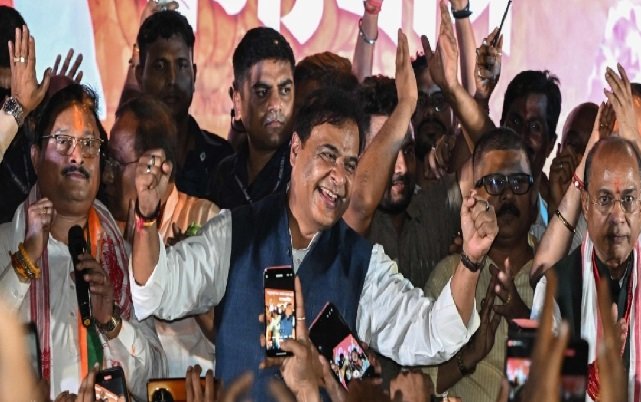 In neighboring West Bengal, which the BJP won for the first time with 207 lawmakers in a 294-member assembly, the two Congress legislators elected were Muslims.
The BJP did not field any Muslim candidates in either Assam or West Bengal. Party leaders in both states, including the prospective chief minister of Bengal, Suvendu Adhikari, credited the victories to support from Hindu voters.
“It was a victory for Hindutva,” Adhikari said.
“In the future, depending on local political dynamics, if Muslim voters increasingly consolidate behind Congress, dominant Hindu voters may also regroup more strongly around the BJP,” said political columnist Radhika Ramaseshan.
Congress has capitalized on the fear and insecurity felt by many Muslim voters under BJP rule where they feel marginalized and their citizenship questioned, said Badruddin Ajmal, chief of the AIUDF in Assam.
“The argument being made is that only a party with the strength to fight the BJP at the centre can ultimately address these concerns. This is not true but voters believe it because they are scared.”
After the BJP accused Congress of becoming a “new Muslim League”, Congress said Muslims account for about 12% of its 664 state legislators nationwide, compared with roughly 78% who are Hindus, in line with India’s religious makeup.
“I am embarrassed to talk about these things in the 21st century,” said Congress spokesperson Pawan Khera, stressing that his party, which has ruled India for 54 years since independence in 1947, had broad support.
“We have always stood by the weak and the oppressed and will continue to do so, irrespective of their religion and caste.”