 Pressmediaofindia
Related Articles



10-05-2026
LONDON/ DUBAI: As households across the globe count the costs of the US-Israel war in Iran, some companies have been counting bumper profits instead.
 The uncertainty sparked by the conflict, and Iran’s effective closure of the Strait of Hormuz, is driving up the cost of living and hitting the budgets of firms, families and governments but while some have been pushed to the brink, others, whose core businesses are more profitable in a war or who benefit from volatile energy prices, have seen record earnings.
Oil and gas
The biggest economic impact of the war so far has been a surge in energy prices. Around a fifth of the world’s oil and gas is transported through the Strait of Hormuz, but those shipments effectively ground to a halt at the end of February.
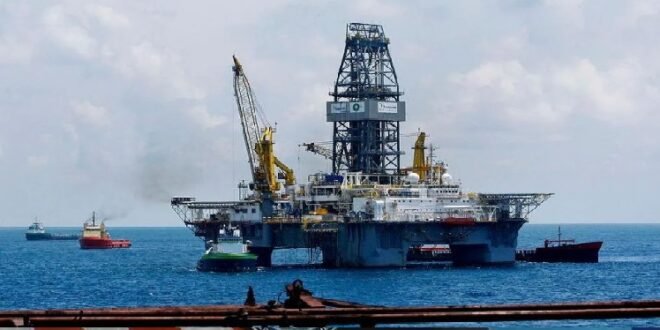
The result has been a rollercoaster of price movements on energy markets, with some of the world’s biggest oil and gas companies benefiting.
The main beneficiaries have been European oil giants, who have trading arms so have been able to gain from sharp price movements boosting profits.
BP’s profits more than doubled to $3.2bn (£2.4bn) for the first three months of the year, after what it called an “exceptional” performance in its trading division.
Shell also beat analysts’ expectations when it reported a rise in first-quarter profits to $6.92bn.
Big banks
Some of the biggest banks have also seen their profits boosted during the war in Iran.
JP Morgan’s trading arm made a record $11.6bn of revenue in the first three months of 2026, helping the bank overall to its second biggest ever quarterly profit.
 Across the rest of the “Big Six” banks which includes Bank of America, Morgan Stanley, Citigroup, Goldman Sachs and Wells Fargo, as well as JP Morgan, profits all rose substantially in the first quarter of the year.
Overall, the banks reported $47.7bn in profits for the first three months of 2026.
“Heavy trading volumes have benefited investment banks, in particular Morgan Stanley and Goldman Sachs,” Susannah Streeter, chief investment strategist at Wealth Club, said.
Defence
One of the most immediate beneficiaries in any conflict is the defence sector, according to Emily Sawicz, senior analyst at RSM UK.
“The conflict has reinforced gaps in air defence capability, accelerating investment in missile defence, counter drone systems and military hardware across Europe and the US,” she told media.
As well as highlighting the importance of defence firms, the war creates a need for governments to replenish weapons stocks, boosting demand.
BAE Systems, which makes products including F35 fighter jet components, said in a trading update on Thursday it expects strong growth in sales and profits this year.
Renewables
The conflict has also highlighted the need to diversify away from reliance on fossil fuels, Streeter said.
This has “supercharged interest in the renewable sector” even in the US, she said, where the Trump administration has popularized the “drill, baby, drill” slogan encouraging greater fossil fuel usage. Streeter said the war has led to renewable investment being seen as increasingly important to stability and resilience to shocks.
One firm that has been boosted is Florida-based NextEra Energy, which has seen shares surge by 17% so far this year as investors pile in on its mission. (Int’l News Desk)