 Pressmediaofindia
Related Articles



30-05-2026
Bureau Report
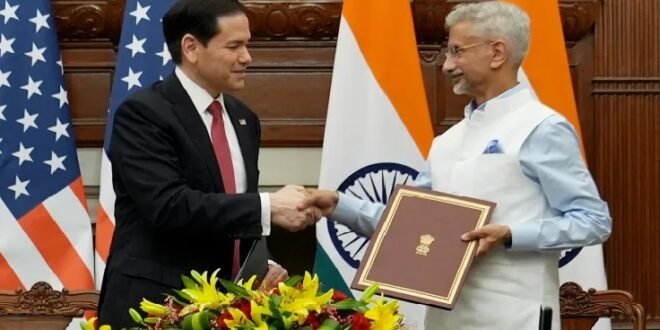
NEW DELHI: India and the United States have signed a framework agreement to secure supplies of critical minerals and rare earths, including their mining and processing, according to the Indian Ministry of External Affairs and the US embassy in India.
 Tuesday’s deal was finalized between Indian External Affairs Minister Subrahmanyam Jaishankar and US Secretary of State Marco Rubio in New Delhi during Rubio’s four-day trip to India.
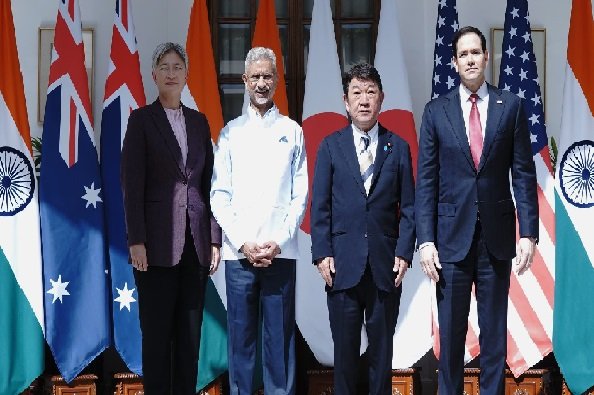
Rubio spent a few days in India before a meeting of foreign ministers from the informal Quad security forum comprising the US, Japan, Australia and India, in New Delhi on Tuesday, the final day of his trip. The Indian foreign ministry also on Tuesday separately announced a critical minerals framework among the Quad countries.
Here is more about the frameworks announced as well as more about India’s critical minerals stockpile.
What are critical minerals, and why are they significant?
Critical minerals are nonfuel minerals used to manufacture batteries, clocks, wiring, military hardware, semiconductors and other technological products. The US describes them as “essential to the economic or national security of the US” and having “a supply chain vulnerable to disruption”.
Nickel, cobalt, lithium, aluminium and zinc are among the best known critical minerals. For 12 critical minerals, the US relies entirely on imports. For 29 additional critical minerals, the US imports at least half of what it needs.
Critical minerals include 17 rare earth elements, 15 lanthanides (metallic elements) on the periodic table, scandium and yttrium. China has deposits of 12 of these. Rare earth metals have special magnetic properties and are necessary for the production of permanent magnets, used for industrial automation, electric vehicle motors, renewable energy generators, electronics and many medical devices. Rare earths are also used in key components of hardware that support semiconductors and artificial intelligence technologies.
 The processing costs for rare earths are high, and mining them involves heavy use of chemicals that generate toxic waste.
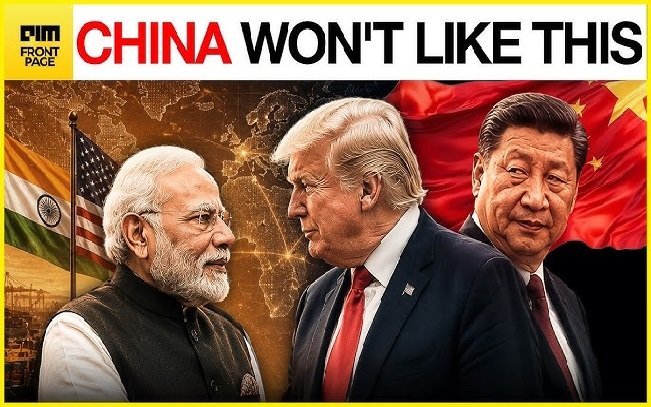
Currently, China controls most of the world’s supply of rare earth minerals. China itself is home to 60 percent of these minerals and processes 90 percent of the world’s supply.
The US and other countries rely heavily on China for these minerals, and Washington, especially under President Donald Trump, has pushed to diversify US sourcing of these minerals to reduce reliance on China.
What is the US-India critical minerals framework?
The Indian foreign ministry said the framework seeks to deepen New Delhi and Washington’s cooperation across the critical minerals and rare earths supply chain, including mining, processing, recycling and related investments.
An Indian statement referred to a critical minerals conference in Washington, DC, in February that Jaishankar attended. In the same month, India joined the US‑led Pax Silica initiative on secure semiconductor and AI supply chains.
The US embassy also said a bilateral deal was reached on Tuesday. “Through this framework, the United States and India will engage in international efforts to protect sensitive supply chains from coercive market practices and reduce our collective vulnerability to single-source monopolies,” an embassy statement said.
The statements do not expand on specific terms of the framework deal or how the cooperation would take place.