 Pressmediaofindia
Related Articles



22-05-2026
BEIJING: When Russian President Vladimir Putin lands in Beijing on Tuesday evening, his official agenda will be to join his Chinese counterpart, Xi Jinping, in commemorating a quarter-century-old agreement, the unambiguously described 2001 Treaty of Good-Neighborliness and Friendly Cooperation.
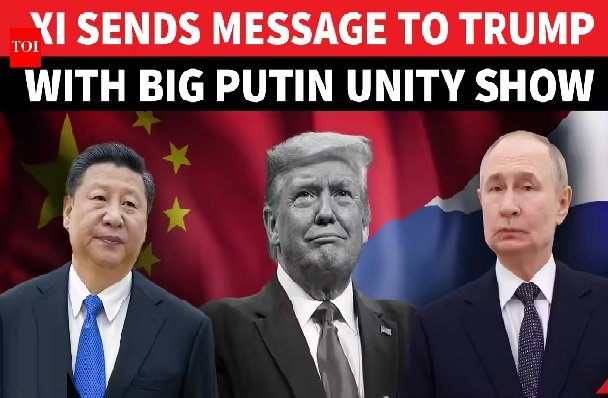 Yet, say analysts, the significance of the Xi-Putin summit, likely to be held on Wednesday morning, runs much deeper as does its timing.
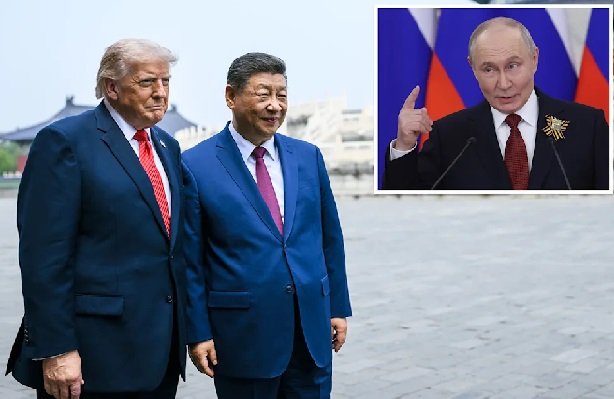
Putin’s visit was announced just a day after United States President Donald Trump’s departure from China following the American leader’s summit with Xi last week. While Trump touted broad trade deals, there is little evidence that the US and China made significant progress on the most contentious issues dividing Washington and Beijing, including Taiwan and the US-Israel war on Iran.
That, say analysts, suits Putin well, allowing him to head to Beijing confident that China has no plans to sidestep its relationship with Russia. For Beijing, meanwhile, the back-to-back visits are a flex of its growing diplomatic leverage, positioning China as a central player capable of engaging rival powers on its own terms.
United by Western sanctions and a view of Trump’s foreign policy as reckless, Putin and Xi have forged a right partnership in recent years and no major shifts are expected during the Russian president’s visit but its timing underscores how Beijing is consolidating its role at the centre of an increasingly fragmented global order, analysts say.
‘Putin needs this more than Xi’
Despite China’s posturing, no breakthroughs are expected from Putin’s visit, but rather a continuity of their strategic relationship. “I don’t think that there is going to be a major shift,” Marina Miron, a postdoctoral researcher in defence studies at King’s College London, told media.
 “It’s going to be a deepening of bilateral relations when it comes to economic cooperation, business; exchange of military technologies and so on.”
Oleg Ignatov, a senior Russia analyst at Crisis Group, echoed that assessment.
“The relationship between the two countries is strategic, they are partners, strategic partners, but they are not military allies, and I don’t expect that they will go anywhere further,” he told media.
“Russia and China’s relationships (are) very stable, very important for both countries, and there is no negative agenda in this relationship.”
Both sides are expected to advance joint projects, particularly in energy. China wants access to Russia’s energy resources “at discount”, while Russia depends on many of China’s dual-use technologies, specifically for drone production, said Miron.
Still, the meeting is more important for Putin.
“Putin needs this more than Xi. Russia is now the junior, dependent partner, following Putin’s disastrous war in Ukraine. Putin might be looking for increased military support from China,” Timothy Ash, an associate fellow at the Russia and Eurasia Programme at Chatham House, told media.
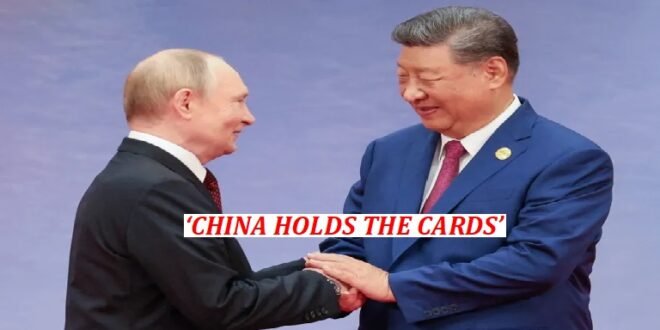
“Rather as Trump went cap in hand to Beijing, so will Putin,” he added. “China has all the cards.”
Ignatov, however, cautioned against reading the relationship through a purely hierarchical lens, stating that the countries’ conduct is because they are ultimately vying for a multipolar world.
“Both sides say that … they’re going to build a multipolar world so they don’t think there (should be) dominant powers (who) should push other countries to do something,” he said.
“That’s not how they look at the international relationships.” (Int’l Monitoring Desk)