 Pressmediaofindia
Related Articles



25-06-2026
By SJA Jafri + Bureau Report
ISLAMABAD: Pakistan has entered what its disaster authority is calling a “critical” weather window.
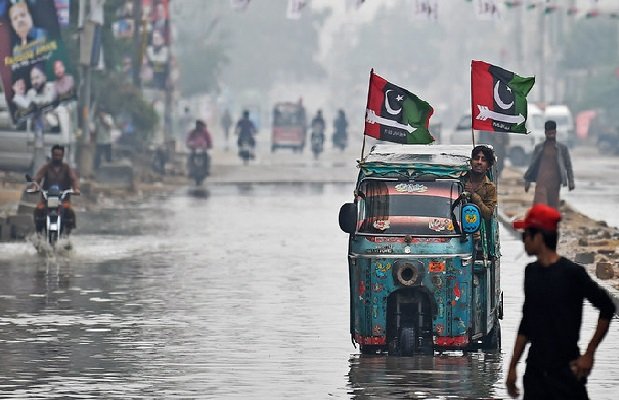 The National Disaster Management Authority (NDMA) on Sunday issued a nationwide alert, warning of thunderstorms, heavy rainfall, urban flooding and an elevated risk of Glacial Lake Outburst Floods (GLOFs) across the country’s northern regions over the next 12 to 24 hours.
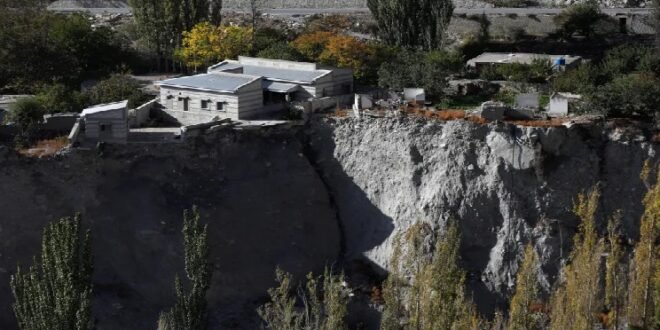
The alert identified Hunza and Skardu areas in the mountainous Gilgit-Baltistan region in the north and the Khyber Pakhtunkhwa province in the northwest among the most vulnerable areas to a possible climate disaster.
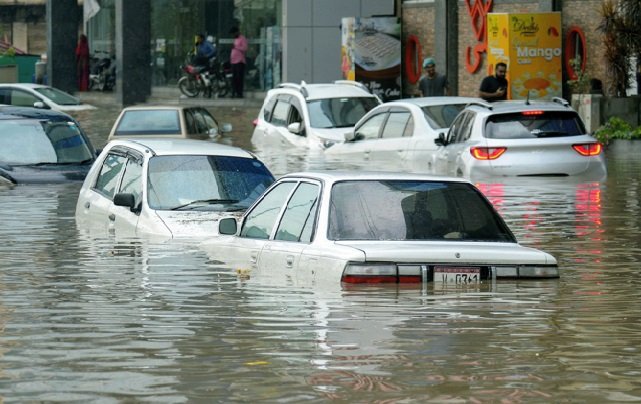
Authorities also warned of flooding in capital Islamabad and other urban areas, including Rawalpindi and its adjoining areas. Provincial and district administrations have been placed on high alert and directed to keep their drainage systems clear.
The warning came as Pakistan braces for a likely fourth consecutive year of punishing monsoon, which is expected to arrive later this month.
Melting glaciers
Last year, monsoon rains in Pakistan killed more than 1,000 people, including 275 children, and displaced three million from their homes but it was the historic floods in 2022 mainly caused by melting glaciers and submerging nearly a third of the country that put Pakistan on a global climate crisis watch.
Pakistan contributes less than 1 percent of global emissions, yet remains among the five countries most affected by climate change.
 In Gilgit-Baltistan, temperatures this year reached a record 48.5 degrees Celsius (119.3 degrees Fahrenheit), breaking a previous high set in 1971. The heat has accelerated glacial melt, swelling and bursting lakes across the ecologically sensitive region.
Pakistan is home to some 13,000 glaciers, the most in the world after the polar icecaps and global warming is fast melting them.
According to the United Nations Development Program (UNDP), melting glaciers across Pakistan’s Hindu Kush, Himalayas and Karakoram mountain ranges have formed more than 3,000 glacial lakes in Gilgit-Baltistan and Khyber Pakhtunkhwa. Of those, 33 have been assessed as vulnerable to hazardous outbursts, with more than 7.1 million people living around them at risk.
GLOFs release millions of cubic meters of water and debris within hours, destroying bridges, farms and entire communities downstream.
In partnership with the UNDP, Pakistan in 2017 launched the scaling-up of the Glacial Lake Outburst Flood Risk Reduction project, known as GLOF-II, covering 24 valleys across 15 districts in Gilgit-Baltistan and Khyber Pakhtunkhwa.
The initiative focused on early warning systems, flood protection infrastructure, and community-based disaster preparedness but Zakir Hussain, director general of the Gilgit-Baltistan Disaster Management Authority, told media that the scale of coverage under Pakistan’s early warning infrastructure is widely misunderstood.
The GLOF-II project, he said, covered only 16 selected valleys, not Gilgit-Baltistan as a whole, and within those valleys, only a limited number of sites. In many of the areas hit hardest in 2025, including Ghizer, Diamer and parts of Hunza, no early warning system existed at all.
“The problem there was the absence of coverage altogether,” Hussain told media.
“The one exception is Shishper in Hunza valley. That is the single case where an early warning system was in place but did not generate a warning despite the glacier changing its behavior.