 Pressmediaofindia
Related Articles

07-05-2026
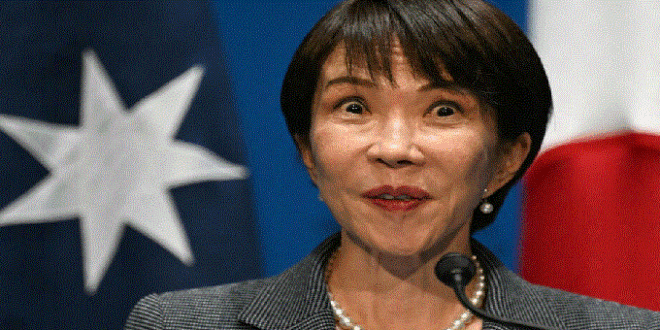
TOKYO: The global oil supply squeeze from shipping disruptions in the Strait of Hormuz during the United States-Israeli war on Iran is having an “enormous impact” across the Asia Pacific, Japan’s prime minister warns.
 Sanae Takaichi made the comments on Monday during a visit to Australia, where both countries signed agreements to boost cooperation on energy and critical minerals.
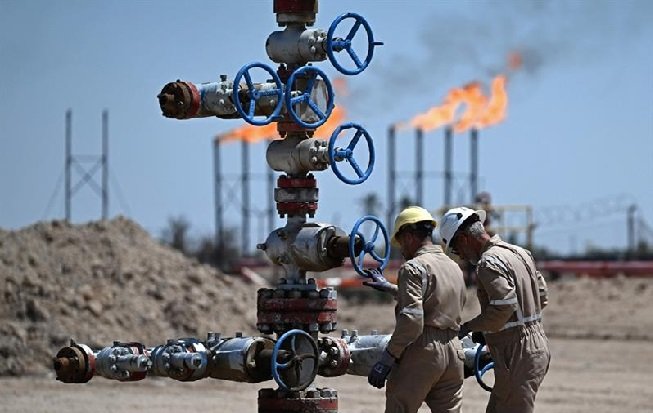
Roughly one-fifth of the world’s oil and liquefied natural gas supplies normally pass through the Strait of Hormuz, but shipping has been essentially blocked by Iran since it was attacked by the US and Israel beginning on February 28.
Eighty percent of that oil is destined for Asia, according to the International Energy Agency.
“The effective closure of the Strait of Hormuz has been inflicting enormous impact on the Indo-Pacific,” Takaichi said on Monday.
“We affirmed that Japan and Australia will closely communicate with each other in responding with a sense of urgency.”
Australia provides approximately one-third of Japan’s energy supplies and is the country’s largest market for liquefied natural gas.
Both Canberra and Tokyo have been trying to shore up energy supplies due to the Iran war. “Like Japan, we are very concerned by disruptions to the supply of liquid fuels and refined petroleum products,” Australian Prime Minister Anthony Albanese said. On the first day of Takaichi’s three-day visit to Australia, both countries issued a string of statements promising to work together on energy, the economy, defence and critical minerals.
Australia has announced plans to provide support of up to $1.3 billion Australian dollars (US$937m) to critical mineral projects with Japanese involvement, creating the potential to supply Japan with resources including gallium, nickel, graphite, rare earths and fluorite. Japan’s government said it is eager to ensure a stable supply of critical minerals, essential for semiconductors, electric vehicle batteries and weapons systems.
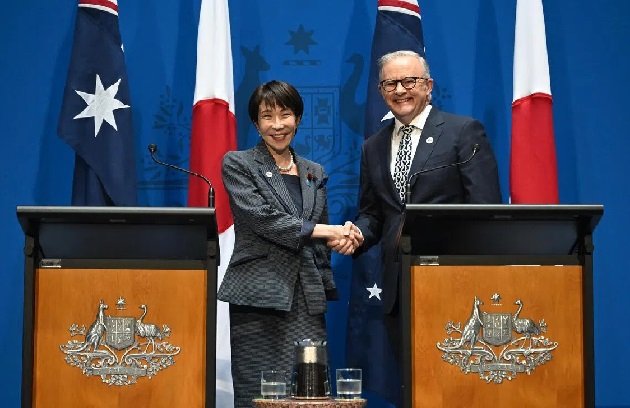 Australia and Japan, two of the US’s closest allies, have ramped up military cooperation in recent years amid shared concerns about shifts in the regional security environment, particularly China’s rising influence.
Last month, they announced a deal of $10 billion Australian dollars (US$7bn) for Japan to provide Mogami-class stealth warships to the Australian navy.
However, United States President Donald Trump has said the US will “help free up” ships stuck in the Strait of Hormuz from Monday, suggesting that his administration will break Iran’s blockade of the strategic waterway.
Trump said on Sunday that he was launching the campaign dubbed Project Freedom at the request of countries whose vessels are stranded in the strait, whom he referred to as “neutral and innocent bystanders”.
“For the good of Iran, the Middle East and the United States, we have told these Countries that we will guide their Ships safely out of these restricted Waterways, so that they can freely and ably get on with their business,” Trump said in a post on Truth Social, without specifying which countries called for Washington’s help.
“Many of these Ships are running low on food and everything else necessary for largescale crews to stay on board in a healthy and sanitary manner,” Trump said, adding that any interference in the operation would “unfortunately, have to be dealt with forcefully”.
It is unclear how the campaign, which Trump described as a humanitarian gesture, will proceed, or whether it will involve coordination with Tehran. (Int’l Monitoring Desk)