 Pressmediaofindia
Related Articles



07-05-2026
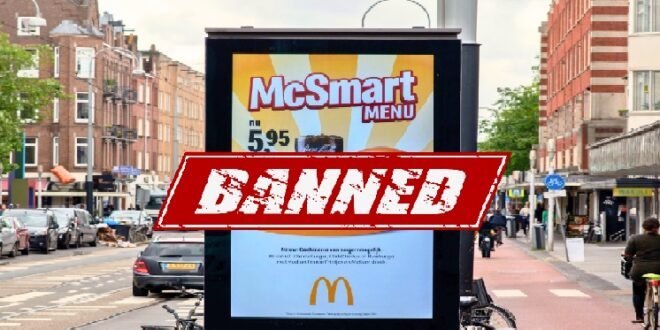
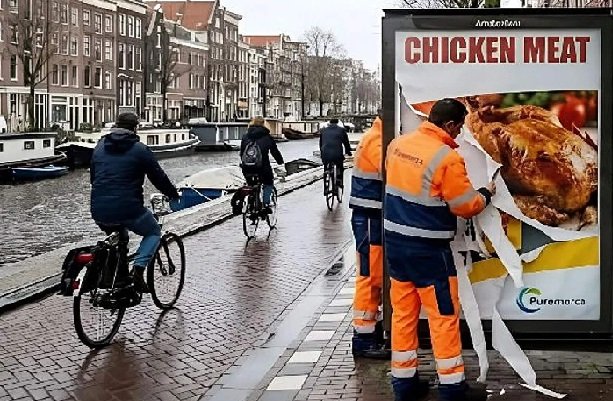
AMSTERDAM: Amsterdam has become the world’s first capital city to ban public advertisements for both meat and fossil fuel products. Since 1 May, adverts for burgers, petrol cars and airlines have been stripped from billboards, tram shelters, and metro stations.
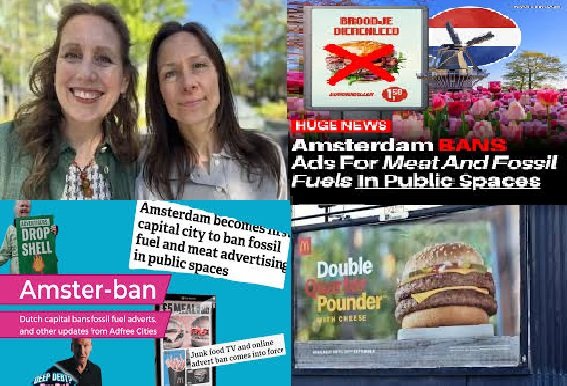 At one of the city’s busiest tram stops, adjacent to a grassy roundabout bursting with vibrant yellow daffodils and orange tulips, the poster advertising landscape has changed.
They now promote the Rijksmuseum, the national museum of the Netherlands and a piano concert. Until last week it was chicken nuggets, SUVs and low-budget holidays.
Politicians in the city say the move is about bringing Amsterdam’s streetscape into line with the local government’s own environmental targets.
These aim for the Dutch capital to become carbon neutral by 2050, and for local people to halve their meat consumption over the same period.
“The climate crisis is very urgent,” says Anneke Veenhoff from the GreenLeft Party. “I mean, if you want to be leading in climate policies and you rent out your walls to exactly the opposite, then what are you doing?
“Most people don’t understand why the municipality should make money out of renting our public space with something that we are actively having policies against.”
This view is echoed by Anke Bakker, who is Amsterdam group leader for a Dutch political party that focuses on animal rights, Party for the Animals.
She instigated the new restrictions, and rejects accusations of them being nanny state.
 “Everybody can just make their own decisions, but actually we are trying to get the big companies not to tell us all the time what we need to eat and buy,” says Bakker.
“In a way, we’re giving people more freedom because they can make their own choice, right?”
Removing that constant visual nudge, she says, both reduces impulse buying and signals that cheap meat and fossil heavy travel are no longer aspirational lifestyle choices. Meat was a relatively small slice of Amsterdam’s outdoor advertising market accounting for an estimated 0.1% of ad spend, compared with roughly 4% for fossil related products.
The advertising was instead dominated by the likes of clothing brands, movie posters, and mobile phones but politically the ban sends a message. Grouping meat with flights, cruises and petrol and diesel cars reframes it from a purely private dietary choice to a climate issue.
Unsurprisingly, the Dutch Meat Association, which represents the industry, is unhappy at the move, which it calls “an undesirable way to influence consumer behavior”. It adds that meat “delivers essential nutrients and should remain visible and accessible to consumers”.
Meanwhile, the Dutch Association of Travel Agents and Tour Operators says that the ban on advertising holidays that include air travel is a disproportionate curb on companies’ commercial freedom.
For activists like lawyer Hannah Prins and her environmental organization Advocates for the Future, which worked closely with campaign group Fossil-Free Advertising, the ban on meat advertising is a deliberate attempt to create a “tobacco moment” for high carbon food.
“Because if I look now back at like old pictures, you have Johan Cruyff,” says Prins, afamous Dutch footballer.
“He would be in advertisements for tobacco. That used to be normal. He died of lung cancer. (Int’l News Desk)