 Pressmediaofindia
Related Articles


03-07-2026
Bureau Report
NEW DELHI: For weeks now, Antu Sheikh has been going through a pile of documents stacked in a soiled plastic bag.
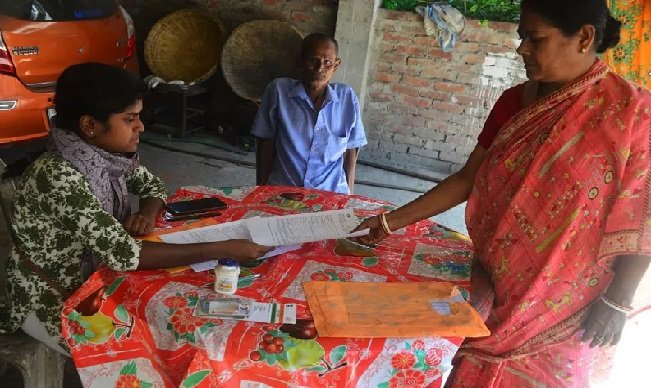 Ever since his name was deleted from the electoral rolls in India’s West Bengal state, the 40-year-old railway construction worker fears he could lose more than just his right to vote.
Sheikh is among 9 million West Bengal residents removed from the electoral rolls days before the state elections were held in April and May. Prime Minister Narendra Modi’s Hindu majoritarian Bharatiya Janata Party (BJP) came to power for the first time in the politically critical state that is home to more than 100 million people, 27 percent of them Muslim.
The controversial Special Intensive Revision (SIR), an exercise being conducted by India’s election commission across the country, was launched to identify deceased, duplicate or dubious voters. In West Bengal, a state that borders Muslim-majority Bangladesh, the SIR was defended by Modi’s government as a means to remove “infiltrators” or “illegal” Bangladeshi migrants But an analysis of the deletions by experts showed that Muslims were disproportionately affected by the SIR, especially in districts where they constituted a high percentage of the population and could sway the vote, including Murshidabad, where Sheikh lives.
Now, he fears that losing the vote was only the start of his SIR-related struggles.
Shortly after coming to power, the BJP government in West Bengal announced that those excluded from the voter list would no longer be eligible for subsidized food rations and other state-run welfare schemes.
An order issued by West Bengal’s Food and Supplies Department on June 4, and accessed by Al Jazeera, said the ration cards of people removed under the SIR will be marked inactive, as authorities began a verification drive of the beneficiaries of the Public Distribution System (PDS), a government food security scheme that serves nearly 90 million people in West Bengal.
 The government later clarified that nearly 2.3 million people, who have challenged the removal of their names from the electoral rolls in special tribunals set for the purpose, will continue to receive the welfare benefits until their appeals are heard.
Sheikh is one of them. While his case is pending before a tribunal, he has been asked by the authorities to submit more documents in order to receive his PDS benefits but as a daily-wage laborer on railway construction projects, his work needs him to move wherever contractors assign projects. His latest assignment is in the neighboring state of Assam, and he will soon need to travel there.
“I can’t stay here indefinitely waiting for paperwork and hearings,” Sheikh said. “If I don’t leave for work, I won’t earn anything.”
Sheikh, who is unmarried, lives in his village in West Bengal’s Murshidabad district with his sister and while he received subsidized rations on June 1, he fears the family may no longer get the subsidy in subsequent months. “We are still living in uncertainty.”
So is Sakeena Bano, a resident of Ramchandrapur town in West Bengal’s South 24 Parganas district. Bano, also 40, told media she had challenged the removal of her name from the voter list, but the tribunal rejected her application.
“After applying in the tribunal and providing all the necessary documents, my name was deleted without a hearing. Now they are denying us access to food and welfare,” she said.
It is not just food security that is under threat. A direct cash transfer scheme for women, which Bano, a mother of three children aged 16, 13 and 10 benefitted from, has also been linked to the SIR deletions.