 Pressmediaofindia

Related Articles


18-06-2026
BEIRUT: On Monday morning, people in Lebanon woke up to yet another ceasefire agreement. An agreement announced between the United States and Iran includes Lebanon, according to Iranian and Pakistani officials but statements from Israeli officials cast doubt over whether the war that has been ravaging southern Lebanon since 2023 is finally over.
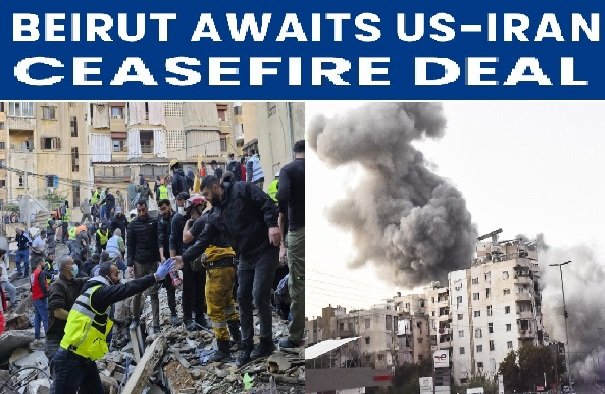 Videos on Monday showed Lebanese people returning home to areas in the south of the country, though officials warned anyone from border villages not to return until the security situation becomes clearer.
Others, however, have little to return to.
Ali Saleh, a 55-year-old from the southern village of Jwaya, has been displaced at a stadium in Beirut since early March.
“I won’t be heading back home,” he told media. “My house was hit and you know the situation financially is difficult at the moment.”
On March 2, Israel intensified its war on Lebanon for the second time in under two years. The intensification came just a few hours after the pro-Iranian Shia group Hezbollah fired six rockets at Israel, its first response to more than 10,000 Israeli violations of the 2024 ceasefire. Hezbollah launched the attack following the February 28 killing of Iran’s Supreme Leader Ayatollah Ali Khamenei in the opening salvoes of the US-Israeli war on Iran.
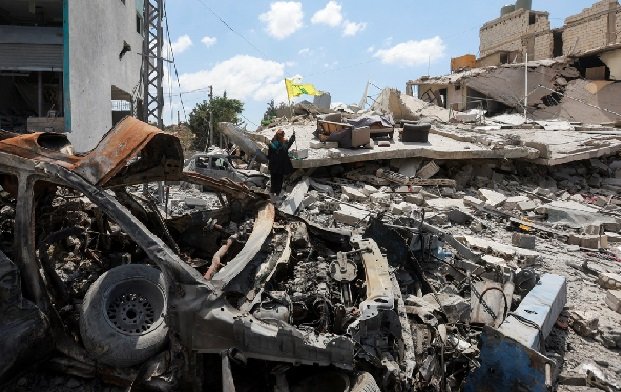
Since then, Israel has killed at least 3,783 people in Lebanon and wounded 11,699. More than 1.2 million have been displaced from the south, Beirut’s southern suburbs and villages in the Bekaa Valley. Villages have been razed by Israel’s military, which occupies large swathes of southern Lebanon.
In recent weeks, evacuation orders and widespread Israeli bombing of Tyre and Nabatieh have led to mass destruction in two of the south’s most populated areas. The Lebanese army announced on Monday that people should exercise caution when returning to their homes, while Lebanese officials said that people from border villages should not yet return home.
Pakistan’s Prime Minister, Shehbaz Sharif, said the deal between the US and Iran announced “the immediate and permanent termination of military operations on all fronts, including in Lebanon”.
 The announcement was welcomed by Lebanon’s President Joseph Aoun who has been attempting to re-impose the authority of the Lebanese state in the country. Aoun said that the Lebanese people were now looking forward to “these understandings being translated into practical steps that bring a definitive end to the cycle of violence and open the way to stability, security, recovery and reconstruction”.
Lebanon’s Parliament Speaker and close Hezbollah ally, Nabih Berri, praised the deal and various regional actors for their role in achieving it, including Pakistan, Qatar, Saudi Arabia and Egypt.
He also thanked Iran and the US for including a clause “on halting Israeli aggression against all of Lebanon, to preserve its sovereignty over its entire territory”.
Despite the trepidation, many Lebanese are already returning home.
“People started returning to their villages and areas and now they are waiting for the full implementation of the ceasefire and the withdrawal of the Israelis from the areas they occupied,” Qassem Kassir, a Lebanese political analyst told media. “People cannot get a clear read on the situation just yet.”
This also is not the first time a ceasefire has been declared between Lebanon and Israel. The November 2024 agreement called for a withdrawal of Israeli troops from Lebanese land and for a cessation of hostilities, while Hezbollah was required to withdraw its armed presence north of the Litani River. (Int’l News Desk)