 Pressmediaofindia
Related Articles



21-05-2026
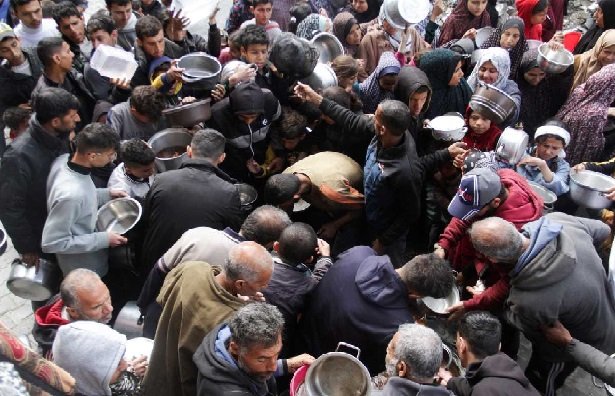
GAZA STRIP: Standing in a long queue under the beating sun, 14-year-old Muhammed al-Roubi was waiting to buy bread but there was a strong chance that, despite his patience, he would not get any.
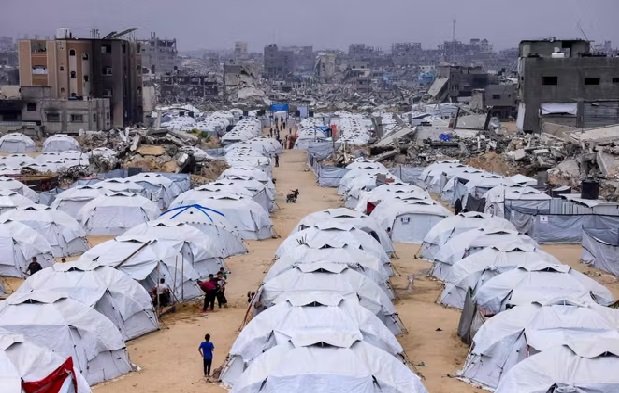 A flour and fuel shortage in recent weeks, brought on by Israeli restrictions on imports into Gaza, means that bakeries cannot produce as much bread as Palestinians in Gaza need.
Palestinians, the vast majority of them living displaced as a result of Israel’s genocidal war on the territory, are instead forced to wait for hours in queues outside of the few remaining bakeries to get subsidized bread packages.
“My uncle’s family and ours live in the same house, and we share food, so we need a large amount of bread every day,” said al-Roubi, who had come to the bakery with his cousin before separating and joining different queues.
“That is why my cousin and I each stand in a separate line,” he explained. “Some days, we return empty-handed because the bread runs out and there are too many people.” The growing queues at the few remaining distribution points reflect the current decline in production levels, while demand continues to rise, driving increased prices and the growth of a black market.
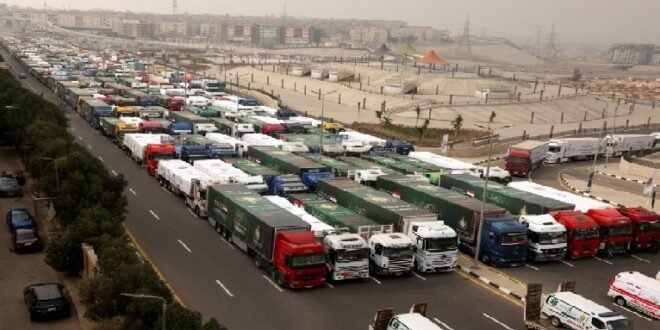
Ismail al-Thawabta, the head of Gaza’s Government Media Office, said last month that the territory needs about 450 tons of flour per day, but that only 200 tons were coming in. Recent shortages stem from Israel’s decision to close the crossings into Gaza on February 28, when Israel launched a joint war with the United States on Iran. The crossings partially reopened after a few days, but traffic through them has been limited.
Israel ultimately decides how much will be let through, despite last year’s “ceasefire” with Hamas stipulating that Israel must significantly ease the restrictions.
According to Israeli media reports, the US-led Board of Peace, tasked with overseeing the administration of Gaza, will not hold Israel accountable for implementing its side of the “ceasefire” unless Hamas agrees to disarm.
 More than one-third of Gaza’s population relies on subsidized bread from World Food Program (WFP)-supplied bakeries, where a bundle, containing about eight or nine pitas, is sold at a capped price of about $1. About 20 percent of bread from WFP-supported bakeries is also handed out for free at meal kitchens but the WFP has been forced to reduce flour supplies to bakeries because of Israel’s import restrictions, meaning that many Palestinians who relied on the bakeries have had to look elsewhere.
One of them is 72-year-old Maysar Abu Rekab, a widow who supports three family members with disabilities.
“We used to receive bread through the WFP distribution points, but now it has become very difficult to get it, except by waiting in long lines, and no one in our family is able to stand in them,” she told media.
“There is no home in Gaza that does not depend on bread as a basic food, especially with the shortage of other food items,” she added but “a bread package now costs between 10 and 15 shekels ($3.45 and $5.17), with the average household needing two packages per day. This creates a heavy burden, especially with low incomes and rising flour prices.”
Multiple crises
Gaza is facing multiple crises alongside the bread shortage, including a sharp decrease in cooking gas supplies, which were already limited. The provision of cooking gas, overseen by Gaza’s Ministry of Economy through gas distributors and stations, has slowed from once every six weeks to once every three months due to the limited quantities Israel allows into the enclave. (Int’l News Desk)