 Pressmediaofindia
Related Articles


29-05-2026
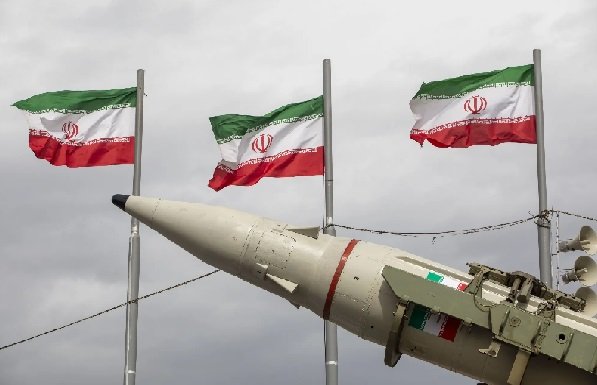
TEHRAN: Iran’s Islamic Revolutionary Guard Corps (IRGC) claimed in a statement that its forces downed an MQ-9 Reaper drone and opened fire on an F-35 fighter jet and another drone that that had entered Iranian airspace.
In a statement, the IRGC did not reveal when the incidents took place. Last night, the US military carried out what it called “self-defense strikes” targeting Iranian missile launch sites and boats around the Strait of Hormuz.
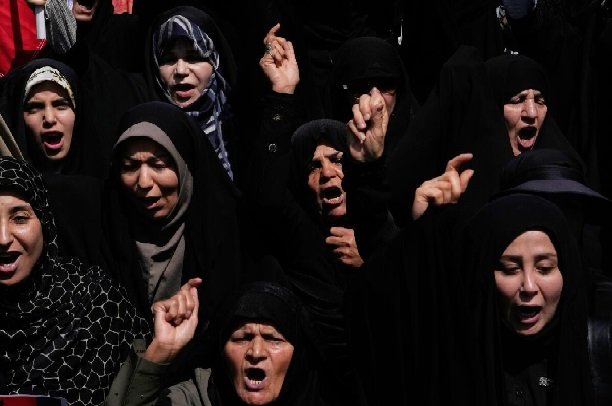 The IRGC warned in the statement that it will retaliate against any ceasefire violations. “The Islamic Revolutionary Guard Corps warns against any violation of the ceasefire by the aggressive US military, and considers its right to reciprocal response to be legitimate and certain,” a statement by the group said according to Iranian state-affiliated media. American and Iranian forces have previously exchanged fire during the ceasefire, and it’s unclear how the attacks will affect the truce. Restoring Iran’s internet exposes regime’s deep power struggles
Iran’s President Masoud Pezeshkian has ordered authorities to begin restoring internet access for the population, ending the longest blackout in any country’s history but the delayed decision underscores how deeply the Islamic Republic fears unrestricted information access for its citizens.
Iran’s internet governance is highly centralized, with multiple layers of state institutions directly accountable to the supreme leader. At the top is the Supreme Council for Cyberspace, a US-sanctioned body established by decree from Supreme Leader Ali Khamenei in 2012 with 27-members, including some of the regimes most influential figures?
Members like the intelligence minister, the chief justice and senior religious clerics, all of whom hold competing visions of how Iranians should access the internet form the council. Among them are hardline members who once likened Instagram to US-F35 fighter jets, and others who continue to obstruct the restoration of full internet access, fearing the population’s exposure to the outside world.
To bypass that deadlock, Iran’s moderate reformist president formed a parallel task force this month, only to face accusations of attempting to overrule the supreme leader’s council. Even as news of his order to restore internet access emerged last night, it remains unclear whether the directive will be fully enforced.
 For now, internet inequality remains deeply entrenched in Iran. Smuggled SpaceX Starlink terminals give a select few direct, unfiltered access to the outside world, expensive VPNs allow a privileged minority to bypass restrictions and a small group of government-approved users receive official access to the open internet.
For the vast majority of Iranians, however, access remains in limbo as they await the decision of a politically divided regime on how they will be permitted to use the internet.
Iran is “stronger today than at start of war”
The commander of Iran’s Islamic Revolutionary Guard Corps (IRGC) of Greater Tehran claimed Iran is stronger now than it was on the first day of the war with the US and Israel, according to a report by Iran’s semi-official Fars News Agency on Sunday. Brig. Gen. Hassan Hassanzadeh said US officials “know very well that Iran is stronger today than on the first day of the war” and warned that if Washington continues what he described as a path of threats and pressure, it would again face defeat and “heavy, fatal, and regrettable blows.”
The top military official responsible for safeguarding Iran’s capital, protecting its regime institutions and suppressing local political dissent said that Iran’s armed forces “have not only not been weakened but have become stronger, more prepared and better equipped than at the beginning of the war,” as cited by Fars, which is closely affiliated with the IRGC. (Int’l Monitoring Desk)