 Pressmediaofindia
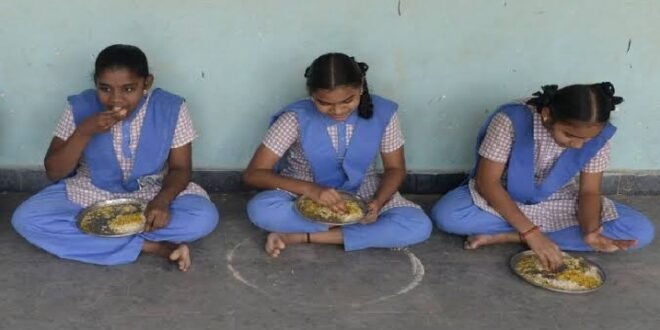
Related Articles



06-07-2026
Bureau Report
NEW DELHI: The government of the eastern Indian state of West Bengal has decided to drop eggs from a school lunch scheme that spans all government-run schools, stirring up debate about politics and nutrition.
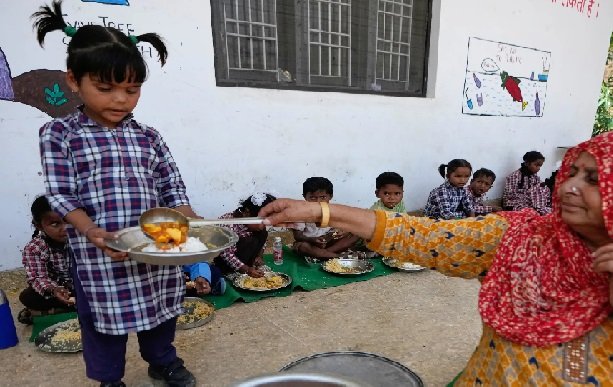 The government, led by Indian PM Narendra Modi’s Bharatiya Janata Party (BJP), has handed the contract for what is known as the midday meal program to the Hindu religious organization, the International Society for Krishna Consciousness (ISKCON), commonly known as the Hare Krishna movement. The organization has in turn announced a menu that strips the meals of eggs.
The Hindu majoritarian BJP, which rules nationally, came to power in West Bengal, a state of more than 100 million people, for the first time in May.
What was announced?
The BJP government of West Bengal announced last week that it was handing over the food contract for the midday meal scheme to ISKCON.
ISKCON, which offers a strictly vegetarian menu like many so-called “upper-caste” Indian Hindus, the organization treats eggs on a par with meat has argued that it will ensure that it serves high-quality and nutritious lunches to the nearly 12 million pupils in West Bengal who consume midday meals.
An ISKCON spokesperson who has since been sent on enforced leave for speaking to the media, told reporters last week that while eggs are packed with protein, an equal weight of soya or cottage cheese held even more protein.
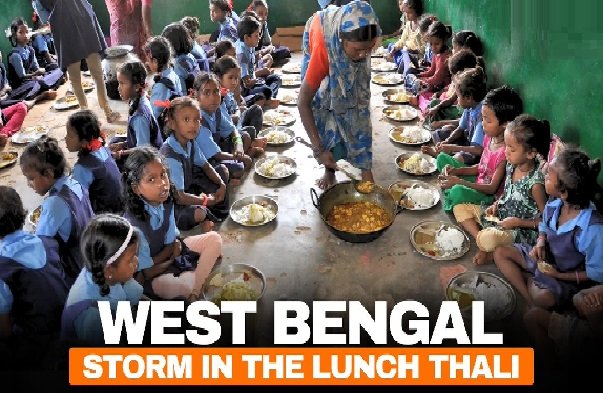 What is the midday meal and who normally supplies these lunches?
Pioneered by the southern state of Tamil Nadu in the 1960s, the midday meal became a national policy in 1995, and has since been credited by researchers for dramatically helping India raise school participation.
While India still suffers from a high dropout rate especially among girls as they enter their teenage years enrolment itself is now almost at 100 percent in most states.
Nationally, 120 million children eat midday meals every school day, making it the largest such program in the world.
In 2021, the Modi government renamed the scheme to link it directly to the prime minister. It is now officially called PM Poshan, “poshan” means nutrition in Hindi though it is still widely known as the midday meal scheme.
Traditionally, nutritionists, educationists and public health experts have advocated for serving hot, freshly prepared meals cooked locally near the schools they are meant to serve. That ensures that the food is fresh, involves the local community which has the biggest stake in ensuring healthy meals and encourages the use of local ingredients that students are familiar with.
In recent years, some states have allowed privately run trusts and nonprofits to also supply midday meals to some schools. ISKCON, through its nonprofit Akshaya Patra, supplies school lunches in parts of more than 10 states but before the West Bengal government’s decision, no major state had handed over the entire operation of the midday meal scheme to ISKCON.
Roughly half of the country’s states and federally governed territories offer eggs to students as part of their midday meals. These include the states of Kerala, Tamil Nadu, Karnataka, Andhra Pradesh, Telangana, Odisha, Assam, Bihar, Tripura, Uttarakhand, Himachal Pradesh, Mizoram and Meghalaya, and the federally governed regions of Puducherry, and Jammu and Kashmir.
Some states like West Bengal until recently offer eggs once a week, others more frequently, and some, like Tamil Nadu, have eggs on the menu every school day but West Bengal’s latest move makes it only the latest BJP-ruled state to try to move away from eggs.