 Pressmediaofindia
Related Articles


17-05-2026
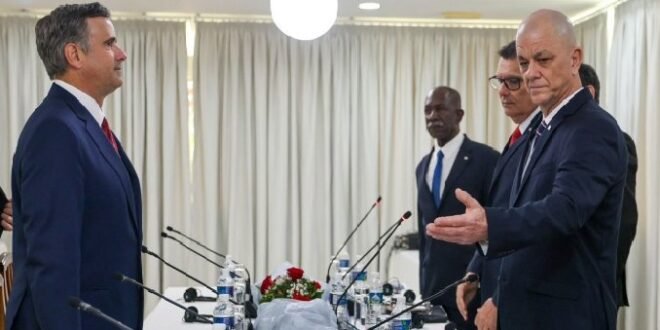
HAVANA: CIA director John Ratcliffe has met his Cuban counterpart at the interior ministry in Havana, after the US renewed an offer of $100m (£74m) of aid to ease the effects of its oil blockade.
 A Cuban statement said the meeting was an attempt to improve dialogue and American officials were told Havana was not a threat to US national security.
A CIA official told media, that the US is “prepared to seriously engage on economic and security issues, but only if Cuba makes fundamental changes”.
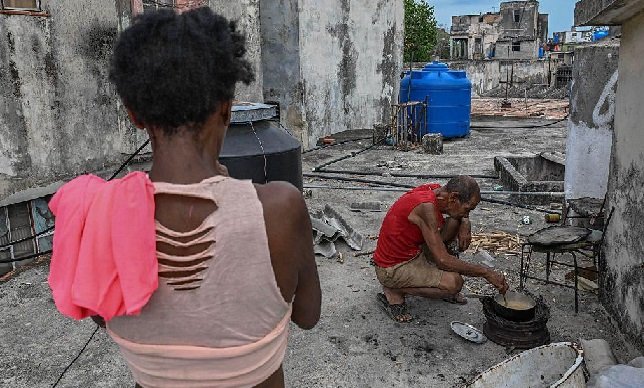
Fuel shortages exacerbated by the US oil blockade on the country have left hospitals unable to function normally and forced schools and government offices to close.
Separately, Cuban president Miguel Diaz-Canel said that instead of offering aid, conditions could be eased faster if the US lifted its blockade.
Attending the meeting was Raul Rodriguez Castro, the grandson of former President Raúl Castro, Interior Minister Lazaro Alvarez Casas, and the head of Cuba’s intelligence services, the CIA official told media.
The delegation met “to personally deliver President Trump’s message”, the CIA official said. “During the meeting, Director Ratcliffe and Cuban officials discussed intelligence cooperation, economic stability, and security issues, all against the backdrop that Cuba can no longer be a safe haven for adversaries in the Western Hemisphere,” the official added. The Cuban statement said: “Both sides also underscored their interest in developing bilateral cooperation between law enforcement agencies in the interest of the security of both countries, as well as regional and international security.” Cuba and the US acknowledged earlier this year they were in talks, but negotiations appeared to stall as the oil blockade wore on.
Cuba has in the past relied on Venezuela and Mexico to supply oil to its refinery system. However, the two countries have largely cut off supplies since US President Donald Trump threatened tariffs on countries that send fuel to Cuba.
 Earlier on Thursday, Foreign Minister Bruno Rodríguez said Cuba was “ready to hear the details of the US aid proposal and how it would be implemented”.
On Wednesday, the US state department said it was renewing an offer to “provide generous assistance to the Cuban people”.
Last week, US Secretary of State Marco Rubio had said that Havana had rejected a previous US offer of humanitarian aid worth $100m (£74m), a claim Cuba denied.
In its statement, the US state department repeated its offer but made it clear that the aid would have to be distributed “in coordination with the Catholic Church and other reliable independent humanitarian organizations”, bypassing the Cuban government.
It added that the decision now rested with the Cuban regime “to accept our offer of assistance or deny critical life-saving aid and ultimately be accountable to the Cuban people for standing in the way of critical assistance”.
In his response, Cuban Foreign Minister Rodríguez said it was unclear whether the US aid offer would be in cash or in-kind assistance.
He added that “the Cuban government does not, as a matter of practice, reject foreign aid offered in good faith and with genuine aims of cooperation, whether bilateral or multilateral”. He added that the best way the US could help Cuba would be to “de-escalate energy, economic, commercial and financial blockade measures, which have intensified as never before in recent months”.
Separately, media has reported on the US preparing to indict former President Raul Castro and his brother Fidel in connection with the downing of planes 30 years ago, according to US officials knowledgeable on the matter.
The potential indictment concerns Cuba’s 1996 deadly shooting down of a plane flown by the humanitarian group Brothers to the Rescue over international waters. (Int’l News Desk)