 Pressmediaofindia
Related Articles



14-07-2026
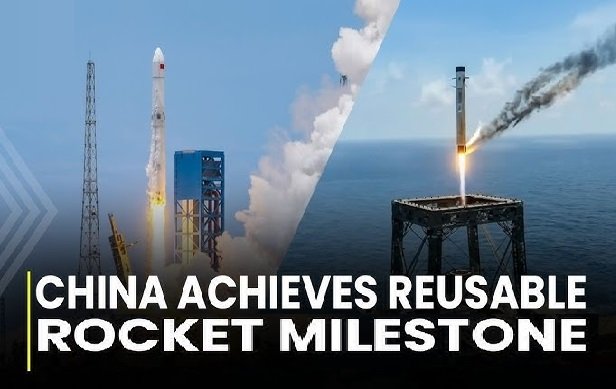
BEIJING: China has recovered the first stage of an orbital rocket for reuse for the first time, joining the United States as the only countries to have pulled off the feat.
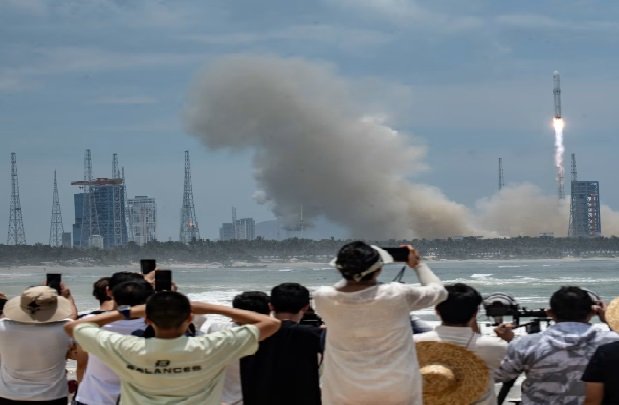 China Aerospace Science and Technology Corporation (CASC) said Friday it successfully recovered the first stage of its Long March-10B rocket after launch using a sea-based recovery system.
The 63-meter (207-foot)-tall Long March-10B lifted off at around 12:15pm Beijing time (0415 GMT) and successfully placed its payload into orbit.
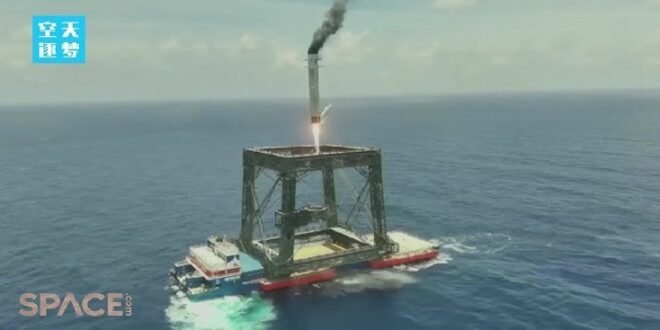
About six minutes after separating from the upper stage, the first-stage booster made a controlled descent before being caught by a net aboard an offshore recovery vessel. Both the launch and recovery succeeded.
A growing global race
This marks China’s entry into the small club of nations capable of recovering orbital-class rocket boosters for potential reuse, a technique pioneered and refined by US Company SpaceX with its Falcon 9 rocket.
SpaceX achieved the first successful vertical landing of an orbital booster on land in December 2015 and has since landed hundreds, dramatically lowering launch costs by flying the same hardware multiple times.
Instead of landing legs like SpaceX’s Falcon 9, China’s Long March-10B first stage was caught mid-air by a net on the “Linghangzhe” recovery ship. That makes China only the second country in the world to achieve a controlled orbital-class booster recovery and the first to do it with a net rather than landing legs but the world’s two largest economies are not the only ones in this contest.
Japan’s space agency, JAXA, is set to test-launch its own prototype reusable rocket on Saturday.
 US-New Zealand Company Rocket Lab is already flying and actively recovering its small Electron rocket boosters by splashing them down in the ocean to refurbish them. The Indian Space Research Organization (ISRO) is actively developing its Next Generation Launch Vehicle (NGLV), designed specifically as a reusable rocket for the global market.
In Europe, the European Space Agency and ArianeGroup have not yet launched the Themis reusable rocket prototype, as the vehicle is currently undergoing pad-testing procedures in preparation for its first low-altitude flight.
Russia is in the early engineering and design phase for the Amur-SPG, a planned methane-fueled rocket meant to copy SpaceX’s vertical landing method. However its first prototype flight has been delayed until at least 2030.
The first stage is typically the most expensive part of a rocket.
For decades, launch vehicles were designed to be used only once before falling into the ocean or burning up in the atmosphere. Recovering and flying the same booster again spreads manufacturing costs across multiple missions, potentially lowering launch costs while allowing operators to launch more frequently.
SpaceX changed the economics of spaceflight when it landed a Falcon 9 first-stage booster for the first time. Since then, the company has made booster recovery routine, with some first stages flying more than 20 missions. Blue Origin has repeatedly reused its New Shepard suborbital rocket.
Years in the making
For years, China relied on expendable Long March rockets while focusing on building its Tiangong space station, carrying out lunar and Mars exploration missions, and expanding its satellite launch capabilities.
As demand for launches accelerated with the growth of commercial satellites and planned broadband constellations, Chinese engineers increasingly shifted their focus toward reusable systems. (Int’l News Desk)