 Pressmediaofindia
Related Articles
19-04-2026
By SJA Jafri
ISLAMABAD/ TEHRAN/ WASHINGTON: Standing on the South Lawn of the White House before boarding his helicopter for Las Vegas on Thursday, United States President Donald Trump offered his most optimistic assessment yet of the war with Iran.
 “We’re very close to making a deal with Iran,” he told reporters. “They’ve totally agreed to that (no nuclear weapons). They’ve agreed to almost everything, so maybe if they can get to the table, there’s a difference.”
He went further, saying Iran had agreed to hand over its stockpile of enriched uranium, material that, if further enriched, can be used to build a nuclear weapon.
“They’ve agreed to give us back the nuclear dust that’s way underground because of the attack we made with the B-2 bombers,” he said, referring to US strikes in June last year.
A deal, he added, could come “over the weekend”. Trump said he would consider travelling to Islamabad himself if an agreement was signed there. “If the deal is signed in Islamabad, I might go. They want me to go.”
Iran’s Ministry of Foreign Affairs presented a different picture. Spokesperson Esmaeil Baghaei confirmed that messages were being exchanged through Pakistan, but was unequivocal on enrichment.
Iran, he said, “based on its needs, must be able to continue enrichment”. No Iranian official has confirmed agreeing to surrender the country’s enriched uranium stockpile. Tehran’s public position, that enrichment is a sovereign right, remains unchanged.
Asif Durrani, a former Pakistani diplomat who served as Islamabad’s ambassador to Tehran from 2016 to 2018, said framing the situation as a gap between the two sides was misleading.
 “There are no gaps, really. If Trump has read the NPT, he would know that every country has the right to access nuclear technology for peaceful purposes,” he told media. “Iran has said multiple times that it does not want a weapon. What it wants is civil nuclear use, within the framework of both the NPT and the JCPOA.”
The NPT, or Treaty on the Non-Proliferation of Nuclear Weapons, aims to prevent the spread of nuclear weapons while promoting peaceful nuclear energy and disarmament.
The JCPOA, or Joint Comprehensive Plan of Action, was the 2015 agreement between Iran and six world powers that capped Tehran’s uranium enrichment and placed its facilities under international supervision in exchange for sanctions relief.
The United States withdrew from the deal in 2018 during Trump’s first term, re-imposing sanctions and setting in motion the gradual erosion of its limits on Iran’s nuclear program.
Seyed Mojtaba Jalalzadeh, an international relations analyst, said the reality was more complex than public statements suggest.
“We should avoid simplistic binaries such as ‘one side is lying’,” he told media.
“The gap visible between Trump’s remarks and the position of Iran’s foreign ministry is more a reflection of the complex, multilayered, and still unfinished nature of the negotiations.” When Trump speaks of “total agreement”, Jalalzadeh said. “He is most likely offering the most maximalist possible reading of the negotiating process.”
It remains unclear whether Trump’s remarks reflect genuine backchannel progress or are a pressure tactic in advance of the April 22 ceasefire deadline, but Trump and Iran’s descriptions paint completely different pictures of the same negotiations.
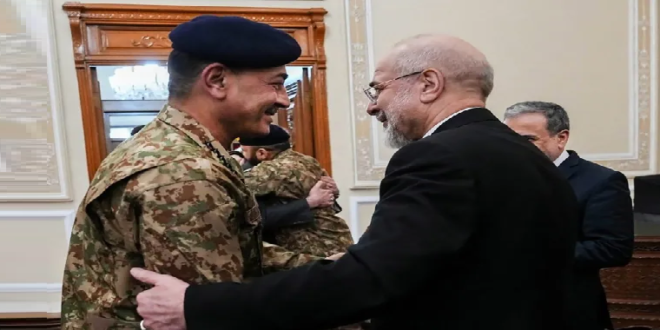
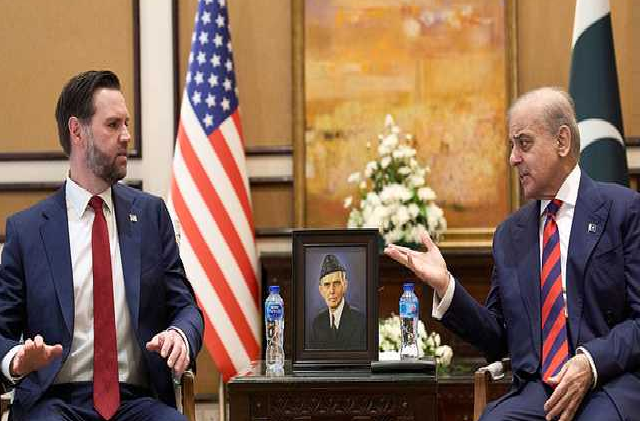
The most active diplomacy on Thursday ran through Tehran, where Pakistan’s army chief, Field Marshal Asim Munir, held a series of high-level meetings.