 Pressmediaofindia
Related Articles



20-04-2026
SYDNEY: Australia and Japan signed contracts on Saturday launching their landmark AU$10 billion ($7 billion) deal to supply Australia with warships, Tokyo’s most consequential military sale since ending a military export ban in 2014.
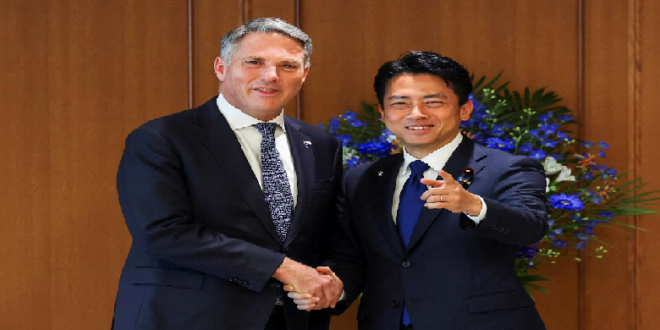
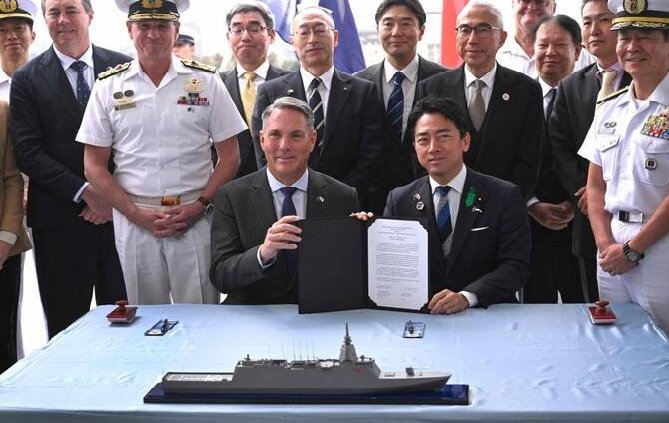 Defence Ministers Richard Marles and Shinjiro Koizumi signed a memorandum “reaffirming the Australian and Japanese governments’ shared commitment to the successful delivery” of the warships, Marles said in a statement.
The deal struck in August anchors Japan’s push away from its postwar pacifism to forge security ties beyond its alliance with the US to counter China.
Mitsubishi Heavy Industries is to supply the Royal Australian Navy with three upgraded Mogami-class multi-role frigates built in Japan from 2029. Eight more frigates will be built in Australia.
Japan’s Defence Ministry posted on social media that Koizumi and Marles welcomed the “conclusion of contracts for General Purpose Frigates, and confirmed to further strengthen bilateral defense ties” in the signing in Melbourne.
Contracts were signed for the first three frigates, to be built in Japan, before there is a “transition to an onshore build” at the Henderson shipyard near Perth in Western Australia, Marles said.
In August, last year, Japan clinched a landmark A$10 billion ($6.5 billion) deal on to build warships for Australia, marking Tokyo’s most consequential defence sale since ending a military export ban in 2014 as it steps away from postwar pacifism to counter China. Under the agreement, Mitsubishi Heavy Industries will supply the Royal Australian Navy with three, upgraded Mogami-class multi-role frigates built in Japan from 2029. Eight more frigates will be built in Australia.
Designed to hunt submarines, strike surface ships and provide air defence, the highly automated warships can be operated by just 90 sailors, half the crew of Australia’s aging Anzac-class frigates.
 Australia plans to deploy the ships to defend critical maritime trade routes and its northern approaches in the Indian and Pacific Oceans, where China’s military footprint is expanding.
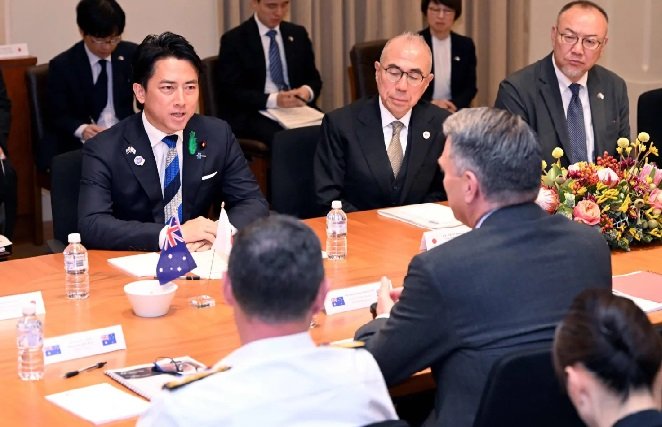
“It’s going to be really important in terms of giving our navy the capability to project, and impactful projection is at the heart of the strategic challenge,” Australian Deputy Prime Minister Richard Marles said at a briefing.
The Mogami, emblematic of a global shift toward versatile modular warships, offers more firepower and a 4,000 nautical miles more range than the current fleet.
“It takes our general purpose frigates from being able to fire 32 air defence missiles to 128,” including “the most advanced”, defence industry minister Pat Conroy said at the briefing with Marles.
The deal also anchors Japan’s push to forge security ties beyond its alliance with the US to counter China. The defence industry partnership “makes it harder for China to play Japan and Australia off against each other and sends a concerted signal to Beijing that both countries are willing to make their quasi-alliance a functioning reality” said Euan Graham, a senior analyst for defence strategy at the Australian Strategic Policy Institute.
The successful frigate bid eases the sting of 2016, when Australia rejected a Japanese submarine program, also led by MHI, in favour of a French design. Canberra scrapped that project in 2023, opting instead to build nuclear-powered submarines with the United States and Britain under the AUKUS pact.
“We took that lesson to heart. The Australian government recognized not only the technical strengths of our ships but also the unified commitment of both government and industry,” Japan’s Minister of Defence Gen Nakatani said at a briefing in Tokyo. (Int’l Monitoring Desk)