 Pressmediaofindia
Related Articles
No Further Talks Planned as Coalition Deadlock Continues Ahead of December 6 Deadline
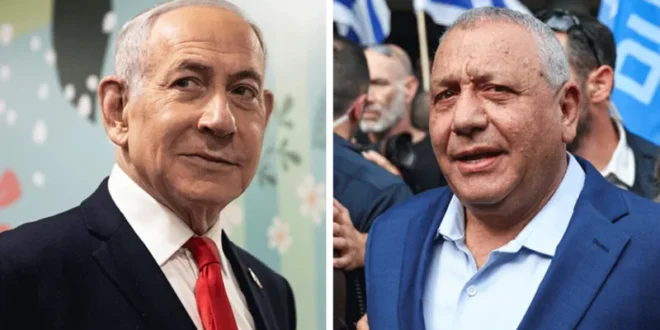
Jerusalem, November 30 (Agencyes): Efforts to resolve Israel’s political deadlock through the formation of a national unity government have suffered a setback after caretaker Prime Minister Benjamin Netanyahu and opposition leader Gadi Eisenkot failed to bridge their substantial differences during talks held on Sunday.
The meeting between the two rival leaders was aimed at exploring the possibility of forming a broad-based national unity government following last month’s parliamentary elections. However, despite what both sides described as businesslike discussions, Hebrew media reports indicated that significant disagreements remained unresolved. No further meetings between their negotiating teams are currently planned.
A joint statement issued by Netanyahu’s right-wing Likud Party and Eisenkot’s centrist Yashar Party confirmed that the leaders discussed the possibility of establishing a national unity administration.
According to the election results, Netanyahu’s political bloc secured 53 seats, while Eisenkot’s four-party opposition alliance won 48 seats in the 120-member Knesset. Neither bloc has secured the 61 seats required for a parliamentary majority.
Following Sunday’s unsuccessful meeting, Eisenkot has decided to continue negotiations with parties already aligned with his coalition while keeping the possibility open for Likud to join at a later stage, according to reports published by Haaretz.
Eisenkot faces a December 6 deadline to complete the process of forming a government.
Netanyahu Offers Rotating Prime Ministership
Before Sunday’s meeting, Netanyahu proposed forming a national unity government with a rotating prime ministership, suggesting that Eisenkot could initially serve as prime minister while he himself would take the position of alternate prime minister.
In a post on X on Saturday, Netanyahu said his responsibility as a leader required him to set aside political considerations, including the principle that the leader of the largest party should head the government.
He stated that he was prepared to allow Eisenkot to become prime minister first, although his proposal did not specify the duration of Eisenkot’s initial tenure.
Responding to the offer, former army chief Eisenkot invited Netanyahu to participate in genuine and accelerated negotiations. However, he had earlier accused Likud of deliberately delaying coalition discussions in an attempt to force another election.
Eisenkot also indicated that he was willing to assess Likud’s intentions within 24 hours if the party demonstrated a genuine commitment to national unity.
Arab Parties Hold Potentially Decisive Position
The formation of a new government has become particularly complicated because of disagreements over cooperation with Arab-led political parties and difficulties in reaching an understanding with ultra-Orthodox groups.
In the October 27 election, two Arab-led alliances, the United Arab List and the Joint List, together secured 19 seats following increased participation by Arab voters.
Their combined parliamentary strength could potentially play a decisive role in determining which political bloc forms the next government. However, nearly all Jewish political parties had pledged before the election not to cooperate with Arab-led parties in forming a government.
President Isaac Herzog consulted political parties following the election and subsequently assigned Eisenkot the responsibility of forming a government within 28 days.
Although Eisenkot has secured coalition agreements with two parties, he continues to face difficulties in assembling the required parliamentary majority.
Political Uncertainty Continues
Netanyahu has justified his unity government proposal by referring to what he described as the magnitude of the existential danger facing Israel and the need for a government capable of responding to national security challenges.
Israel’s political system has historically depended on coalition governments, as no single political party has ever secured an outright parliamentary majority.
The country experienced particularly prolonged political instability between 2019 and 2022, when five separate elections were held amid repeated failures by Netanyahu and his political opponents to reach workable coalition agreements.
With the December 6 deadline approaching and negotiations remaining uncertain, Israel faces another potentially prolonged period of political uncertainty.