 Pressmediaofindia
Related Articles



11-05-2026
PREAH VIHEAR/ SIEM: When asked how she spends her day, 11-year-old Sokna rattled off a list of chores.
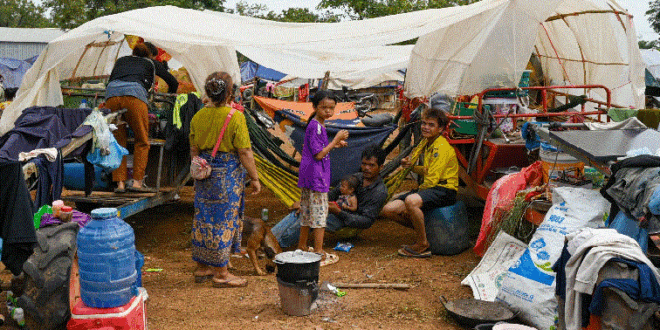
She first fetches water, then washes dishes and sweeps the leaves and dust from around the blue tarpaulin tent her family now calls home, in the grounds of a Buddhist pagoda in northwestern Cambodia.
 Sokna and her sister have stopped attending school, their mother Puth Reen said, since moving to this camp for people displaced by the recent rounds of fighting between Thailand and Cambodia.
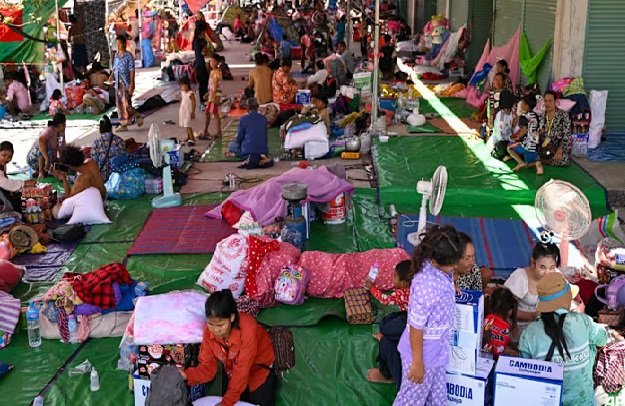
The two sisters are among more than 34,440 people who remain in displacement camps in Cambodia 11,355 of whom are children as of this month, according to the country’s Ministry of Interior.
“I tried to tell them to go to school but they don’t go,” Puth Reen told media, explaining how precarious life had become since returning to live in Cambodia after fleeing neighboring Thailand, where she had worked for many years, as the fighting started. Like Puth Reen and her family, the future looks murky for the tens of thousands of Cambodians including many schoolchildren who are still in displacement camps, and their lives remain disrupted months after the last outbreak of fighting between Thailand and Cambodia.
Forced to flee their homes in areas where local troops are now stationed and on high alert, or in areas occupied by opposing Thai forces, Cambodia’s internally displaced say they are surviving off aid donations, while those more fortunate are transitioning from emergency tents into wooden stilted houses provided by the Cambodian government but with tension still evident between the leadership in Bangkok and Phnom Penh, the tenuous ceasefire along the Thai-Cambodia border means life cannot yet return to normality.
Some areas on the Cambodian border, such as the villages of Chouk Chey and Prey Chan in Banteay Meanchey province, have become rallying points for nationalists who post on social media about the Thai occupation of Cambodian territory. Their anger is directed at the large shipping containers and barbed wire that Thai forces have used to block access to villages once inhabited by Cambodians and occupied during fighting.
 The Thai military-installed containers now form a sort of new frontier between the two countries. The Cambodian military has also prevented people, such as local farmer Sun Reth, 67, from returning to their homes in front-line areas, which are still highly militarized zones, with troops ready at any moment for a new round of fighting.
“Now the Cambodian military base is just next to (my house),” Sun Reth said, adding that she was not allowed by authorities to sleep in her modest home or pick cashew nuts from her farm to sell for a little income.
Cambodian children more focused on ‘rumors’ of war
The long-held border dispute between Thailand and Cambodia erupted into two rounds of conflict last year, over five days in July and almost three weeks in December.
Dozens were reported killed on both sides, and hundreds of thousands of civilians fled their homes as both countries’ armed forces fired artillery, rockets and, in the case of Thailand, conducted air strikes deep into Cambodian territory. Thailand has a modern air force, a military capability not possessed by its smaller neighbor.
Cambodian and Thai officials reached a ceasefire on December 27, but the situation remains tense five months on.
For families who fled the fighting, school continues for most children in the displacement camps but parents say education is fragmented while their lives are still so unsettled. (Int’l Monitoring Desk)