 Pressmediaofindia
Related Articles



“The actual status of the Kohe Imam Zamin land can ultimately be established not through claims or estimates, but through a fresh official survey, authenticated land records, and judicial orders.”
“A fresh official survey and authenticated land records are essential to determine the actual status of the 82 acres and 27 guntas of Kohe Imam Zamin land.”
“The actual status of the Kohe Imam Zamin land can ultimately be established not through claim
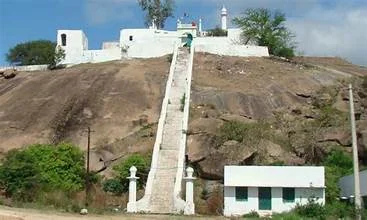
Hyderabad, Sept 19 ( Najaf Ali Shoukat-PMI) The historic Kohe Imam Zamin shrine and its surrounding land at Ammuguda in Trimulgherry, Secunderabad, have once again come into focus amid questions over the protection of Waqf property, alleged encroachments, historical land records, different survey numbers and ongoing legal disputes.
According to available records, the Telangana Waqf Board approached the Hyderabad Disaster Response and Assets Protection Agency (HYDRAA) in November 2024 regarding the Kohe Imam Zamin property. The Waqf Board reportedly described the overall extent of the land as 82 acres and 27 guntas and alleged that unauthorised dumping was taking place in an area containing a water body on the Waqf property, raising concerns about possible further encroachments. The Board sought HYDRAA’s intervention to protect the property and address the alleged encroachments.
How Accurate Are Claims of 60 or 70 Per Cent Encroachment?
Complaints regarding large-scale encroachments on the Kohe Imam Zamin land have surfaced periodically. Claims have also been made by some local sources that around 60 or even 70 per cent of the land is allegedly under encroachment.
However, no recent comprehensive government survey establishing a definitive percentage of encroached land across the entire 82 acres and 27 guntas has been found in the currently available record.
Therefore, it would not be appropriate to present any particular percentage as an established fact. A fresh joint survey by the Revenue Department, Waqf Board and other concerned authorities would be necessary to determine the actual ground situation.
High Court Judgment of January 27, 2026
An important development in the matter was the Telangana High Court judgment dated January 27, 2026, concerning Survey No. 66/1 at Trimulgherry. Three writ petitions were heard in connection with the land. The petitioners challenged certain orders of the Waqf Board and the basis of Muntakhab No.54/M1/Tel-I/RR/84, published in the Andhra Pradesh Gazette in 2004.
According to the historical details recorded in the judgment, the land concerned was identified under the old Survey No. 62 and was recorded in the name of Kohe Imam Zamin between 1920 and 1929. The court record states that the government resumed the land in 1929, followed by subsequent proceedings concerning its auction and ownership.
The Waqf Board, on the other hand, argued before the court that the relevant Survey Nos. 66/1 and 66/2 were service inam/mafi inam lands associated with the Kohe Imam Zamin institution. The Board relied on historical pahani records and other documents in support of its claim. The Board also referred to records concerning land acquired for defence purposes and compensation allegedly paid in connection with such acquisition.
After examining the issues relating to survey, inquiry and the applicable legal procedure, the High Court allowed the writ petitions and set aside the challenged orders.
Importantly, the judgment concerned the specific dispute relating to Survey No. 66/1. It should not be presented as a final determination of the ownership status of the entire 82 acres and 27 guntas associated with Kohe Imam Zamin.
Need for a Comprehensive Ground Survey
The key question now is: what is the present status of the land described as measuring 82 acres and 27 guntas?
A comprehensive government survey would be required to answer this question. Such a survey should identify each survey number separately and establish which portions are recorded as Waqf property, which are under government or defence use, where existing constructions are located, where alleged encroachments exist, and which portions are involved in ongoing litigation.
It would also be important to disclose what action, if any, was taken on the Waqf Board’s 2024 representation to HYDRAA concerning the alleged encroachments and dumping.
Protection of Historical Heritage
The Kohe Imam Zamin site is not merely the subject of a land dispute; it is also associated with Hyderabad’s historical religious heritage. A report published in February 2026 raised concerns at the local level regarding the land, basic facilities, cleanliness, and preservation of the historic site.
Protection of the legal status of the land should therefore go hand in hand with ensuring visitor safety, basic civic facilities, and clarity regarding the legal status of existing constructions.
Need for a White Paper or Public Status Report
The available revenue records, pahani documents, gazette notifications, Muntakhabs, Waqf records and court proceedings from different periods indicate a complex legal history surrounding Kohe Imam Zamin.
For this reason, it would not be legally appropriate to describe any individual or institution as an “encroachment mafia” merely on the basis of public allegations or claims.
What is needed is a fresh joint survey by the Telangana Waqf Board, Revenue Department, HYDRAA and other concerned government agencies, followed by publication of a clear status report on the 82 acres and 27 guntas.
If unauthorised occupation or illegal construction is established on any portion of the property, action can be taken in accordance with law. Where ownership or Waqf status is currently before a court, the final judicial determination should be respected.
The actual status of the Kohe Imam Zamin land can ultimately be established not through claims or estimates, but through a fresh official survey, authenticated land records, and judicial orders. Such an approach would help protect the historic site while reducing the possibility of further land-related disputes.
It is important to note that, if unauthorised encroachments on the Kohe Imam Zamin land are established, responsibility should not automatically be attributed to any single individual, including Haider Agha. The possible roles, if any, of officials or former officials of the Waqf Board, former Shia representatives, politicians, or other individuals connected with the land records and management may also require examination. A detailed inquiry is reportedly underway to establish the facts, identify the parties involved, and determine whether any negligence, collusion, or procedural lapses occurred. (pressmediaofindia.com)