 Pressmediaofindia
Related Articles

19-05-2026
RAMMUN/ WEST BANK: Fresh off the seventh forced displacement of his central West Bank Bedouin community since 1948, Abu Najjeh was not in a contemplative mood leading up to Nakba Day. He said he was in a rush, too busy reacting to the crises of the day, the continuing “third Nakba”, as he called it.
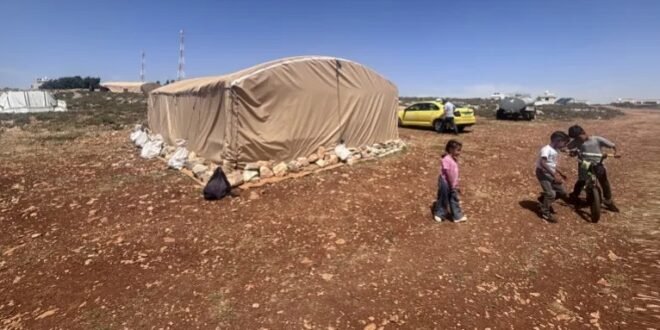
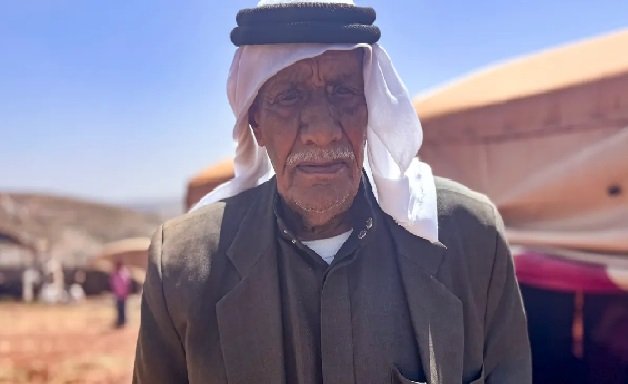 “This is not a proper place to live that’s why I’m in a hurry … waiting for a car to take me,” said Abu Najjeh, the mukhtar, or leader, of the former Bedouin community of Ein Samiya, speaking from a recently erected tent in the outskirts of Rammun before rushing to find his sons amid unfolding violence in Jiljilyya.
Just that morning, Jewish settlers had stolen hundreds of sheep and two tractors from a member of his extended family in Jiljilyya, to the north of Rammun, as well as shooting and killing 16-year-old Yousef Kaabneh also from Abu Najjeh’s Kaabneh clan.
Like the community of Ein Samiya, Yousef and his family had been forcibly displaced from Wadi as-Seeq in 2023, one of dozens of Palestinian Bedouin communities emptied since October 7, 2023. Already ascendant, the Israeli far right has used the Hamas-led attack on Israel, along with the cover of Israel’s genocidal war on Gaza, to ramp up attacks on Palestinians in the West Bank and seize more land.
Yousef’s family had relocated to Jiljilyya, hoping to finally be safe from settler attacks in an area under Palestinian Authority (PA) administration and where Israeli civilians are prohibited from entering under Israeli law.
One of Abu Najjeh’s own sons had also fled to Jiljilyya two months earlier, thinking the same. But on Wednesday morning, dozens of settlers rampaged through Jiljilyya, Sinjil and Abwein, all in Area A. The armed settlers opened fire on residents, shooting Yousef dead. The killing took place two days before Nakba Day, May 15, when Palestinians mark the forced expulsion of 750,000 Palestinians from their homes during the Nakba, the Arabic word for catastrophe, used by Palestinians to refer to the ethnic cleansing that took place during the formation of Israel on historical Palestine and now, a few hundred metres away from where they recently moved to near Rammun, is another illegal settler outpost.
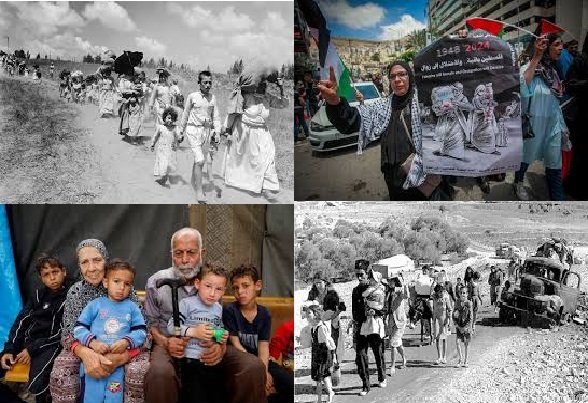 “Where is there to go?” Abu Najjeh wondered.
A history of family expulsions
It is a question that has haunted the Kaabneh family for eight decades.
Before 1948, the Kaabneh were Bedouins of the larger Jahalin clan living freely in the Bir al-Saba area in the Naqab Desert. They were pastoral people who grazed their flocks of livestock across the vast open ranges but in 1948, they were expelled from their homes by Zionist paramilitary and later military forces during the Nakba.
Pushed north to the West Bank, controlled by Jordan from 1948 to 1967, they drifted through Masafer Yatta and towards Ramallah, searching for land wide enough to sustain a herding community. In 1967, the Israelis once again forced them out, this time after they captured the West Bank in a war.
“They gave us 24 hours, they expelled us towards al-Muarrajat no water, in September,” recalled Abu Najjeh. Throughout the 1970s, various Israeli military orders pushed them around different areas in the southern West Bank, and towards Ramallah, he explained. “Since 1967,” he said, “we haven’t rested a single day.”
Around 1980, they finally found what started to feel like home. In the hills east of Ramallah, at a place called Ein Samiya, named for the nearby spring, the community put down roots, remaining there for more than 40 years. The flocks grew to thousands, and the children had a school. “The feeling was one of ease,” Abu Najjeh said, the only moment where the urgency dropped from his voice. “The livestock could graze all the way to the spring at al-Auja, drink, and come back to us. It was a blessed life.” (Int’l News Desk)