 Pressmediaofindia
Related Articles



22-05-2026
By SJA Jafri + Agencies
ISLAMABAD/ BANGKOK: Thailand’s cabinet has approved a drastic reduction to its visa-free entry scheme for tourists from more than 90 countries.
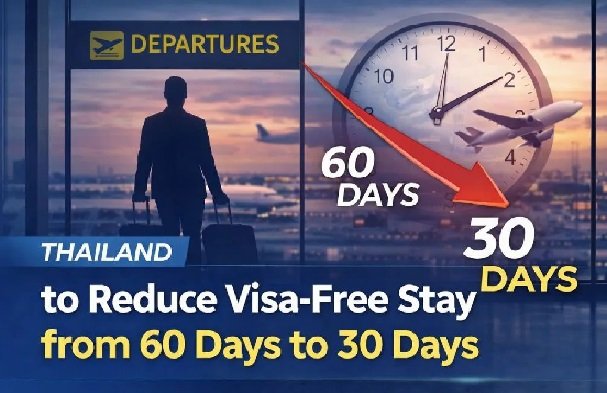
The decision, issued yesterday, shifts the country away from a sweeping 60-day visa exemption introduced in July 2024 to stimulate its post-pandemic recovery. That exemption was for areas that included the United States, Israel, parts of South America and Europe’s 29-nation Schengen zone.
 Under the new framework, the government will revert to a tiered system, capping visa-free stays at 30 days while shortening permission for citizens of some countries to just 15 days.
“The current scheme has allowed some people to exploit it,” government spokesperson Rachada Dhanadirek told reporters in Bangkok, noting that while tourism remains an indispensable pillar of the Thai economy, security concerns have taken priority.
Thai officials acknowledged the generous 60-day window had inadvertently opened loopholes, paving the way for a surge in illicit grey-market enterprises, unauthorized foreign workers and online scam operations. Policymakers now view a 30-day ceiling as an adequate timeframe to accommodate genuine, high-value travelers.
The policy reversal follows a series of high-profile arrests involving foreign nationals engaged in drug trafficking, human smuggling and running unauthorized local businesses, such as hotels and language schools.
Foreign Minister Sihasak Phuangketkeow said the measure does not target any specific nationality but rather individuals abusing the visa system to evade law enforcement.
To prevent systemic abuse, the Ministry of Foreign Affairs said it will also enforce a strict cap of two visa-free entries per calendar year via land borders for the standard 30-day tier, mirroring protocols used before the 2024 expansion.
 The government has not yet announced when the changes will take effect, but they were decided at a sensitive time for Southeast Asia’s second-largest economy, where tourism accounts for more than 10 percent of its gross domestic product. Government data revealed a 3.4 percent year-on-year drop in foreign arrivals during the first quarter, driven largely by a nearly 30 percent plunge in Middle Eastern travelers. Despite the downturn, officials maintained their annual target of attracting 33.5 million foreign tourists this year.
Earlier, for Thai national Khaochat Mankong, 2026 was meant to be the biggest year of her life. After filing the necessary paperwork with the United States embassy in Bangkok, Khaochat, 27, was poised to start a new life with her American husband in California.
Khaochat watched those plans evaporate in an instant as US President Donald Trump’s administration announced an indefinite pause on the processing of immigrant visa applications from 75 countries, including Thailand.
The US Department of State said it had suspended applications for the targeted countries because their migrants claimed welfare benefits at “unacceptable rates”.
“I’m shocked; I never thought they would interfere with permanent visas or marriage visas,” Khaochat, an English tutor in Bangkok, told media but “now everything has to be paused for who knows how many years.”
Khaochat said she had hoped to raise a family in the US and had no intention of claiming any welfare benefits.
“If they want to screen people, then test language ability, check financial accounts,” she said. “I have the language skills, I have money. Why should I be blocked from living with the person I love?”