 Pressmediaofindia
Related Articles



16-04-2026
LAHORE/ KARACHI: Mohammed Amin was eight when he died shortly after testing positive for HIV.
His fevers were so bad that he insisted on sleeping in the rain, and he writhed in pain “like he’d been thrown in hot oil”, says his mother, Sughra.
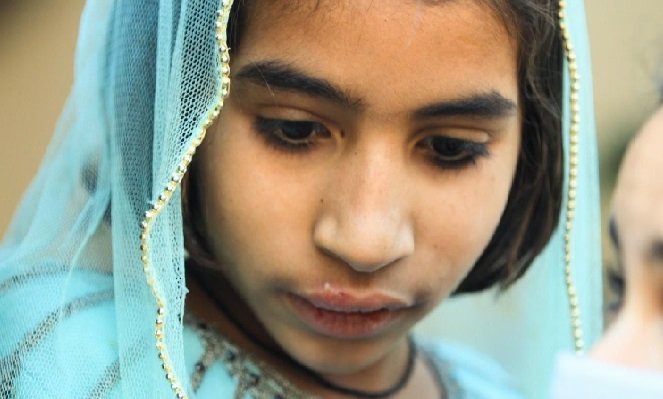 “He used to fight with me, but he also loved me,” 10-year-old Asma says as she kneels at her younger brother’s graveside.
Not long after her brother contracted the virus, Asma was also diagnosed with HIV. Her family believe both children contracted it from injections with contaminated needles during routine medical treatment at a government hospital in Taunsa, in the province of Punjab, Pakistan.
They are two of the 331 children that BBC Eye has identified as testing positive for HIV in the city between November 2024 and October 2025.
After a doctor at a private clinic linked the outbreak to the hospital, called THQ Taunsa, in late 2024, local authorities promised a “massive crackdown” and suspended the hospital’s medical superintendent in March 2025 but a BBC Eye investigation can now reveal that dangerous injection practices continued months later.
During 32 hours of undercover filming at THQ Taunsa in late 2025, we witnessed syringes being reused on multi-dose vials of medicine on 10 separate occasions, potentially contaminating the drugs inside.
In four of these cases we saw medicine from the same vial given to a different child. We do not know if any of the children were HIV-positive but this practice creates a clear risk of viral transmission.
“Even if they have attached a new needle, the back part, which we call the syringe body, has the virus in it, so it will transfer even with a new needle,” said Dr Altaf Ahmed, a consultant microbiologist and one of Pakistan’s leading infectious disease experts, after watching our undercover footage.
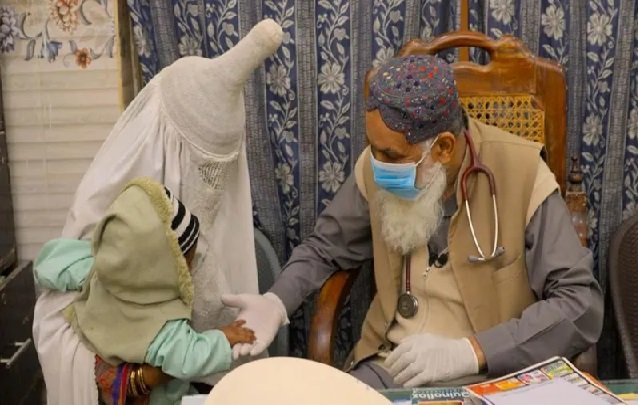 Despite signs on the hospital walls showing safe injection practice we filmed staff including a doctor injecting patients without sterile gloves 66 times, and a different expert told us our footage highlighted broader weaknesses in infection control training in Pakistan.
We also watched a nurse rummage through a medical waste disposal box without sterile gloves. “She is violating every principle of injecting medicine,” said Ahmed but when we showed our footage to the hospital’s new medical superintendent, Dr Qasim Buzdar, he refused to acknowledge it was genuine. He claimed it could have been recorded before he took over or that “this footage could also be staged”, and insisted his hospital was safe for children.
Dr Gul Qaisrani, a doctor at a local private clinic, was the first to spot the outbreak in late 2024 after noticing a rise in the number of children going through his clinic who tested positive for HIV.
Almost all of the 65 to 70 children he diagnosed had been treated at THQ Taunsa, he says.
He recalls one mother telling him that her daughter was injected with the same syringe as a cousin living with HIV, and that the syringe was then used on several other children. Qaisrani says a father told him he challenged syringe reuse at THQ Taunsa but was ignored by nurses.
BBC Eye has pieced together data from the Punjab provincial Aids screening programme, private clinics and a data set leaked by police to identify 331 children who tested positive for HIV in the city of Taunsa between November 2024 and October 2025 out of a sample of 97 children with HIV whose families were also tested, only four of their mothers tested positive. (BBC)