 Pressmediaofindia

Related Articles


17-04-2026
JERUSALEM: An overwhelming number of Israelis oppose the US-Iran ceasefire deal declared last week, and anticipate a return to the war, a poll has found. The findings match observations by analysts, who say that Israeli political leaders promised a final showdown with Iran, only for the conflict to instead leave the Iranian government still standing.
 According to the poll, published by the Israeli Institute for National Security Studies (INSS) on Sunday, 61 percent of respondents said they opposed the ceasefire, announced 90 minutes before United States President Donald Trump’s apocalyptic deadline on Tuesday, in which he had promised to launch devastating attacks on Iran’s civilian infrastructure. Additionally, 73 percent said they expected fighting with Iran to restart within the next year and the majority of respondents, 69 percent said they support continued military action in Lebanon, irrespective of talks between the Lebanese and Israeli governments that began in the US on Tuesday. Israel has continued to attack Lebanon, claiming it was excluded from the ceasefire, and killing more than 300 people in the past week in strikes that have led to widespread condemnation.
The expectation among many Israelis had been that Prime Minister Benjamin Netanyahu would finally make good on his promise to end what he has long framed as the existential threat from Iran. But the war Israel launched with the US on Iran on February 28 has, despite the death toll and spiraling economic cost, failed to deliver on that promise.
Instead, a two-week ceasefire has been negotiated, reportedly without Israel’s involvement, and the Iranian state endures, battered but unbowed. Tehran’s ballistic missile arsenal remains partly intact, and its strategic reach may even have widened, not least through its grip on the economically vital Strait of Hormuz.
“He (Netanyahu) did oversell how much the war could accomplish: regime collapse and completely destroying the nuclear program and ballistic missiles, which couldn’t be accomplished,” Dahlia Scheindlin, an American-Israeli political consultant, pollster, and journalist, who recently wrote about the various polls showing resistance to a ceasefire.
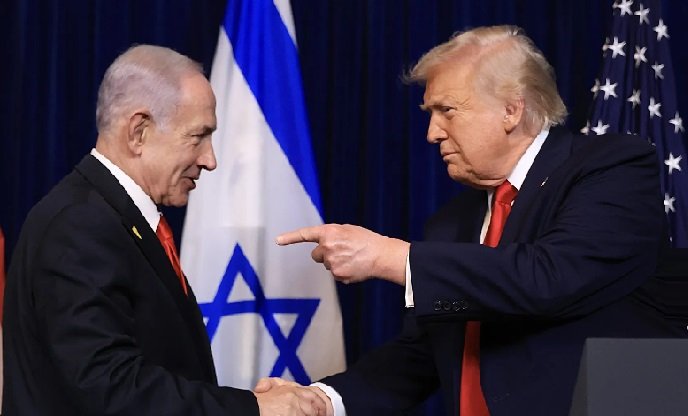 Much of the problem for the Israeli leader, she suggested, was his longstanding public opposition to negotiations with Iran, such as his resistance to previous agreements to limit its nuclear program in return for sanctions relief, of the kind that the US now appears to be considering.
“For many years and decades, (Netanyahu) had completely destroyed and delegitimized the idea that diplomacy and agreements negotiated agreements would have any impact,” she said, referring to Netanyahu’s previous characterization of talks between the US and Iran as somehow posing an existential threat to Israel.
None of Israel’s top political leaders has questioned its reasons for attacking Iran. Instead, opposition leaders, such as Yair Lapid, fell in behind Netanyahu. Lapid told reporters he supported a “just war against evil”, doubting whether Iran could sustain a prolonged war against Israel and the US.
Needless to say, the US ceasefire has been seized upon by Lapid as an apparent capitulation on Netanyahu’s part. “[Netanyahu] has turned us into a protectorate state that receives instructions over the phone on matters pertaining to the core of our national security,” Lapid wrote on social media after the ceasefire.
The left-wing Democrats leader Yair Golan was equally scathing. “Netanyahu lied,” he wrote. “He promised a ‘historic victory’ and security for generations, and in practice, we got one of the most severe strategic failures Israel has ever known.” (Int’l Monitoring Desk)