 Pressmediaofindia
Related Articles


05-04-2026
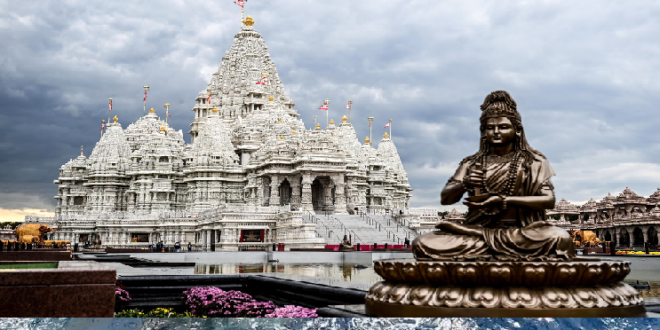
NEW JERSEY: In the center of the suburban town of Robbinsville, New Jersey, sits the largest modern Hindu mandir outside India.
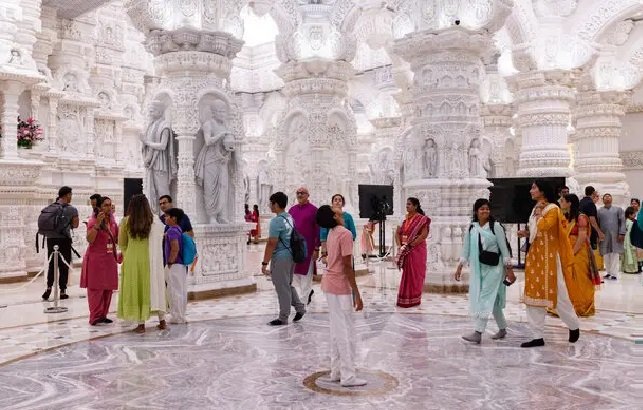 What visitors from around the world see is a breathtaking display of craftsmanship hand-carved stone from Rajasthan assembled across a sprawling 185-acre complex. The temple has gone viral on social media for its intricate designs, which took millions of hours to complete. Baps Swaminarayan Akshardham, the religious organization behind the site, has built similar temples across the globe but some workers say these monumental structures came at a high cost.
Beneath the beauty and sheer scale of the Robbinsville complex lies a darker story: allegations of worker abuse, visa fraud and medical neglect during the temple’s construction between 2015 and 2023. Workers believe that at least two laborers, Ramesh Meena and Devi Lal died from a largely preventable, irreversible lung disease called silicosis, caused by inhaling fine silica dust produced while carving stone, according to court documents and labor advocates familiar with the case. Lal died while waiting for a lung transplant.
Workers say others have been diagnosed with other respiratory illnesses such as tuberculosis and chronic bronchitis. Workers spoke to the Guardian on condition of anonymity for fear of retaliation and to protect their families. Symptoms of silicosis include shortness of breath, persistent cough, chest pain and fatigue and can lead to severe disability and premature death.
“A person would prefer committing suicide rather than dying from silicosis because it’s such a painful death,” said a former Baps temple worker, who developed tuberculosis. “The breathing problem is so bad that you really pray for the person to die, so that he can be at peace.”
 The temple denies the allegations and asserts a ministerial exception, which is a first-amendment based legal doctrine that prevents courts from interfering with religious institutions’ employment decisions on “ministers” or equivalent responsibilities such as teaching faith, leading workshops, or carrying out religious duties. Two hundred Dalit workers, members of the lowest caste in India’s rigid social hierarchy, came from Rajasthan to New Jersey to work on the temple. Historically subjected to extreme social and economic marginalization, Dalits have long been relegated to the most dangerous and lowest-paid labor. Dalit workers are also purportedly not allowed to worship in these temples because of their low caste ranking.
At the Robbinsville site, workers say they labored for 90 hours a week for as low as $1.20 an hour, according to the complaint. Workers allege that passports were taken from them and they were not allowed to contact their families for long periods of time. “I saw my kids growing up on the phone,” a worker said, explaining that he also hadn’t seen his parents, brother and wife for seven years. His roommate had also died by suicide after returning to India. His roommates’ family say depression and the working conditions at the temple played a significant role in his death.
“At that time his health was fine. He had a checkup along with everyone else, and was told he had some silicosis, but not much, around 10 to 20%,” Ankush Kumar, son of the deceased, wrote in a Signal message.
“No one contacted us or helped us at the time of this tragedy. We had to deal with everything on our own. Since then, life has been really hard for me. I’m the only earning member in the family. I support my two siblings and my mother. I’ve had to give up my full-time education to start earning,” he said.
In addition to the emotional toll of family separation, workers also say that they were not given proper PPE while carving and weatherizing stones for construction. (Int’l News Desk)