 Pressmediaofindia
Related Articles



11-04-2026
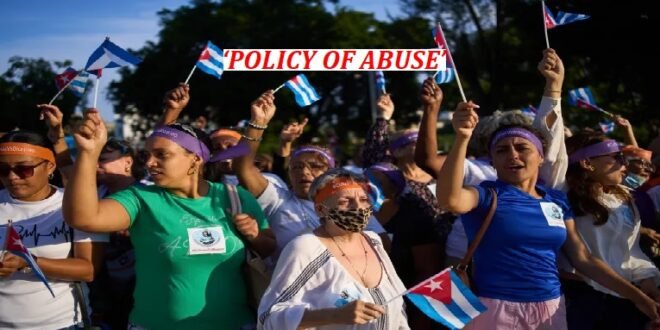
HAVANA: Hundreds of women marched in Cuba’s capital, Havana, to protest the de facto oil blockade and pressure campaign that the United States has imposed on the island.
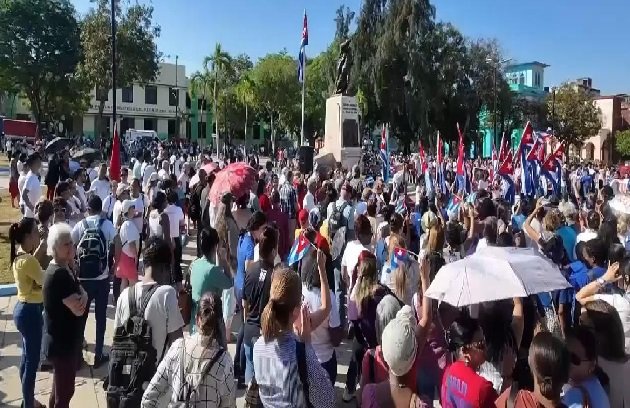 Banners and signs at Tuesday’s demonstration bore the slogan “Tumba el bloqueo” or “Tear down the blockade”. Many protesters waved Cuban flags, and some wore T-shirts with the hashtag #NoMasBloqueo or “No more blockade”.
The protest took place on what would have been the 96th birthday of the late Vilma Espin, a leader in the Cuban Revolution and a former first lady. She was the wife of Raul Castro and the sister-in-law of Fidel Castro, both presidents.
Top officials in Cuba’s communist government led the demonstration, including Deputy Prime Minister Ines Maria Chapman and Deputy Foreign Minister Josefina Vidal.
They denounced the US campaign against the Cuban government as a kind of collective punishment.
“This policy of abuse has to stop,” Vidal told The Associated Press. “The Cuban people don’t deserve this. It’s the most comprehensive, all-encompassing, and longest-running system of coercive measures ever imposed against an entire country.”
The Cuban government has organized protests in recent weeks as a show of opposition to policies put in place under US President Donald Trump.
Last Thursday, for instance, Cuban President Miguel Diaz-Canel joined demonstrators on bicycles and electric vehicles outside the US Embassy in Havana to denounce the US-led fuel shortage.
Since January, the Trump administration has sought to cut Cuba off from its foreign oil imports, as part of a bid to destabilize its government.
First, on January 11, Trump announced that Cuba would receive no more money or oil from its close regional ally Venezuela, following a US attack that culminated in the abduction and imprisonment of the South American country’s president, Nicolas Maduro.
 Then, on January 29, Trump issued an executive order announcing tariffs against any foreign government that attempted, whether directly or indirectly, to deliver oil to Cuba.
Since then, Cuba’s foreign oil supply has effectively been severed. Only in the last couple of weeks has the blockade been eased slightly, when the Trump administration allowed the arrival of a Russian oil tanker in Havana’s harbor on March 30.
According to the International Energy Agency, some 58 percent of Cuba’s energy production comes from oil, as of 2023. Another 23.6 percent comes from natural gas.
While Cuba does produce some crude oil domestically, most of its oil supply comes from external sources. The International Energy Agency estimates that the country produces only 40.6 percent of its own oil supply, with 59.4 percent coming from abroad.
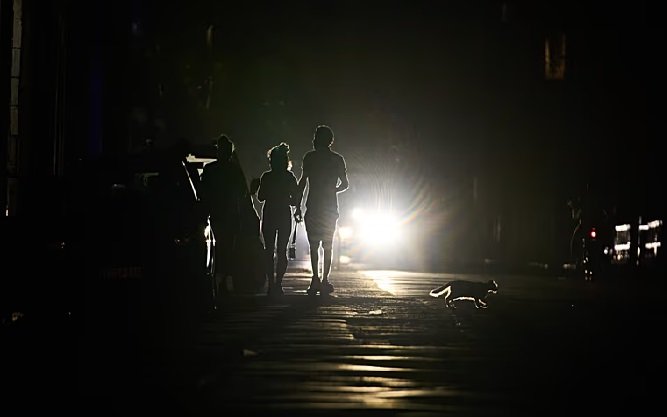
With little foreign oil entering the country, Cuba has suffered at least two island-wide blackouts in the last month. Those outages come with deadly consequences, as hospitals and other critical infrastructure lose the power necessary for life-saving work.
Russia has announced it plans to send a second oil tanker to Cuba, in defiance of the US blockade but Trump has continued to apply pressure to the Cuban government, holding up the change in Venezuela’s leadership as an example he would like to replicate. (Int’l Monitoring Desk)