 Pressmediaofindia
Related Articles


04-02-2026
DHAKA: Sukumar Pramanik, a Hindu teacher in Rajshahi city about 250km (155 miles) from Bangladesh’s capital, Dhaka, says the country’s upcoming national election could be his final test of trust in politics.
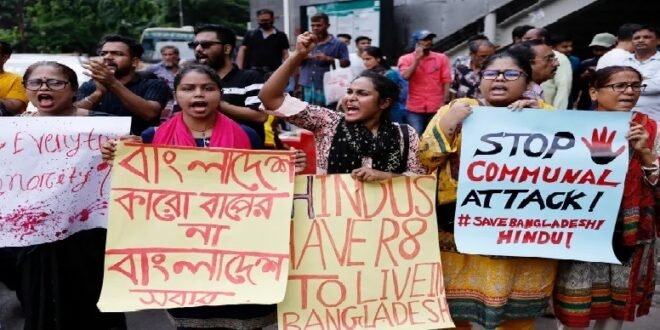
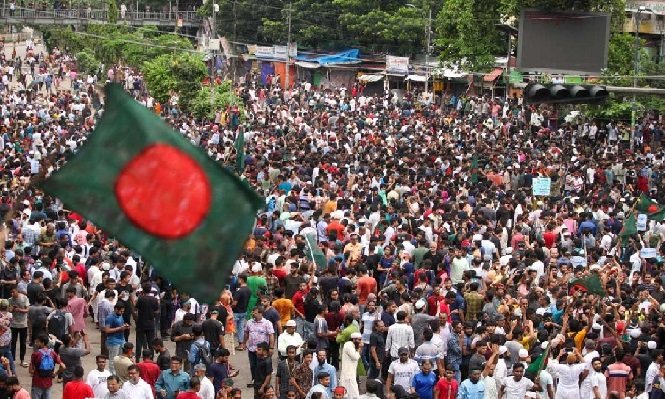 Electoral periods in Bangladesh have seen spikes in communal and political violence throughout the country’s history, with religious minorities often bearing the brunt amid intense political competition and social tension but since August 2024, and the end of former Prime Minister Sheikh Hasina’s rule, minorities in Bangladesh have felt under siege, with reports of attacks, killings and arson against their property, even though the government insists that most incidents were not motivated by religious hate. That backdrop has intensified fears ahead of the February 12 election, despite efforts by leading political parties to reach out to minority communities. “The leaders of major parties have assured us that we will be safe before and after the vote,” Pramanik said, but faith in politicians runs low in his community at the moment.
After the August 2024 uprising that led to Hasina’s ouster, mobs in several parts of the country targeted the Hindu community, many of whose members had historically voted for Hasina’s Awami League, which has long tried to claim a “secular” mantle even though critics have accused the party of failing to prevent attacks on minorities during its long years in power, and indulging in scaremongering.
Pramanik said a mob from his village attacked the Hindu community in Rajshahi’s Bidyadharpur, beating him and breaking his hand. He required surgery and spent days in hospital. “I stood in front of the mob believing they knew me and would not attack me,” he said. “They broke my hand but more than that, they broke my heart and my trust. I had never experienced anything like this before.”
Hindus form about 8 percent of the population in Muslim-majority Bangladesh, with Christians, Buddhists and other minorities present in much smaller numbers.
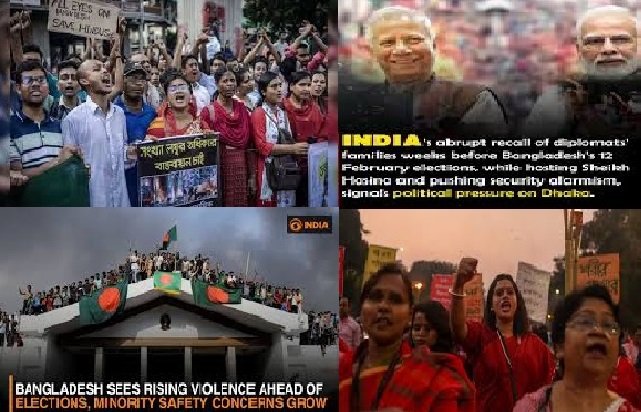 Through Bangladesh’s history, say experts and minority leaders, political actors and their supporters have at times exploited religious identities to intimidate voters or settle local disputes, leading to targeted attacks on minority homes, places of worship and individuals.
“If you look at elections in the past even during the Awami League’s tenure oppression and persecution of minorities never truly stopped,” Manindra Kumar Nath, acting general secretary of the Bangladesh Hindu Buddhist Christian Unity Council (BHBCUC), an umbrella group representing these minority communities, told media. “It happened before elections and after elections” but what made things worse, he said, was that “there has been no proper justice”.
Not after Hindus were attacked following the 2001 election that former Prime Minister Khaleda Zia and her Bangladesh Nationalist Party (BNP) won, and not after later attacks against Hindus in subsequent years.
Now, sporadic attacks in recent months ahead of the election have revived those fears. According to the BHBCUC, at least 522 communal attacks were recorded in 2025, including 61 killings. The group says 2,184 incidents took place in 2024 following Hasina’s removal in August that year.
Minorities are now “deeply insecure” ahead of the election, Nath said. “There is fear among everyone,” he added.
The Bangladesh government disputes claims of widespread communal violence. According to official data, in 2025, authorities recorded 645 incidents involving members of minority communities. Of these, the government says, only 71 had “communal elements”, while the remainder were classified as general criminal acts. Officials argue the figures show that most incidents involving minorities were not driven by religious hostility, stressing the need to distinguish communal violence from broader law-and-order crimes. (Int’l News Desk)