 Pressmediaofindia

Related Articles



02-03-2026
Bureau Report
NEW DELHI: A landmark legal battle over privacy, data control and the business model of big tech is playing out in India as WhatsApp’s 2021 privacy policy faces close scrutiny from the country’s top court.
 At stake is not just WhatsApp’s policy but broader questions over privacy rights, consumer choice and regulation of dominant online platforms. WhatsApp is India’s most popular messaging app.
A few days ago, WhatsApp told the Supreme Court it would comply by 16 March with an order requiring it to give Indian users greater control over how their data is shared with its parent company, Meta.
In an affidavit, seen by media the messaging platform added that users could continue using the app even if they opted out of sharing data with Meta for advertising. The move comes days after the court criticized WhatsApp’s 2021 privacy policy, warning that it would not allow WhatsApp or Meta to “play with” Indians’ right to privacy or “make a mockery” of the Constitution, which guarantees privacy as a fundamental right.
The remarks were made during open court hearings on WhatsApp’s January 2021 policy update, which required users to share data with Meta companies to keep using the app, a “take it or leave it” approach that India’s competition watchdog, the Competition Commission of India (CCI), said left users with “no real choice”.
The update drew criticism from users who said they felt compelled to accept terms they were uncomfortable with, noting it differed from the 2016 policy, which had allowed existing users to opt out of sharing data with Meta for advertising.
The policy has also been criticized by digital rights activists as invasive and a violation of user autonomy, while others argue that leveraging a platform’s popularity for advertising is common practice in the internet age.
WhatsApp is ubiquitous in India with about 853 million users, according to World Population Review. Rivals such as Signal, Telegram and homegrown platforms like Koo exist but none match in popularity.
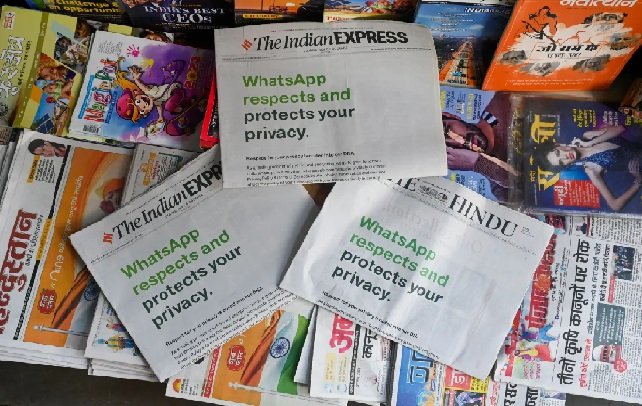 Given its vast reach, WhatsApp and its parent company are among the global tech firms closely watched by India’s federal government which has, in recent years, tightened digital regulations and pushed platforms for greater accountability.
A legal battle over WhatsApp’s privacy policy began in March 2021 when the CCI ordered an investigation, alleging that Meta was engaging in “exploitative and exclusionary conduct”. It said forcing users to share data with Meta companies allowed the firm to leverage WhatsApp’s dominance in India to deny advertising access to rivals.
In November 2024, the CCI fined Meta $25m for “abusing its dominant position” and ordered it and WhatsApp to implement behavioral remedies within three months. It barred WhatsApp from sharing user data with Meta entities for five years and directed the company to clearly specify the purposes of data sharing in its privacy policy.
WhatsApp and Meta challenged the order before a company law tribunal, which upheld the penalty but stayed the five-year data-sharing ban. In January 2026, the firms moved the Supreme Court to contest the fine.
While hearing the case earlier this month, the Supreme Court criticized WhatsApp’s “take it or leave it policy”, saying that it was a way of “committing theft of private information”.
The court also voiced concern over personal communications being used for targeted advertising and directed WhatsApp to establish a consent-based framework for data sharing.