 Pressmediaofindia
Related Articles



28-03-2026
NEW YORK: Society should respect plumbing and electrician careers as artificial intelligence (AI) replaces some office jobs, the boss of US financial giant BlackRock has told media.
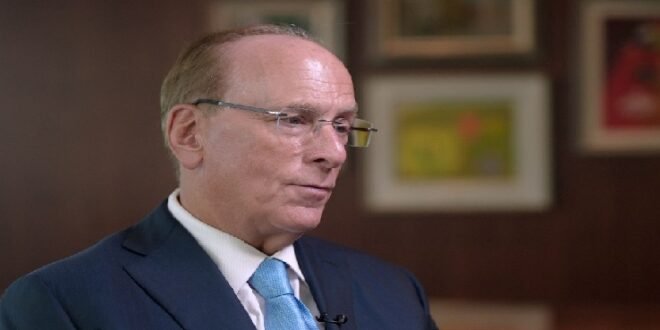
 Larry Fink, who leads the world’s largest asset manager, says the US “overdid” the focus on young people going to university and idolizing jobs careers in banking while undervaluing skilled trades.
In a wide-ranging exclusive interview, he also warned if the price of oil hits $150 (£122) a barrel it will trigger a global recession.
BlackRock is a financial colossus, controlling assets worth $14 trillion, and is one of the biggest investors in many of the world’s largest companies.
Its size and spread gives Fink, who is one of the eight co-founders of the business, which started in 1988, a unique insight into the health of the global economy.
Earlier this week, in his annual letter to shareholders, Fink said the AI boom would create an enormous amount of jobs “related to electricians and welders and plumbers”.
In contrast, there might not be as much demand for some office jobs and this could lead to a rethink about what roles are needed as “society is changing and evolving”.
He said this meant we needed to change our perception of skilled trades.
He said the average plumber had been portrayed on television as being overweight and having their pants hanging below their waistline, while investment bankers are idolised in drama series like Industry.
“I think what we did wrong,” he said. “We really put judgment on so many jobs and so many people who probably should not have gone into banking or media or law, probably should have been a great worker with their hands, and we need to now rebalance that approach.”
 In the US, he says, after World War-II “we built the foundation of education, and we said to all the young people, go to college, go to college, go to college and we probably overdid it”.
“We need to balance that out, and we need to be proud that… a career can be just as strong in these fields of plumbing and electricians.”
Fink also discussed the US-Israel war with Iran which has triggered wild moves in financial markets as people try to assess what will happen to energy costs.
For Fink, it is too early to determine the ultimate scale and outcome of the conflict, but he believes it will be one of two extreme scenarios.
In one, if the conflict is settled and Iran becomes a country that can be accepted again by the international community, the price of oil could fall back to below where it stood before the Iran war but if not, he says, then there could be “years of above $100, closer to $150 oil, which has profound implications in the economy” and an outcome of “a probably stark and steep recession”.
The surge in energy costs has led to some in the UK to argue that it should be focusing more on producing its own oil and gas.
Fink says countries need to be pragmatic about their energy mix by using all sources available to them, but providing cheap energy is key to driving growth and raising living standards.
“Rising energy prices is a very regressive tax. It affects the poor more than the wealthy.”
While the UK already has some solar and wind power and hydrocarbons, if oil prices were to rise to $150 for three or four years, “you would have so many countries moving so rapidly towards solar and maybe even wind”.
Countries should not depend on just one source, he says. (Int’l Monitoring Desk)