 Pressmediaofindia

Related Articles



17-03-2026
WASHINGTON: Rights groups have slammed United States Secretary of Defense Pete Hegseth for saying that “no quarter” will be shown to Iran, as the US and Israel continue their military campaign against the country.
 “We will keep pressing. We will keep pushing, keep advancing. No quarter, no mercy for our enemies,” Hegseth told reporters on Friday.
Under the Hague Convention and other international treaties, it is illegal to threaten that no quarter will be given.
Domestic laws, such as the 1996 War Crimes Act, also prohibit such policies. US military manuals likewise warn that threats of “no quarter” are illegal.
Brian Finucane, a senior adviser at the International Crisis Group, a think tank, said Hegseth’s comments appear to run afoul of those standards.
“These comments are very striking,” Finucane told media over a phone call. “It raises questions about whether this belligerent, lawless rhetoric is being translated into how the war is being conducted on the battlefield” but Hegseth has publicly dismissed concerns about international law, claiming he would abide no “stupid rules of engagement” and no “politically correct wars”.
His rhetoric has provoked concern among some experts that measures designed to prevent civilian harm are being ignored in favour of a campaign of “maximum lethality”.
Hegseth’s remarks also come after a US strike on a girls’ school in southern Iran that killed more than 170 people, most of them children. The war has left at least 1,444 Iranians dead and millions more displaced.
‘Inhumane and counterproductive’
Prohibitions against declaring “no quarter” go back more than a century, part of an effort to impose restraints on conduct during war.
 The Nuremberg trials after World War II upheld that legal standard, as Nazi officials were prosecuted, in some cases, for denying quarter to enemy forces.
“The basic idea is that it’s both inhumane and counterproductive to execute people who have laid down their arms,” said Finucane.
He added that the “mere announcement” of “no quarter” from a government official can itself be a war crime.
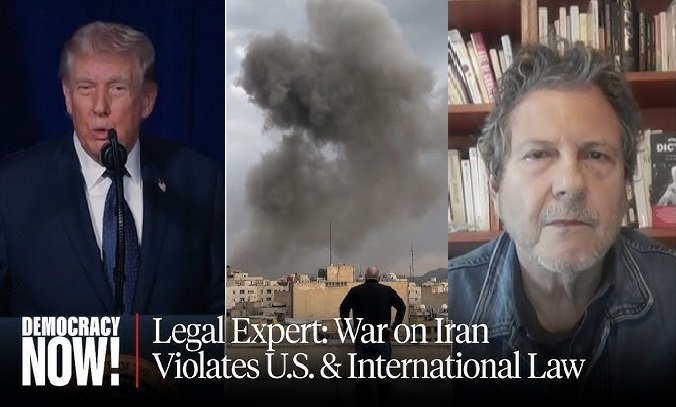
The US and Israel have already faced allegations of violating international law during their war against Iran. Experts have condemned their initial strike on February 28 as “unprovoked”, deeming the conflict an illegal war of aggression.
Iranian officials also protested after a US submarine sank a military vessel, the IRIS Dena, off the coast of Sri Lanka, as it returned from a ceremonial naval exercise in India. That attack killed at least 84 people.
While warships are considered legal military targets, Iran has said that the ship was not fully armed, raising questions about whether it could have been interdicted rather than sunk.
US forces also purportedly declined to help rescue sailors from the Dena, even though the Geneva Convention largely requires aid to the shipwrecked. The Sri Lankan navy ultimately helped collect survivors from the wreckage.
‘Serious red flag’
The US military has faced criticism for killing civilians in military operations for decades. That includes during the so-called “global war on terror”, when airstrikes resulted in thousands of civilian deaths, including a 2008 attack on a wedding party in Afghanistan.
Even before the war with Iran, the Trump administration had faced accusations that it violated international law by attacking alleged drug-trafficking vessels in the Caribbean Sea and eastern Pacific Ocean. (Int’l News Desk)