 Pressmediaofindia
Related Articles
08-01-2026
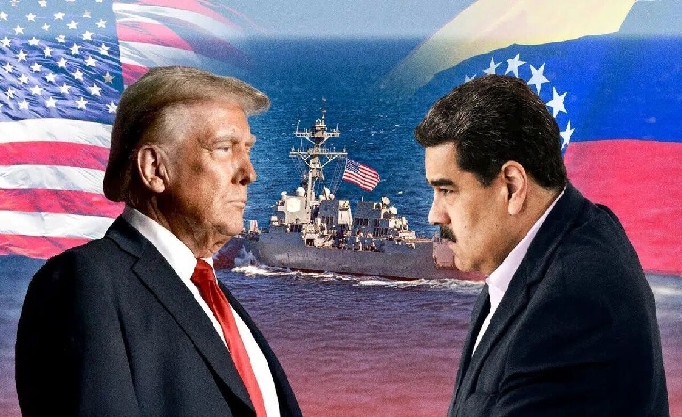
UNITED NATIONS: Amid a dramatic escalation between the United States and Venezuela, members of the Security Council were sharply divided over the fate of ousted President Nicolas Maduro Moros and next steps for his oil-rich nation, even as many delegates warned that Washington, DC’s, actions threaten the very foundations upon which the multilateral world order was built.
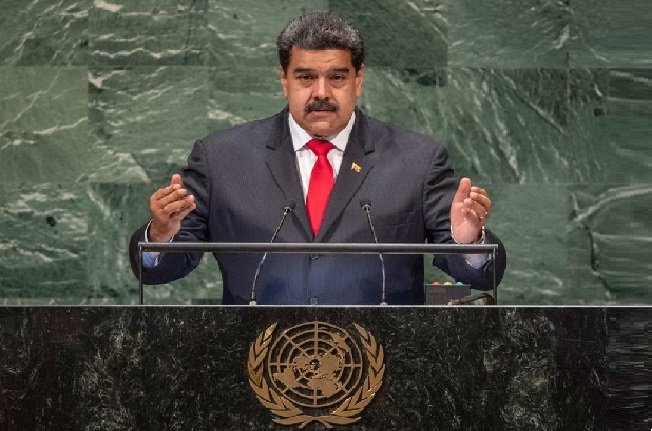 “Today, it is not only Venezuela’s sovereignty that is at stake,” said that country’s representative, who addressed the 15-member organ in its first meeting of 2026. “The credibility of international law, the authority of this Organization and the validity of the principle that no State can set itself up as judge, party and executor of the world order are also at stake.”
Describing the events of 3 January as profound and historic for the entire international community, he said his country was the target of an illegitimate armed attack, lacking any legal justification, by the United States. “If the kidnapping of a Head of State, the bombing of a sovereign country and the open threat of further armed action are tolerated or downplayed, the message sent to the world is a devastating one namely, that the law is optional and that force is the true arbiter of international relations,” he warned.
‘There Is No War against Venezuela’
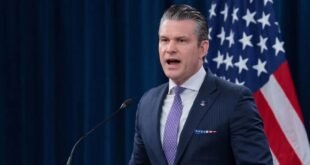
The representative of the United States, however, emphasized that “there is no war against Venezuela or its people”. His country’s military conducted a surgical law enforcement operation to apprehend two indicted fugitives, the “narco-terrorists” Nicolas Maduro Moros and Celia Flores. Framing the action as a law enforcement operation in furtherance of lawful indictments, he likened it to the 1989 arrest of Panama’s former leader, Manuel Noriega, and said the region was more stable as a result.
Maduro is not just an indicted drug trafficker, he said, but the leader of a vicious terrorist organization, the Cartel de los Soles, which works with other gangs to use illegal narcotics as a weapon against the United States. He also rejected the legitimacy of Maduro’s presidency, citing a UN finding that he manipulated Venezuela’s electoral system and that the 2024 election was a farce. Under his regime, Venezuela has seen extrajudicial killings, torture and arbitrary detentions, and more than 8 million refugees have fled the country.
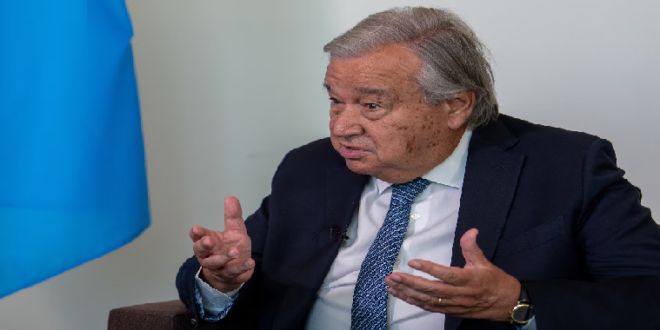
 At the meeting’s outset, Rosemary DiCarlo, UN Under-Secretary-General for the Department of Political and Peacebuilding Affairs, delivered remarks on behalf of Secretary-General Antonio Guterres. “I am deeply concerned about the possible intensification of instability in the country, the potential impact on the region and the precedent it may set for how relations between and among States are conducted,” she said.
Voicing grave concern over decades of instability, human rights violations and economic turmoil in Venezuela, she nevertheless called for respect for the Charter of the UN, including the principles of sovereignty, political independence and territorial integrity of States. “The situation is critical, but it is still possible to prevent a wider and more destructive conflagration,” she stressed.
Force, Coercion Cannot Legitimately Decide Venezuela’s Future
Jeffrey Sachs, President of the UN Sustainable Development Solutions Network and Director of the Center for Sustainable Development at Columbia University, also briefed, noting that the issue at stake today is not Venezuela’s character. “The issue is whether any Member State, by force, coercion or economic strangulation has the right to determine Venezuela’s political future or to exercise control over its affairs.” Since 1947, he said, the United States has repeatedly used force and political manipulation to bring about regime change. (Int’l News Desk)