 Pressmediaofindia
Related Articles


09-02-2026
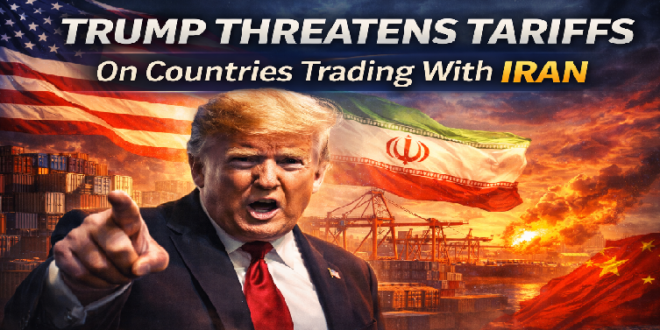
WASHINGTON: US President Donald Trump has signed an executive order threatening to impose additional tariffs on countries that continue to trade with Iran.
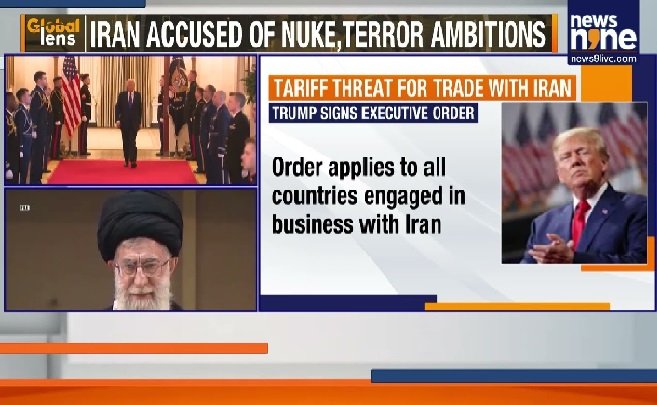 The order, issued on Friday, does not specify the rate that could be imposed but uses 25% as an example. It says the tariff could apply to goods imported into the US from any nation that “directly or indirectly purchases, imports, or otherwise acquires any goods or services from Iran”.
Trump has not directly commented on the order but reiterated “no nuclear weapons” for Iran when speaking from Air Force One on Friday night.
It came after talks between senior US and Iranian officials in Oman, following several weeks of threats from both sides.
Trump threatened a 25% tariff of countries doing business with Iran earlier this year, in a post to Truth Social.
On 12 January, he wrote: “Effective immediately, any country doing business with the Islamic Republic of Iran will pay a tariff of 25% on any and all business being done with the United States of America.”
At the time, no further detail was provided on how the tariffs would work in practice.
The White House said that this latest executive order reaffirmed the “ongoing national emergency with respect to Iran” and noted that the president may modify it of circumstances change.
It read: “The President is holding Iran accountable for its pursuit of nuclear capabilities, support for terrorism, ballistic missile development, and regional destabilization that endanger American security, allies, and interests.”
Separately, the US state department announced on Friday that it was sanctioning 15 entities “that have traded in Iranian-origin crude oil, petroleum products, or petrochemical products”.
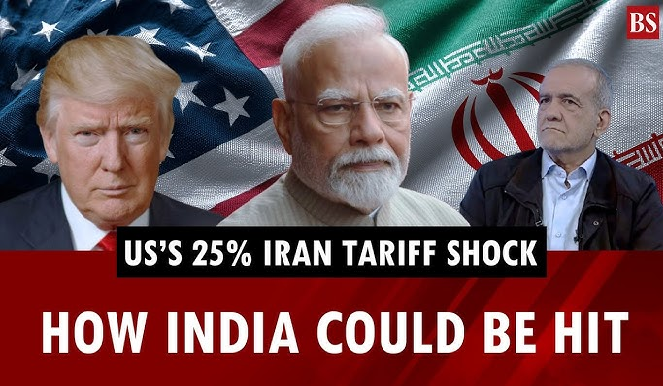 There was no immediate comment to either announcement from Iran, which is already subject to extensive sanctions imposed by the US and other Western powers over the country’s nuclear program.
Tehran insists this is entirely peaceful and has repeatedly denied accusations by the US and its allies that it is seeking to develop nuclear weapons.
Under a 2015 nuclear deal with world leaders, Iran was not permitted to enrich uranium above 3.67% purity, the level required for fuel for commercial nuclear power plants and was not allowed to carry out any enrichment at its Fordo plant for 15 years.
However, Trump abandoned the agreement during his first term in 2018, saying it did too little to stop a pathway to a bomb, and reinstated US sanctions, which crippled the Iranian economy. Those measures, affecting oil exports, shipping and banks included “secondary sanctions” on countries trading with Iran.
Tehran retaliated by increasingly breaching restrictions under the deal, particularly those related to the production of enriched uranium.
Last year, the UN re-imposed economic and military sanctions after the UK, France and Germany accused the country of “continued nuclear escalation” and lack of co-operation. Despite sanctions on certain products and industries, there are still more than 100 countries that trade with Iran.
Its biggest export partner is China. In the year to October 2025, Beijing bought more than $14bn (£10.4bn) of products from Iran, according to figures from Trade Data Monitor based on official Iranian data. China is followed by Iraq, which received $10.5bn worth of goods from its neighbor.
Iran also counts the United Arab Emirates and Turkey among its largest customers. Exports from Iran to Turkey jumped substantially from $4.7bn in 2024 to $7.3bn last year. (Int’l News Desk)