 Pressmediaofindia
Related Articles



23-02-2026
WASHINGTON: The United States Supreme Court ruling against the administration of US President Donald Trump’s sweeping global tariffs has left a question unanswered on what is the refund process for the funds collected over the past several months through the tariffs that had been imposed on most US trading partners .
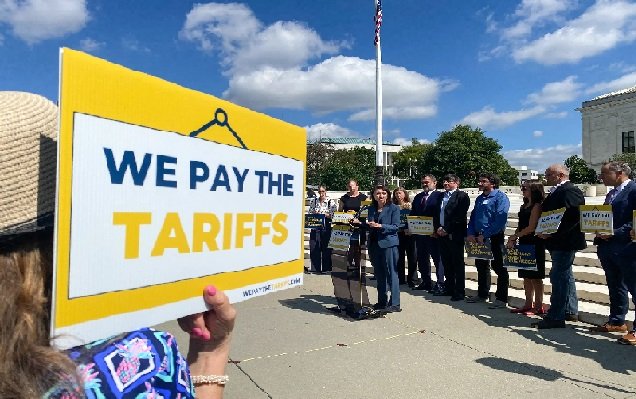 In a 6–3 decision issued on Friday, Chief Justice John Roberts upheld a lower court ruling that found the president’s use of the International Emergency Economic Powers Act (IEEPA) exceeded his authority.
The high court did not specify how the federal government would refund the estimated $175bn collected under the tariffs. In his dissent, Justice Brett Kavanaugh warned that issuing refunds would present practical challenges and said it would be “a mess”.
The case will now return to the Court of International Trade to oversee the refund process.
More than 1,000 lawsuits have already been filed by importers in the trade court seeking refunds, and a wave of new cases is expected. Legal experts say the administration will likely require importers to apply for refunds individually. That process could disproportionately burden smaller businesses affected by the tariffs.
“The government is probably not going to voluntarily pay back the money it unlawfully took. Rather, the government is going to make everyone request a refund through different procedures by filing formal protests. They’re going to delay things procedurally as long as they can. Hiring lawyers and going through these procedures costs money and time,” Greg Shaffer, a law professor at Georgetown University, told media.
“I imagine the largest companies, who have been prepared for this eventuality, will eventually get their money back but smaller importers, it’s a cost-benefit analysis where they might shrug their shoulders and say it’s not worth going through the hassle to get the unlawfully imposed taxes paid back to them.”
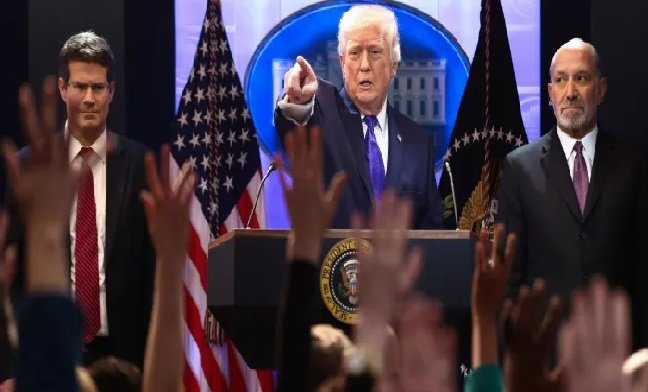 Despite Friday’s ruling, other sweeping levies remain in place. Trump had invoked Section 232 of the 1962 Trade Expansion Act to impose sector-specific tariffs on steel and aluminum, cars, copper, lumber, and other products, such as kitchen cabinets, worldwide.
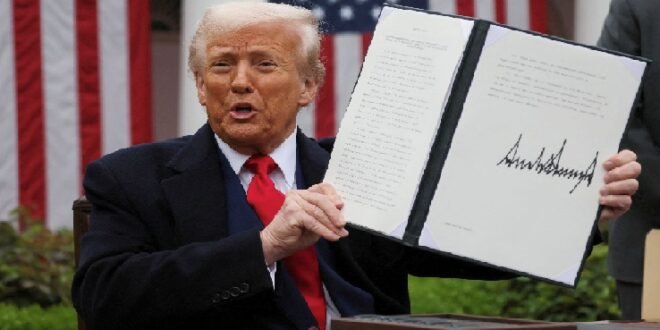
On Friday, Trump said he would impose a 10 percent global tariff for 150 days to replace some of his emergency duties that were struck down. The order would be made under Section 122 of the Trade Act of 1974, and the duties would be over and above tariffs that are currently in place, Trump said.
The statute allows the president to impose duties of up to 15 percent for up to 150 days on any and all countries related to “large and serious” balance of payments issues. It does not require investigations or impose other procedural limits.
The president also has other legal avenues available to continue taxing imports aggressively.
“Our trading partners were well aware of the risks the President faced in using IEEPA as the basis for reciprocal and other tariffs. Nevertheless, they chose to conclude deals with Washington, convinced by Washington that other statutes would be utilized to keep the tariffs in place,” Wendy Cutler, vice president of the Asia Society Policy Institute, told media in a statement.
“With respect to China, USTR (United States trade representative) still has an active Section 301 investigation on China’s compliance with the Phase One agreement, which could be a major feature of the back-up plan for Beijing.”
The president is expected to travel to Beijing next month to meet his Chinese counterpart, Xi Jinping, to discuss trade. (Int’l News Desk)