 Pressmediaofindia
Related Articles


09-04-2026
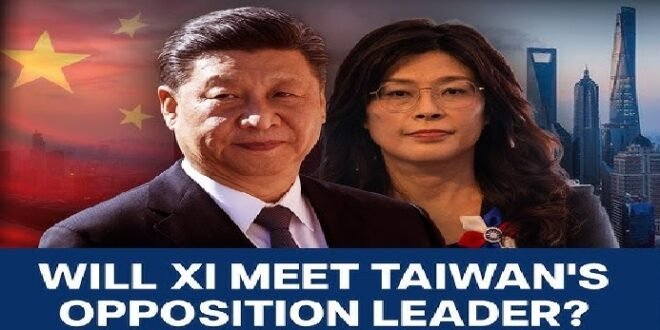
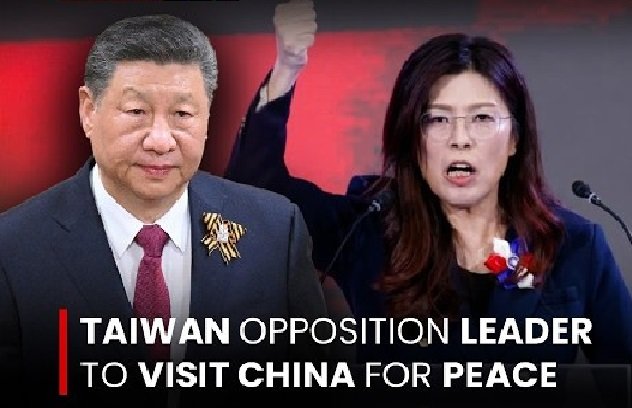
TAIPEI: As Taiwanese opposition leader Cheng Li-wun meets with Chinese President Xi Jinping in Beijing later this week, the Taiwanese public will be watching closely to see how the two leaders discuss Taiwan’s disputed political status, in a make-or-break moment for Cheng’s political career.
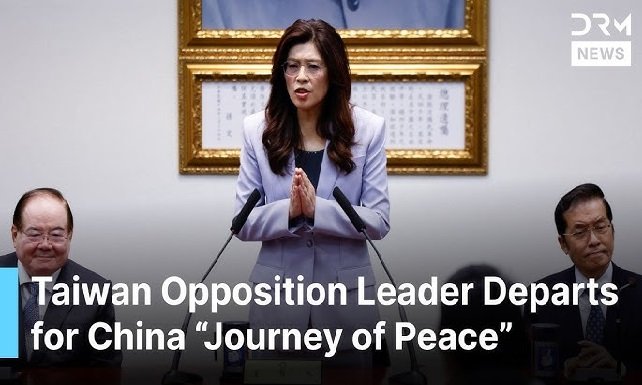 The recently elected chairperson of the Kuomintang (KMT) travelled to Shanghai on Tuesday, accompanied by a delegation of party members. Cheng told a media briefing before her six-day trip that she aims to show that Taiwan and China “are not destined for war, nor do they need to remain on the brink of military conflict”.
Cheng’s trip will take her to Nanjing, the capital of China’s eastern Jiangsu province, to visit the mausoleum of Chinese revolutionary leader Sun Yat-sen revered on both sides of the Taiwan Strait as the “father of modern China” before heading to Beijing for her summit with Xi at the end of the week.
President Ma Ying-jeou, also from the KMT, was the last sitting Taiwanese leader to meet with Xi at a 2015 summit in Singapore. However, the pair met again in 2024, when Ma travelled to China as a private citizen.
Cheng’s trip is taking place in a very different context for the KMT as Taiwan’s political landscape has “shifted drastically” over the past decade, according to Sanho Chung, a political scientist at Taiwan’s National Cheng Kung University.
Taiwanese nationalism has surged in the years since the Xi-Ma summit 11 years ago, while the KMT’s political power has waned. The party continues to perform well in local elections, thanks to its deep political networks and long history in Taiwan but it lost the last three presidential elections in 2016, 2020 and 2024 to the centre-left Democratic Progressive Party (DPP).
The KMT has long sold itself as the party that can work most effectively with China, but that position has been challenged by the DPP, according to Chung.
 Since taking power in 2016, the DPP has offered voters a different diplomatic blueprint, he said, by raising Taiwan’s international profile while strengthening the military. The DPP has also pledged to keep the “door open” to Chinese leaders even after Beijing cut off formal contact with Taipei following the election of President Tsai Ing-wen from the party, he said but the past few years have also included a surge in Chinese military activity in the Taiwan Strait, the 180km (112-mile)-wide waterway dividing China and Taiwan including six rounds of live-fire military exercises since 2022.
The latest drills staged around Taiwan in December 2025 saw Chinese forces practice encircling and blockading the island.
The wars in Ukraine, Gaza and Iran have left many Taiwanese wondering whether a distracted US, Taiwan’s unofficial security guarantor, would actually help them during a future conflict with China. US President Donald Trump’s mercurial approach to US foreign policy has sown more doubt.
In the face of these concerns, the idea of thawing ties with China still appeals to some voters, said Wen-ti Sung, a non-resident fellow at the Atlantic Council’s Global China Hub. “If Chairperson Cheng can have cordial photo ops with Xi Jinping, the KMT can use that to argue dialogue is more effective than deterrence,” he told media. Over the next week, Taiwanese voters will be waiting to see how deftly the KMT’s Cheng manoeuvres around all the potential pitfalls underlying Taiwanese engagement with China, said James Chen, an adjunct instructor at Taiwan’s Tamkang University.
Such a diplomatic high-wire act requires Taiwanese leaders to neither fully acknowledge China’s claims over Taiwan, a 23.5 million-people democracy, nor antagonise Beijing, while also potentially keeping the door open to future trade and economic exchange. (Int’l Monitoring Desk)