 Pressmediaofindia
Related Articles

06-01-2026
DAMASCUS: Syria is still facing numerous challenges a year after the toppling of Bashar al-Assad’s regime. Among the key priorities for the new government is rebuilding its national army and security forces.
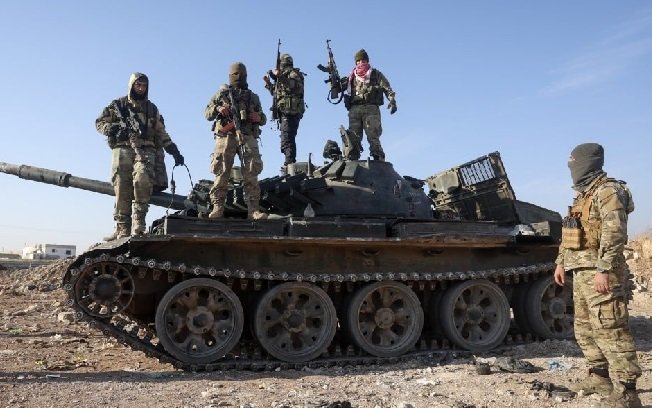 For decades, Syria’s security apparatus and the military were considered by many as a brutal force to protect the regime and crackdown on dissent.
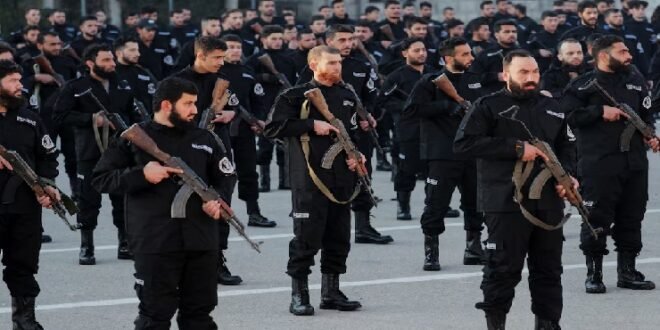
The new interim government has begun the restructuring and recruiting process, focused on rebuilding the armed forces and adopting a new doctrine where loyalty is to the country.
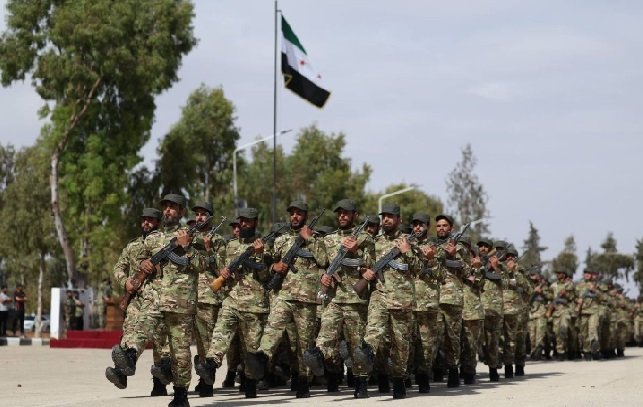
“We started the process of restructuring our military and army … and we are meeting the need of the moment by having an army that Syria deserves as a nation to building an army that represents Syria and is able to face the challenges,’’ Defence Minister Murhaf Abu Qasra said during a ceremony for soldiers graduating from a military academy in the city of Aleppo.
“We will develop all branches of the armed forces and increase our military preparedness and efficiency to protect our nation and we already issued rules of conduct and discipline,” Abu Qasra said after attending a military march by newly graduating candidates showing off their camouflage uniform and military vehicles and rifles but analysts warn that the process of rebuilding could be long and difficult, given the challenges that lie ahead not least among them changing the mentality of armed groups and transforming them into part of an organized, professional army and among the main issues is vetting the large number of recruits to the country’s newly formed security forces, deciding whether to continue with Russian equipment, integrating forces from southern Syria and the Kurdish-led Syrian Democratic Forces (SDF) in the northeast, and building the trust of the country’s many minority groups.
The success of the Syrian armed forces would go a long way to providing political stability in the country, and, with it, possible foreign investment and support for the government in Damascus.
 “If Syria fails to integrate all armed forces and former opposition groups into its army, it faces an existential challenge of fragmentation and disintegration,” Caroline Rose, director of military and national security priorities at the New Lines Institute, told media.
“Without unification within its army and ongoing sectarian division, the country risks frequent security flashpoints infighting between different armed groups and its armed forces that could put Syria back on the path to civil war,” Rose explained.
When the al-Assad regime collapsed on December 8, 2024, so did its security apparatus and armed forces. Many abdicated and fled to neighboring countries, some hid in their homes, and others turned in their weapons and military IDs to the new authority.
In the first hours after al-Assad fled, Israel also began widespread air attacks around the country. On December 10, the Israeli military said in a statement that it had destroyed 80 percent of Syria’s strategic military capabilities. In the last year, Israel attacked Syria more than 600 times.
“With Israel having destroyed much of Syria’s conventional land, aerial, and naval military equipment in the initial days after al-Assad’s fall, along with the fact that the new administration has purged many regime-era officers and soldiers from its ranks, the new Syrian Army is, in many ways, starting from scratch,” Rose said.
Syria’s President Ahmed al-Sharaa has dissolved the former army. His group, Hay’at Tahrir al-Sham (HTS), which controlled the province of Idlib for years during Syria’s revolution and was the main fighting force that toppled al-Assad along with other, smaller groups, makes up about 40,000 fighters with those numbers, the government would struggle to govern the entirety of Syria. (Int’l Monitoring Desk)