 Pressmediaofindia
Related Articles


04-04-2026
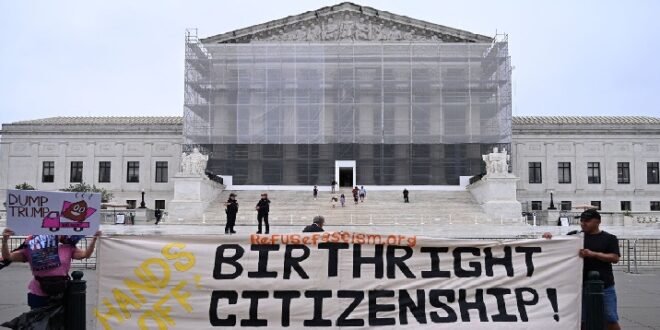
WASHINGTON: If you are born on United States soil, are you automatically a citizen of the country?
This is the question that will be put before the US Supreme Court on Wednesday, a response to President Donald Trump’s extraordinary effort to change longstanding interpretations of the country’s constitution amid his wider hardline immigration drive.
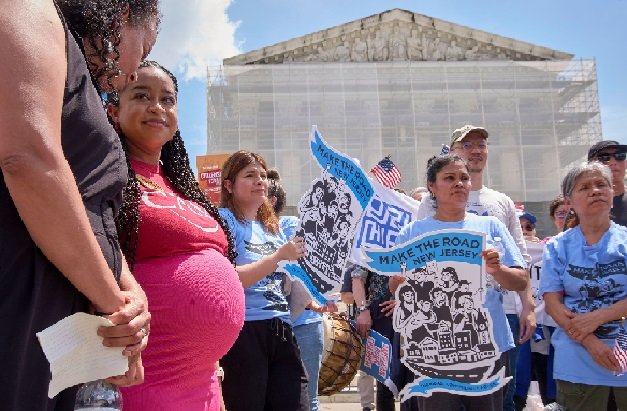
 Advocates challenging Trump’s efforts to do away with so-called birthright citizenship in which any infants born in the US, regardless of their parents’ immigration status, concurrently become US citizens, hope to present what they see as an open-and-shut case to a nine-justice panel of the country’s top court.
“This is one of the biggest issues for American society,” said Aarti Kohli, who will be present at Wednesday’s hearing as executive director of the Asian Law Caucus, one of several groups that brought the challenge.
“It’s not just about what the executive order does, but it’s about the power that the president has to rewrite the Constitution.”
Advocates have not shied from the difficult context of the highly consequential case, which they say risks transforming the cultural fabric of the US, inflating the number of people living in the US not afforded equal rights, and creating a “permanent underclass” for some immigrant groups.
It will be brought before a US Supreme Court dominated by a 6-to-3 conservative supermajority. The panel has recently handed Trump a handful of major defeats, but it has largely leaned in the president’s favor on immigration.
“Every judge in the lower courts, regardless of which party appointed that judge, has ruled in our favor,” Kohli said.
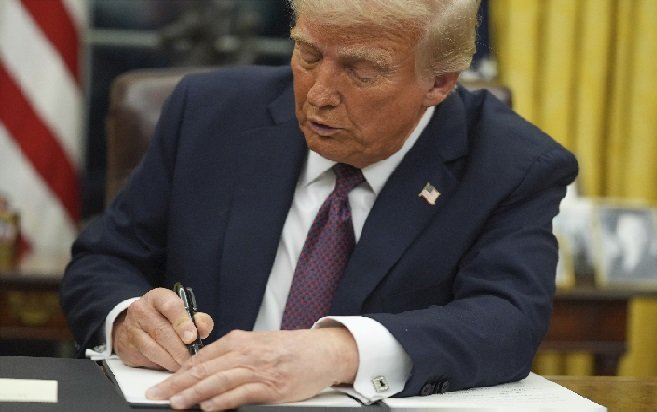
 Wednesday’s case before the Supreme Court represents the culmination of a months-long challenge to an executive order signed by Trump just hours after taking office on January 20, 2025.
The order sought to effectively end birthright citizenship, long interpreted as established under the 14th Amendment of the US Constitution, ratified in 1868, three years after slavery was officially outlawed in the US.
The amendment overturned the 1857 Dred Scott v Sandford Supreme Court ruling, which maintained that Black slaves born in the US were not US citizens.
Instead, the 14th Amendment stated: “All persons born or naturalized in the United States, and subject to the jurisdiction thereof, are citizens of the United States and of the State wherein they reside.”
Trump’s executive order argued the 14th Amendment “has never been interpreted to extend citizenship universally to everyone born within the United States”. It singled out the phrase “subject to the jurisdiction thereof” to argue the constitutional amendment does not apply to those in the United States without documentation or on temporary visas.
If further ordered; “no department or agency” is to issue or accept citizenship documents for individuals born to parents of those categories.
The executive order said it would take effect for those born after 30 days of its signing, but its enforcement has been widely blocked amid ongoing legal challenges.
What will challengers argue?
At least 10 legal challenges have been launched against Trump’s order but Trump v Barbara is the first to be heard before the Supreme Court.
The case is named after one of the plaintiffs, “Barbara”, a Honduran citizen who was expecting her fourth child while living in New Hampshire in October 2025, awaiting the processing of her asylum application. Her co-plaintiffs include a woman from Taiwan, in the US on a student visa who gave birth to a child in Utah in April 2025 and a Brazilian national, whose wife gave birth in March 2025. (Int’l Monitoring Desk)