 Pressmediaofindia
Related Articles
14-12-2025
KHARTOUM: A women’s rights organization has documented nearly 1,300 cases of endemic sexual and gender-based violence across war-torn Sudan, with the paramilitary Rapid Support Forces (RSF) blamed for the overwhelming majority of attacks.
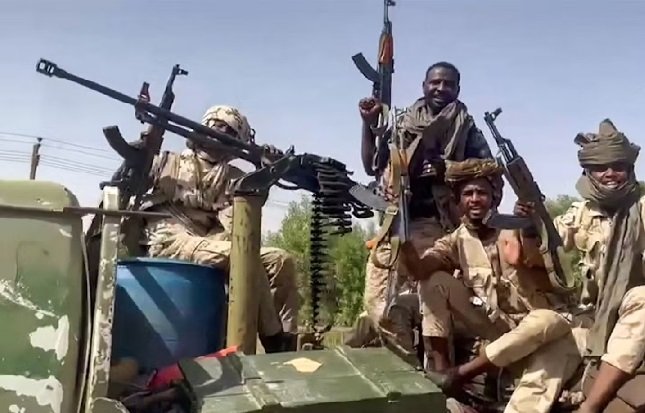 The Strategic Initiative for Women in the Horn of Africa (SIHA) released findings on Thursday showing it had verified 1,294 incidents spanning 14 states since Sudan’s brutal civil war started in April 2023.
The disclosure underscores how sexual violence has become a systematic weapon in the war, the report said, which is one gruesome part of what humanitarian organizations have called the world’s largest humanitarian crisis.
The SIHA network attributed 87 percent of cases where perpetrators were identified as RSF fighters, describing the violations as “widespread, repeated, intentional, and often targeted” rather than contained incidents.
Rape accounted for more than three-quarters of documented incidents, while 225 cases involved children as young as four years old.
The group outlined a calculated three-stage pattern accompanying RSF territorial advances. Initial home invasions and looting accompanied by rape, followed by attacks in public spaces as control solidifies, and finally the long-term detention of women subjected to torture, gang rape and forced marriage.
“Women and girls from non-Arab tribes in Darfur, including the Masalit, Berti, Fur and Zaghawa, were directly targeted,” the report said. In Al-Gezira state, witnesses described RSF forces singling out lighter-skinned girls and women aged 14 to 30 as “trophies”.
Just last week, the Sudan Doctors Network, a medical monitoring organization, documented 19 additional rape cases at al-Afad Camp in al-Dabba, where women fleeing the recently fallen city of el-Fasher were attacked by RSF forces. Two survivors are pregnant and receiving care.
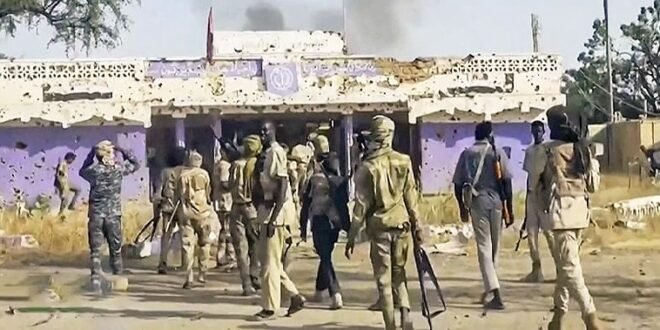
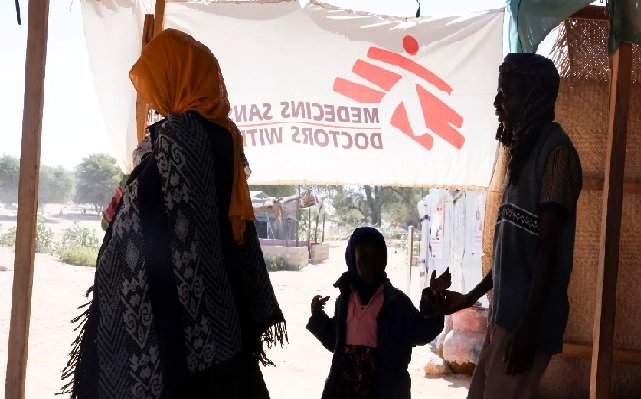 The main fighting has shifted from Darfur, following the RSF capture of el-Fasher in October, to the vast central Kordofan region, which sits between territory controlled by the government-aligned Sudanese Armed Forces (SAF) in the east and RSF-held areas in the west.
The paramilitary force currently holds a commanding position and has been advancing on urban centers across West Kordofan.
After RSF forces captured the Heglig oilfield near the South Sudan border on December 8, both warring parties agreed to allow South Sudanese troops to secure the site, which serves as a critical economic lifeline for both countries.
South Sudan confirmed that seven of its soldiers were killed on Thursday in a drone strike by the SAF.
On December 5, RSF fighters attacked a preschool in Kalogi locality, killing more than 100 people, including 46 children. The attackers then targeted paramedics and civilians who rushed to assist victims in what authorities described as deliberate suicide drone strikes.
United Nations human rights chief Volker Turk warned days earlier that Kordofan faces “another wave of mass atrocities,” saying history was “repeating itself” after international warnings before el-Fasher’s fall went largely unheeded.
Since late October, the UN has documented at least 269 civilian deaths from bombardment, artillery fire and summary killings in the region, though communication blackouts suggest the actual toll is far higher.
The conflict has displaced 12.4 million people and forced 3.3 million to flee as refugees since erupting in April 2023. (Int’l News Desk)