 Pressmediaofindia

Related Articles



23-03-2026
VIENNA: Shortly after the United States and Israel first attacked Iran on February 28, analysts warned that war could drive oil prices above $100 a barrel.
 Now, less than three weeks into the conflict, market watchers are seriously considering the possibility of prices surpassing $150 or even $200.
On March 9, the price of Brent crude, the global benchmark hit nearly $120 and has not dropped below the $100 threshold since March 13.
An Israeli strike on Iran’s South Pars gas-field on March 18, prompting Iranian attacks on oil and gas facilities in Qatar, Saudi Arabia and the United Arab Emirates, further pushed crude prices up on Wednesday to more than $108 a barrel.
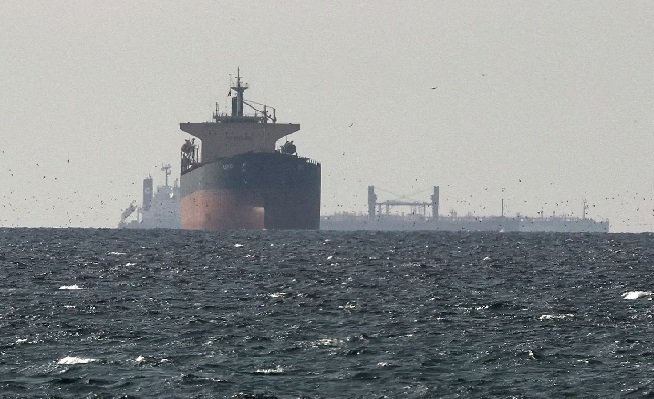
Analysts widely agree that prices have room to move much higher if the Strait of Hormuz, the conduit for about one-fifth of global oil supplies in peacetime, remains effectively closed in the coming weeks.
The only real point of contention is by how much.
“Benchmark Middle Eastern crudes like Oman and Dubai have already crossed the $150 threshold, so $200 is already within sight, even if not for Brent and West Texas Intermediate,” Vandana Hari, the founder of oil market analysis provider Vanda Insights, told media.
“How much further crude climbs from here almost entirely hinges on how much longer the Strait of Hormuz remains closed,” Hari said.
After Iran declared the strait closed early in the conflict and threatened to strike any ships attempting to pass, traffic all but stopped.
US President Donald Trump has failed to attract international support for a naval convoy to reopen the strait, while countries are scrambling to do deals with Iran for safe passage. Only a handful of ships mostly Indian, Pakistani, Turkish and Chinese-flagged vessels have been allowed to pass in recent days.
 While countries have committed to releasing 400 million barrels of oil from emergency stockpiles in coordination with the International Energy Agency, the reserves cannot fully offset the halt of shipping through the waterway.
Singapore-based OCBC Group Research estimates that the global market is facing a daily shortfall of about 10 million barrels even when the reserves are taken into account.
Wood Mackenzie analysts said last week that Brent could soon hit $150 and that $200 was not “outside the realms of possibility” in 2026.
Iran has also invoked the prospect of $200 oil, warning through a military spokesperson last week that the world should “get ready” for such a spike.
“Strategic reserves and replacement barrels can stabilize prices if the market believes supply will meet demand, but if flows through Hormuz were materially disrupted for a sustained period, prices well above $100, even approaching $200, are plausible,” Chad Norville, president of industry publication Rigzone, media.
“In several respects, the conditions today could allow for an even more dramatic move than the Gulf War, given the larger share of global supply potentially at risk and the wider imbalance between supply and demand that presents.”
Oil prices at $150 or higher would weigh heavily on the global economy.
The International Monetary Fund estimates that every 10 percent rise in oil prices, sustained over a year, would correspond with a 0.4 percent increase in global inflation and a 0.15 percent reduction in economic growth.
The highest Brent crude has ever reached is $147.50 per barrel at the height of the global financial crisis in 2008. In today’s dollars, the all-time peak equates to about $224. Adi Imsirovic, an energy expert at the University of Oxford, told media that oil at $200 a barrel “would be a major handbrake to the world economy”. He described the prospect of prices hitting such levels as “perfectly possible”. (Int’l News Desk)