 Pressmediaofindia
Related Articles



06-04-2026
LONDON: Police forces are being offered specialist support from a new national democracy protection unit to deal with the rising level of threats and abuse facing MPs.
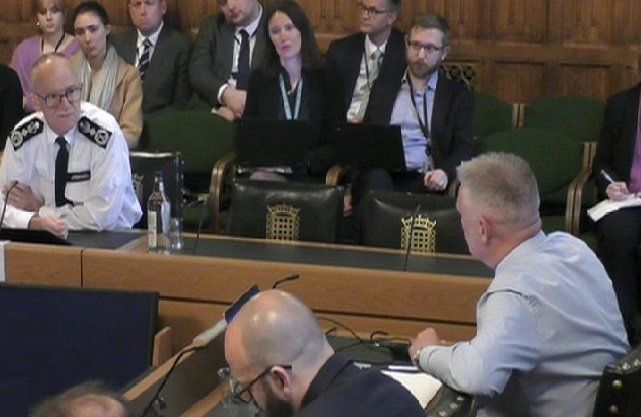
 Police chief Chris Balmer has been tasked with leading the new initiative to help forces investigate and tackle “anti-democratic crimes”.
Reports of crimes against MPs have more than doubled since 2019, reaching almost 1,000 last year, with the spike driven by allegations of harassment, criminal damage, and threats to kill.
MPs told media that death threats had become commonplace and many are not reported to police.
Last month, Security Minister Dan Jarvis said: “The volume, breadth and tempo of threats against elected representatives is unprecedented.”
He announced Balmer as the national police lead for defending democracy and said he had written to the senior officer to emphasize “the importance of keeping pace with the evolving threat that abuse poses”.
In his role, Balmer will co-ordinate intelligence on threats to politicians, advise police forces on the categorization of anti-democratic crimes, and provide specialist support to officers investigating alleged offenders.
MPs reported 4,064 crimes to the Metropolitan Police’s Parliamentary Liaison Team between 2019 and 2025, according to data released to media.
The figures, which were first reported by the Times, show the number of alleged offences against MPs have increased year-on-year, with 976 recorded in 2025, compared to 364 in 2019.
The most numerous recorded offences were related to malicious communications (2,066 in total across the six-year period), followed by harassment, and criminal damage to a building.
 There were 50 death threats reported in 2025, up from 31 the previous year.
The number of reported offences related to physical violence fluctuated but was comparatively low.
The number of alleged assaults peaked at 14 in 2024, a general election year and went down to three in 2025.
The data did not show how many of the alleged offences led to prosecutions and convictions. Security measures to protect MPs have been expanded since the murders of Jo Cox in 2016 and Sir David Amess in 2021.
Launched in 2016, Operation Bridger is a national police program that has offered MPs access to extra security in their homes and constituency offices.
In the 2017/18, £4.2m was spent on security for MPs, a 60% increase on the previous year. While security costs have fluctuated in the years since, they have remained high compared to pre-2016 levels but MPs have urged the police and the UK government to go further to protect them.
Labour MP Kim Leadbeater, the sister of Cox, told media that nearly 10 years on from her sister’s murder “we’re probably in a worse place”.
She continued: “I think what we also have to acknowledge is that this is a political problem, it’s a problem for our democracy but I do think there’s a broader problem for our society as well in terms of how we are able to listen to each other.”
Recently, Labour MP Sam Rushworth had to boost security at his home including installing panic buttons and cameras after he received repeated death threats from an obsessed constituent.
Starting in 2024, Benjamin Clarke bombarded Rushworth with abuse online before threatening to burn the Bishop Auckland MP’s house down with the Labour politician inside. (Int’l News Desk)