 Pressmediaofindia
Related Articles

20-03-2026
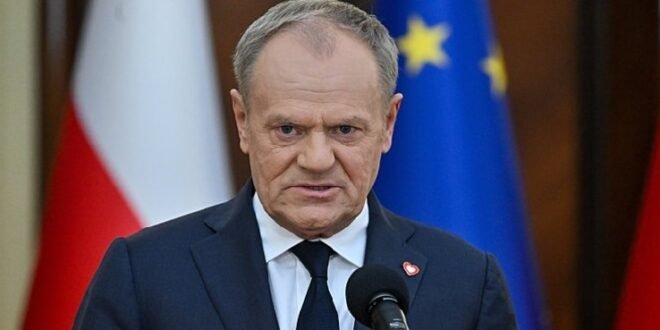
WARSAW: Poland will not send troops to Iran as the conflict does not directly affect its security, Prime Minister Donald Tusk said on Tuesday, adding that the United States and other powers understood Warsaw’s decision.
 US President Donald Trump called on allies over the weekend to help secure the Strait of Hormuz as Iranian forces continue attacks on the vital waterway amid the US-Israeli war on Iran, now in its third week
Poland’s government “does not plan any expedition to Iran, and this does not raise any doubts on the part of our allies,” Tusk said before a government meeting.
He said this covered Poland’s land, air and naval forces, which are still being built up in the face of the conflict over the border in Ukraine.
Tusk said securing the Baltic Sea remained a central element of Poland’s strategy.
A number of other US allies including Germany, Spain and Italy, have said they have no immediate plans to send ships to help reopen the Strait of Hormuz, which Iran has effectively shut with attacks and threats of attacks.
Three days ago, US President Donald Trump urged other nations to send warships to the Strait of Hormuz on Saturday, after Iran threatened escalation across the Middle East to retaliate for Washington’s bombing of its main Gulf island energy hub.
Tehran’s ability to stop shipping through the strait, a major channel for oil and gas shipping, could give it enormous leverage over the US and its allies.
“The Countries of the World that receive Oil through the Hormuz Strait must take care of that passage and we will help, A LOT!” Trump wrote in a social media post. “The US will also coordinate with those Countries so that everything goes quickly, smoothly and well.” As the war entered its third week, Iran projected defiance after US forces hit military sites at Kharg Island, the Gulf outpost that handles 90% of Iranian oil exports. A drone attack had already disrupted a United Arab Emirates energy hub, the US embassy in Baghdad warned US citizens to leave Iraq and Iran’s Islamic Revolutionary Guard Corps urged the US to move industries out of the region.
 Since Israel and the United States began attacking Iran on February 28, the war has killed more than 2,000 people, mostly in Iran, and created the biggest-ever oil supply disruption, pushing up global prices.
Several US allies rebuffed Donald Trump’s call on Monday to send warships to escort tankers through the Strait of Hormuz, drawing criticism from the US president, who accused Western partners of ingratitude after decades of support.
The US-Israeli war on Iran is in its third week with no end in sight. The critical Strait of Hormuz, through which 20% of the world’s oil and liquefied natural gas flow, remains largely closed off, raising energy prices and fears of inflation.
The conflict has already imposed economic costs on US allies, who were not consulted before the airstrikes on Iran and who have endured months of harsh criticism and bellicose threats from Trump since he returned to office.
A number of US partners, including Germany, Spain and Italy, said they had no immediate plans to send ships to help reopen the strategic waterway which Iran has effectively shut with drones and naval mines.
“We lack the mandate from the United Nations, the European Union or NATO required under the Basic Law,” German Chancellor Friedrich Merz said in Berlin, adding that Washington and Israel had not consulted Germany before launching the war. Trump has demanded help from allies to reopen the Strait of Hormuz, which usually carries about a fifth of global energy supplies but even if he can assemble a major coalition it could prove very hard to end Iran’s blockade.
Khamenei has not appeared in public, instead issuing a statement on Thursday read by a television presenter. (Int’l News Desk)