 Pressmediaofindia
Related Articles

30-03-2026
By SJA Jafri
ISLAMABAD: In the middle of 1971, at the height of the Cold War, a Pakistani government plane carrying US Secretary of State Henry Kissinger flew overnight from Islamabad to Beijing. The trip was secret, the facilitator was Pakistan and the geopolitical consequences were generational.
 More than 50 years later, Pakistan is once again carrying messages. Foreign Minister Ishaq Dar confirmed on March 25 that Islamabad is relaying a US 15-point ceasefire proposal to Tehran, with Turkiye and Egypt providing additional diplomatic support, as the US-Israeli war against Iran stretches into its second month.
On Thursday, chief US negotiator Steve Witkoff also confirmed that Pakistan was transferring messages between Washington and Tehran. Hours later, President Donald Trump announced on his social media platform, Truth Social, a 10-day pause on threatened strikes against Iranian power plants, citing, in his words, a request from the Iranian government.
Iran has so far denied that direct negotiations are taking place but Trump’s latest pause means that his initial threat to attack Iran’s power plants, delivered last weekend, has now been deferred twice, as Pakistan plays the part of a key diplomatic facilitator.
The role is not new. Pakistan brokered the secret US-China backchannel in 1971 and was a key interlocutor in the Geneva Accords that helped end the Soviet occupation of Afghanistan in the 1980s. It also facilitated talks that led to the 2020 Doha Agreement and has, across successive governments, attempted to mediate between Saudi Arabia and Iran.
Since the launch of Operation Epic Fury, the US-Israeli air campaign that began in late February 2026 and killed Supreme Leader Ali Khamenei within days, Islamabad has quietly but deeply inserted itself into the crisis, working the phones and holding meetings with key regional actors.
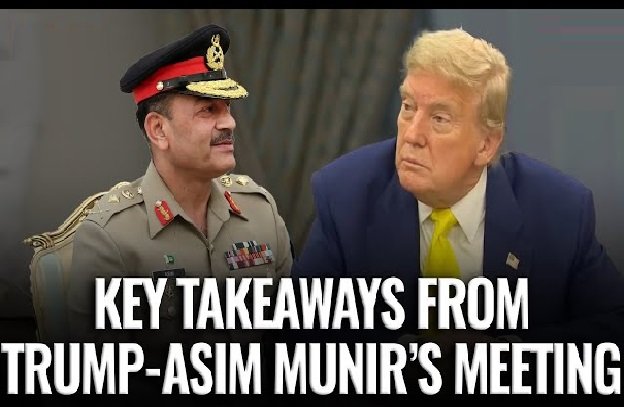
 Prime Minister Shehbaz Sharif has spoken repeatedly to Iranian President Masoud Pezeshkian. Army Chief Field Marshal Asim Munir has held at least one direct call with President Donald Trump. Both Sharif and Munir have also travelled to Saudi Arabia, with whom Pakistan signed a mutual defence agreement in September last year, and which hosts a US base and has faced Iranian attacks in recent weeks.
“Pakistan’s story is told most often through the prism of conflict,” says Naghmana Hashmi, a former Pakistani ambassador to China. “Yet beneath the headlines of coups, crises, and border skirmishes runs a quieter, more consistent thread; a state that has repeatedly tried to turn its geography and Muslim-world ties into diplomatic leverage for peace,” she told PMI.
Whether this latest round of diplomacy produces anything durable remains uncertain but it has once again raised a familiar question: How and why does Pakistan keep emerging as a diplomatic broker, and how effective has it been?
Opening the China channel
In August 1969, US President Richard Nixon visited Pakistan and quietly tasked the country’s military ruler, President Yahya Khan, with passing a message to Beijing: Washington wanted to open communication with the People’s Republic of China.
At the time, the US treated Taiwan as China and did not recognize Beijing.
Pakistan was chosen for the diplomatic role because it maintained working relations with both Washington and Beijing.
Winston Lord, who served as Kissinger’s aide and was on the flight to Beijing, described the decision in a 1998 oral history interview conducted by the Association for Diplomatic Studies and Training.