 Pressmediaofindia
Related Articles
06-03-2026
Bureau Report + Agencies
ISLAMABAD/ TEHRAN: It was the first working day of the week and Muhammad Raza, a 23-year-old Pakistani medical student, was assisting the doctors treating patients at Tehran University of Medical Sciences hospital in the Iranian capital.
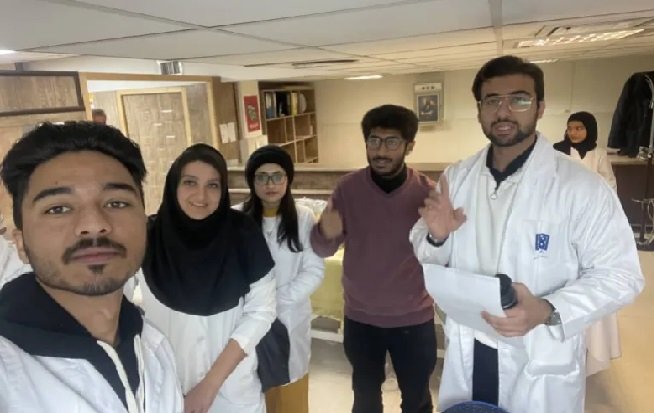 A loud explosion brought the ward to a halt. Israel and the United States had begun bombing Iran in a joint operation on the morning of February 28.
“We had been hearing about an imminent attack, and when it did strike, it sent a surge of anxiety and panic through my body,” Raza told media from inside a bus on his way to Islamabad on Tuesday.
As chaos and fear gripped Tehran following the bombings, Raza rushed to his hostel near the hospital compound and immediately called the Pakistani embassy, less than 2km (1.2 miles) away.
The mission instructed him and other students to gather with essential belongings by the evening before arrangements could be made to send them home.
“It was really scary. All of us were afraid of what might happen and wanted to reach Pakistan at the earliest,” Raza said.
Muhammad Tauqeer, another Pakistani medical student, told media he was on a field deployment away from the college campus when the strikes began.
“The second we heard the first strike landing in Tehran, everything fell into chaos. People rushed outside. Our teachers told the foreign students to immediately seek assistance from our embassies and return to our hostels, which is what we did,” said the 24-year-old on Tuesday, speaking from another bus to his hometown of Jhang in Punjab province.
 “I called my family and told them about the situation,” Tauqeer added.
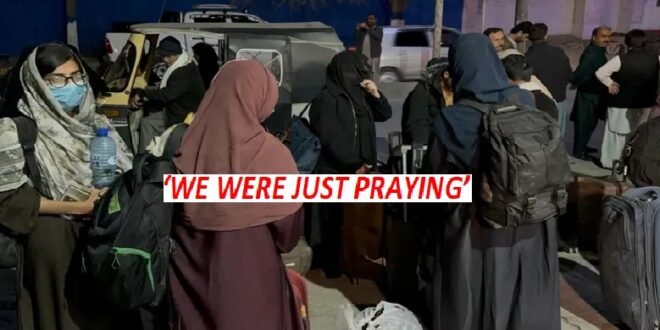
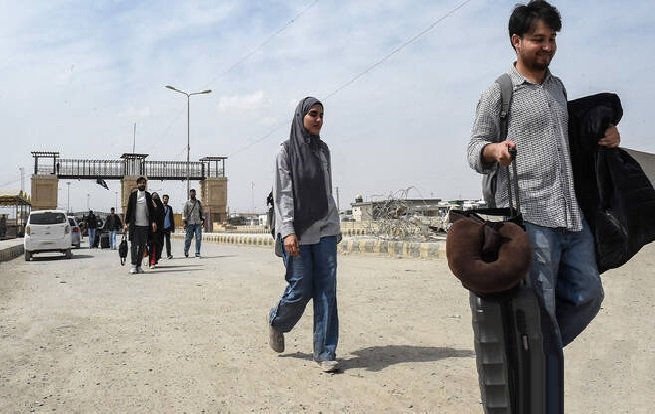
The Pakistani embassy in Tehran asked its nationals to report by Saturday evening. Hundreds arrived, carrying essentials including clothes, laptops, textbooks, documents and cash.
Five buses left the embassy compound on Saturday night for Zahedan, a 1500km (932-mile) journey that took about 20 hours as the convoy cut through central Iran, passing cities such as Yazd, Isfahan and Kerman as they were being hit in the US-Israeli assault.
During their journey, the students were also trying to get updates on the Iran war, which had soon escalated into a regional conflict, with Iran’s retaliatory attacks targeting US assets across the Gulf and Saudi Arabia.
Kainat Maqsood, another Pakistani student, said it was during the “deeply distressing” journey that she learned about the killing of Iran’s Supreme Leader Ayatollah Ali Khamenei.
“It was such a devastating news for us,” she said as she waited to board her onward bus to Multan city in Punjab. “He was a leader many of us looked up to, and now he is gone.”
From Zahedan, the Pakistani border town of Taftan was about 100km (62 miles) away. For almost the entire stretch of their journey, the passengers had no mobile signal.
“We were all so scared. The journey was at night and we had no idea what was going to happen,” said Tauqeer. “The entire bus was silent. Everyone was just praying.”
The buses crossed into Pakistan on Sunday evening. Pakistani officials on Tuesday night said nearly 1,000 citizens, including some 400 students, had returned to the country in the past three days through the Taftan border in Chagai district and the Gabd-Rimdan border in Gwadar district.