 Pressmediaofindia
Related Articles


07-04-2026
By SJA Jafri + Bureau Report
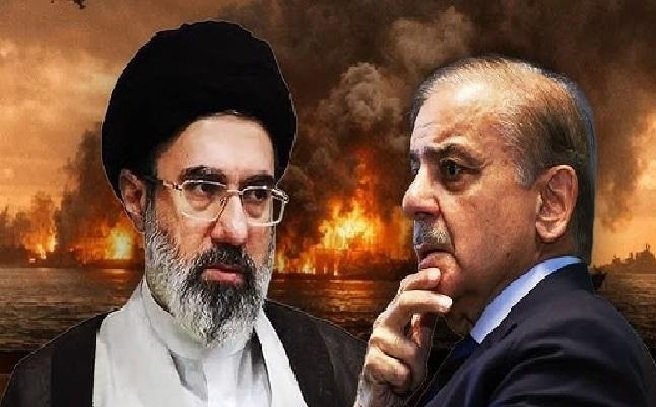
ISLAMABAD: Pakistan intends to continue to nudge the United States and Iran towards negotiations aimed at ending their war but the Ministry of Foreign Affairs acknowledges “obstacles” in its efforts.
 Foreign Office spokesperson Tahir Andrabi did not specify the roadblocks on the path to peace that he was referring to but his comments, made during a weekly media briefing in Islamabad, came hours after US President Donald Trump threatened to bomb Iran “back to the Stone Ages” if it did not accept Washington’s terms for a peace deal.
Pakistan has been leading a multination effort to facilitate negotiations between the US and Iran.
“Despite challenges and obstacles, Pakistan will continue its efforts to promote facilitation and dialogue,” Andrabi said. He added that Islamabad was working to create conditions for “meaningful negotiations among relevant stakeholders”.
He said the US and Iran had confidence in Pakistan’s role as a neutral intermediary.
In a sign of that confidence, Iran has allowed 20 Pakistani-flagged vessels to transit the Strait of Hormuz. Andrabi called it “a harbinger of peace” and a positive step for regional stability.
He did not confirm whether any Pakistani ship had so far sailed through the strait.
The Hormuz route has been largely blocked since Iran began restricting oil and gas shipments following the outbreak of the US-Israel-Iran conflict on February 28. The disruption has driven up energy prices and triggered widespread economic strain.
Andrabi also pointed to sustained high-level contact between Islamabad and Tehran. He cited a March 28 call in which Iranian President Masoud Pezeshkian spoke with Prime Minister Shehbaz Sharif, stressing the need to “build trust in order to facilitate talks and mediation” and praising Pakistan for its “supportive role for peace”.
 The briefing came just a day after Deputy Prime Minister and Foreign Minister Ishaq Dar returned from Beijing, where he met China’s Foreign Minister Wang Yi.
The visit produced a joint five-point initiative calling for an immediate ceasefire, urgent diplomatic engagement to prevent further escalation, and the restoration of normal maritime traffic through the Strait of Hormuz.
Andrabi said the Chinese-Pakistani plan had since been shared with Iran, the US and other stakeholders, receiving appreciation “across the region and beyond”.
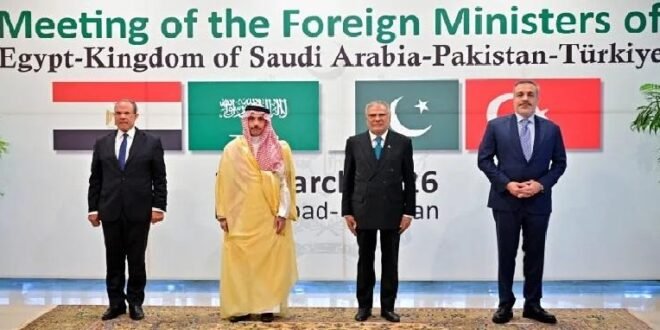
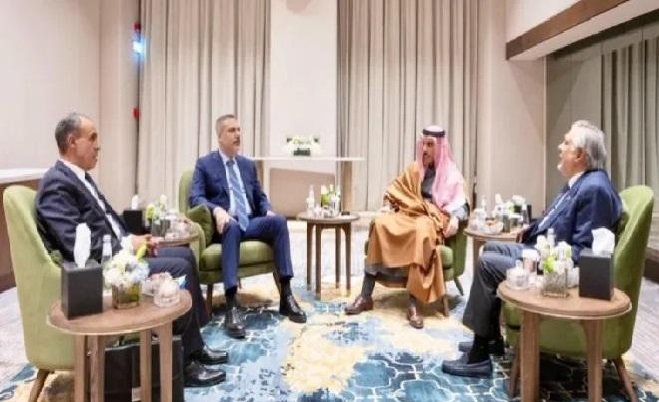
He added that the proposals were consistent with the outcome of the four-nation ministerial meeting held in Islamabad the previous weekend, the foreign ministers of Saudi Arabia, Turkiye and Egypt joined Dar for those talks.
Dar travelled to Beijing despite medical advice to rest after sustaining a hairline fracture during the Islamabad talks, a move Andrabi said reflected the importance Pakistan places on its ties with China. “The Chinese side expressed deep appreciation, conveying that China and Pakistan are strategic cooperative partners,” he said. The Islamabad meeting between Pakistan, Saudi Arabia, Turkiye and Egypt was the second such gathering in a coordinated regional push to de-escalate tensions. The first was held in Riyadh on March 19.
Following those talks, Dar said Pakistan was prepared to host direct US-Iran negotiations “in the coming days”.
“Pakistan will be honored to host and facilitate meaningful talks between the two sides for a comprehensive and lasting settlement,” he said on March 30.
At Thursday’s briefing, Andrabi reiterated that offer, confirming Pakistan had formally “offered to host and facilitate negotiations as part of its broader diplomatic outreach”.
He said the next phase of efforts would focus on securing “meaningful negotiations among relevant stakeholders”.