 Pressmediaofindia

Related Articles


13-03-2026
By SJA Jafri + Bureau Report
ISLAMABAD: Pakistan has ordered sweeping emergency austerity and fuel conservation measures after a disruption in oil and gas supply caused by the United States-Israel war on Iran and an escalating Middle East conflict.
 Prime Minister Shehbaz Sharif announced the measures in a televised address to the nation on Monday night, warning that disruptions to maritime traffic in the Strait of Hormuz a vital waterway for traded oil had placed Pakistan’s economy under direct threat.
“The entire region is currently in a state of war,” Sharif said as he laid out a series of steps, including moving to a four-day workweek for government employees and spring holidays for schools from March 16 to the end of the month.
Sharif said 50 percent of government staff will work from home on a rotating basis and recommended similar arrangements for the private sector, giving key sectors such as banking an exemption.
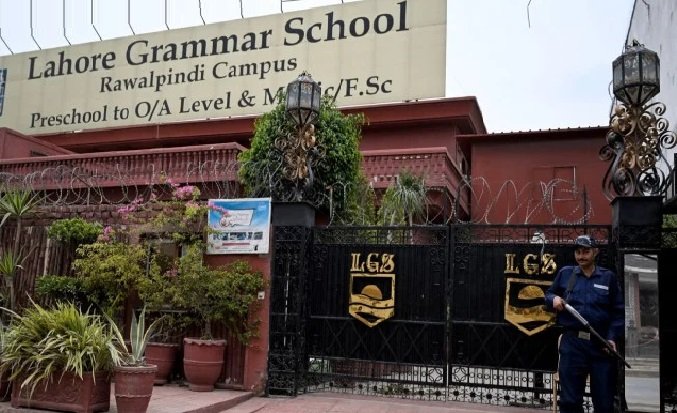
While schools will remain closed for two weeks from Monday, scheduled examinations will be held. Universities and higher education institutions have been directed to shift to online classes to conserve fuel.
The austerity measures also include the federal and provincial cabinet members forgoing their salaries and allowances for the next two months, while salaries of the members of federal and provincial legislatures will see a 25 percent cut during the period.
Ministers, parliamentarians and officials can make a foreign trip only for essential purposes and in economy class.
All in-person meetings across federal and provincial governments have been banned and must be conducted online, and fuel allowances of government offices have also been reduced.
People have been asked to restrict social gatherings, with weddings and parties capped at 200 guests and limited to one main dish.
 Heavy reliance on imported energy
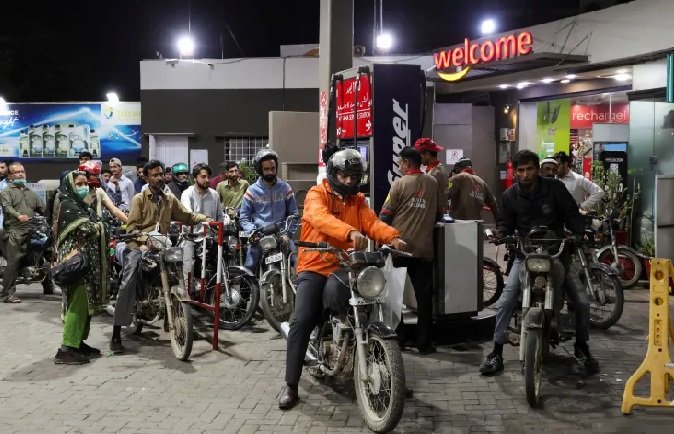
Pakistan relies on imports for more than 80 percent of its oil needs. Between July 2025 and February 2026, its oil imports totalled $10.71bn, while the calendar year total in 2024 was more than $15bn but the recent energy crisis has triggered the largest fuel price increase in the country’s history, with petrol on Tuesday costing $1.15 a litre and diesel at $1.20 a litre, a 20 percent jump since last week.
Energy analyst Amer Zafar Durrani, a former World Bank official and chief executive of advisory firm Reenergia, said the government’s austerity measures could work in the short term, but they leave the main driver of fuel demand largely unaddressed.
“Transport dominates petroleum consumption,” Durrani told media. “Roughly 80 percent of petroleum products are used in transport, meaning the country’s oil dependence is fundamentally a mobility problem.”
He said measures like salary cuts or procurement freezes mainly affect public finances and do little to reduce national fuel use. He suggested that improving freight logistics by shifting more cargo from roads to rail could have a better effect.
On rising oil prices, Durrani said Pakistan could be particularly affected given the value of its currency in the global market.
“The biggest risk does not come from oil prices alone. The real macroeconomic trigger is currency depreciation, which amplifies the impact of higher oil prices on domestic inflation,” he said.
Durrani said a long-term solution lies in harnessing more electric power for transport needs, reducing the reliance of industries on diesel, and expanding renewable energy.